

Interface test system
- Summary
- Abstract
- Description
- Claims
- Application Information
AI Technical Summary
Benefits of technology
Problems solved by technology
Method used
Image

Examples
Embodiment Construction
[0063] The present invention is an innovative approach to test switch technology. The invention provides safe access to control, protection, and automation devices in a secondary circuit. In accordance with a preferred embodiment, the present invention generally comprises a test block and a test plug for testing circuits connected to an electrical panel.
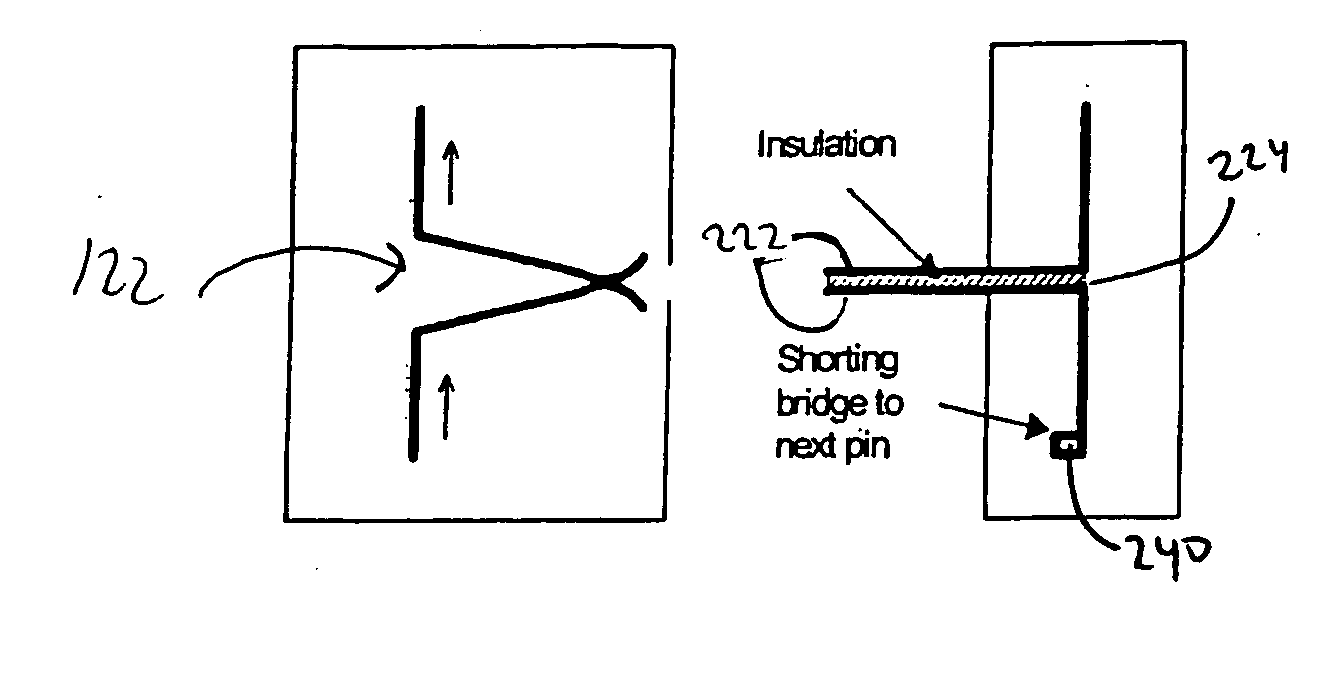
[0064] The test block assembly is preferably simple, facilitating entry into a circuit or the closure of a circuit. The test block assembly in accordance with a preferred embodiment of the present invention comprises a contact spring pair. The spring pair is preferably bent into a specified shape at its knee so that the spring pair contact forming a contact point. In addition, the bent shape of the spring pair provides extra strength to the spring pair and prevents the spring pair from breaking or becoming damages when being utilized.
[0065] The test block can be mounted in an electrical panel for long time periods, and since it onl...
PUM
 Login to View More
 Abstract
Description
Claims
Application Information
 Login to View More