Method of undervoltage protection during engine cranking

a technology of energy storage system and engine cranking, which is applied in the direction of electric programme control, electric control, instruments, etc., to achieve the effect of prolonging the life of the battery pack and decreasing the amount of reserve energy

US20050256617A1Active Publication Date: 2005-11-17GM GLOBAL TECH OPERATIONS LLC
2 Cites 234 Cited by

Patent Information

Authority / Receiving Office
US · United States
Patent Type
Applications(United States)
Current Assignee / Owner
Publication Date
2005-11-17

Smart Images

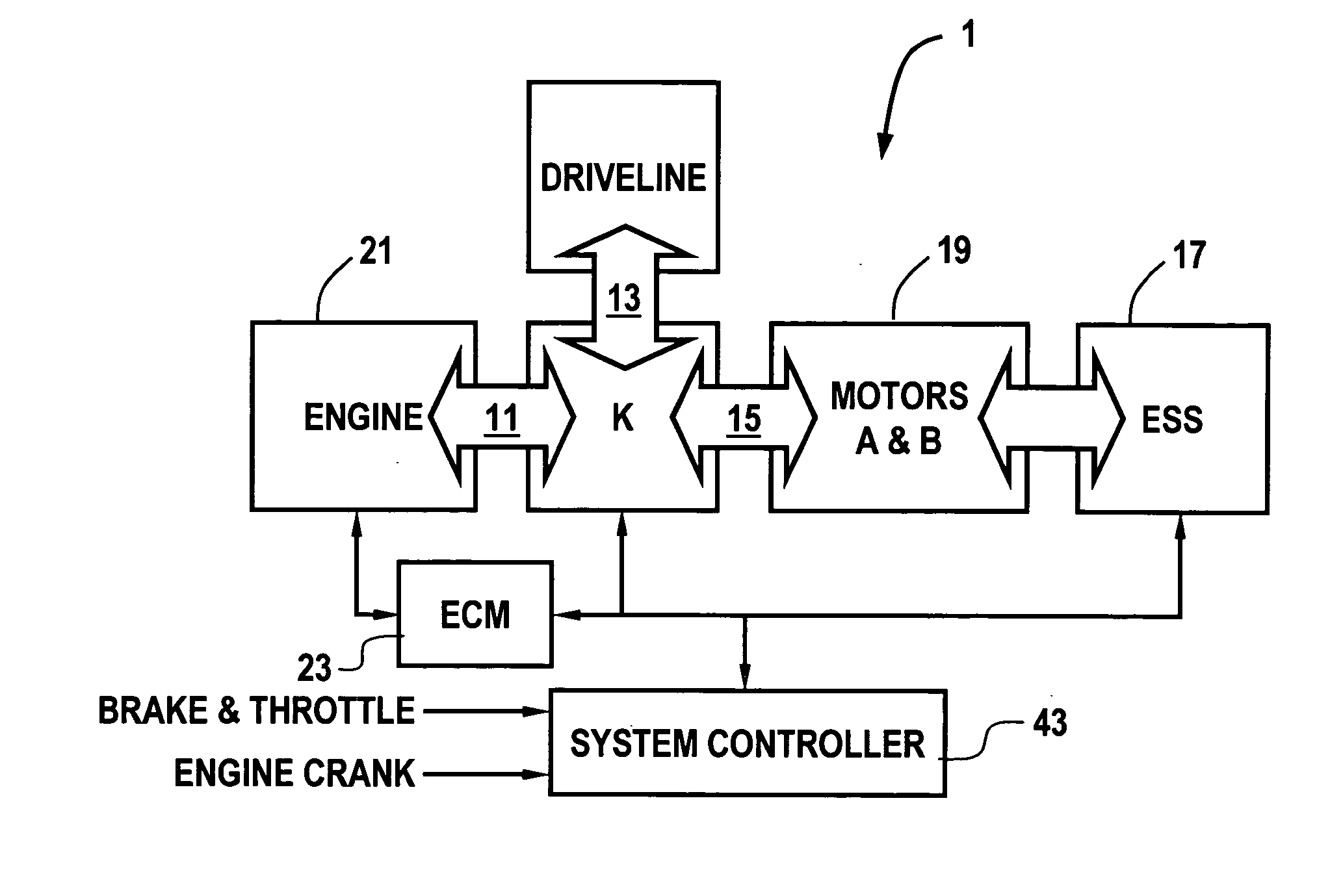
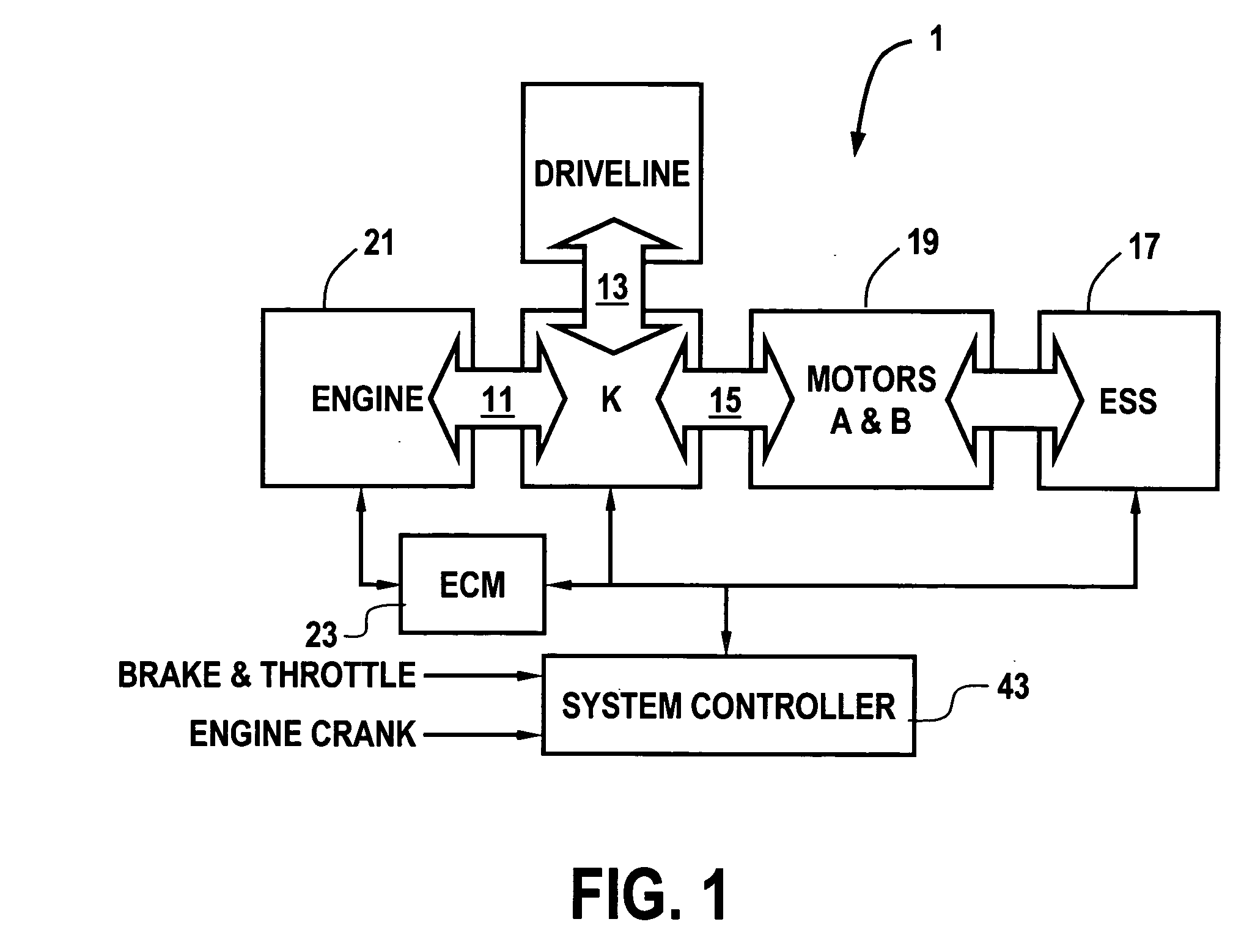
  • Figure 1
    Figure 1
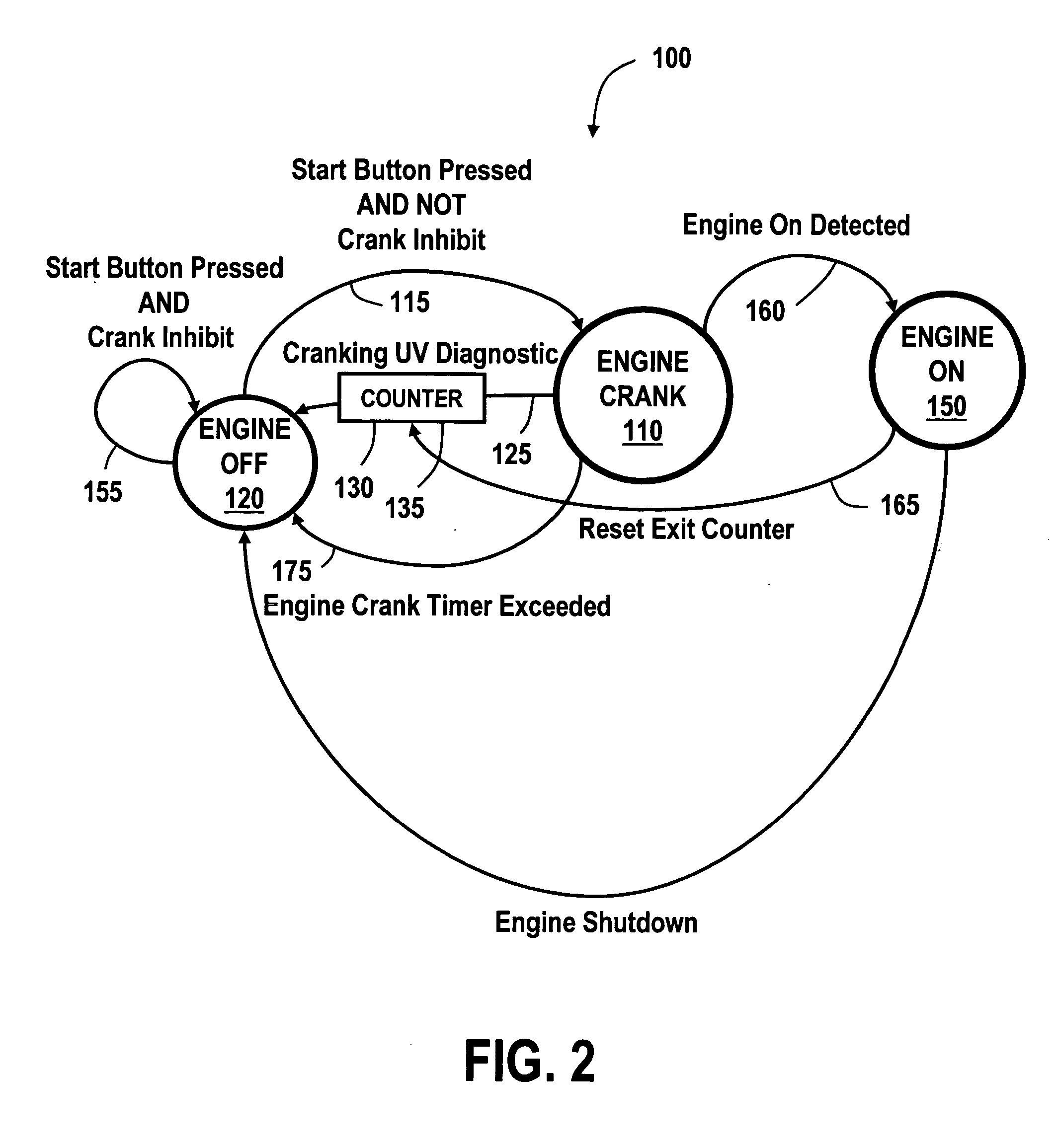
  • Figure 2
    Figure 2
  • Figure 3
    Figure 3
Patent Text Reader

Abstract

A method for controlling the cranking of an engine of a vehicle powertrain system having a rechargeable energy storage system that is adapted to provide electric power to an electric machine, wherein the system is adapted to exit from the engine crank state as a function of an output voltage of the energy storage system to the electric machine during the crank state, if the output voltage is less than a crank undervoltage threshold for a predetermined crank time. According to the method, the crank undervoltage threshold is a function of the number of failed start attempts, generally decreasing as a function of the number of failed start attempts. The predetermined crank time is a function of a magnitude of a difference between the output voltage and the crank undervoltage threshold.
Need to check novelty before this filing date? Find Prior Art

Description

TECHNICAL FIELD

[0001] The invention is generally related to undervoltage protection for energy storage systems during engine cranking. More particularly, the invention is related to undervoltage protection of the energy storage system of a hybrid electric vehicle powertrain system during engine cranking. BACKGROUND OF THE INVENTION

[0002] Hybrid electric vehicle powertrain systems frequently utilize a high voltage energy storage system, such as a battery pack, to provide electric energy to an electric drive motor to produce the necessary output torque to crank the combustion engine. Under most conditions, the battery pack has adequate energy capability and capacity to crank and start the combustion engine. However, under certain circumstances the capacity of the battery may not be sufficient to start the engine. For example, in extremely cold ambient temperature conditions the state of the fuel and its ability to be delivered to the engine, high frictional losses and other factors ...

Examples

Embodiment Construction

[0015] With reference first to FIG. 1, a block diagram of an exemplary dual-motor, electrically variable transmission powertrain system 1 of a hybrid electric vehicle to which the present invention is applicable is illustrated. The powertrain system 1 includes a diesel compression ignition engine, a vehicle driveline and a pair of electric machines (also referred to herein as electric motors or motors). The motors (identified as A and B), driveline and engine are operatively coupled to one another, for example, through a coupling means (K) comprising one or more planetary gearsets and selective coupling paths established in accordance with application and release of various torque transfer devices, e.g., clutches. The engine is coupled (11) to the coupling means at a mechanical input thereof. The driveline is coupled (13) to the coupling means at a mechanical output thereof. The motors are coupled (15) to the coupling means at various rotating members of the planetary gearsets. Negl...