
Vibration isolator and attachment method thereof
a technology of vibration isolator and isolator body, which is applied in the direction of machine supports, transportation and packaging, etc., can solve the problems of generating unusual noises such as squeaking noises, preventing the generation of strange noises, and maintaining the vibration isolating characteristics. , to achieve the effect of maintaining the adhesion state further more satisfactorily, preventing the generation of strange noises, and satisfying the maintenance of steering stability
- Summary
- Abstract
- Description
- Claims
- Application Information
AI Technical Summary
Benefits of technology
Problems solved by technology
Method used
Image

Examples
Embodiment Construction
[0028] The embodiments of the invention will be hereinafter described with reference to examples shown in the accompanying drawings.
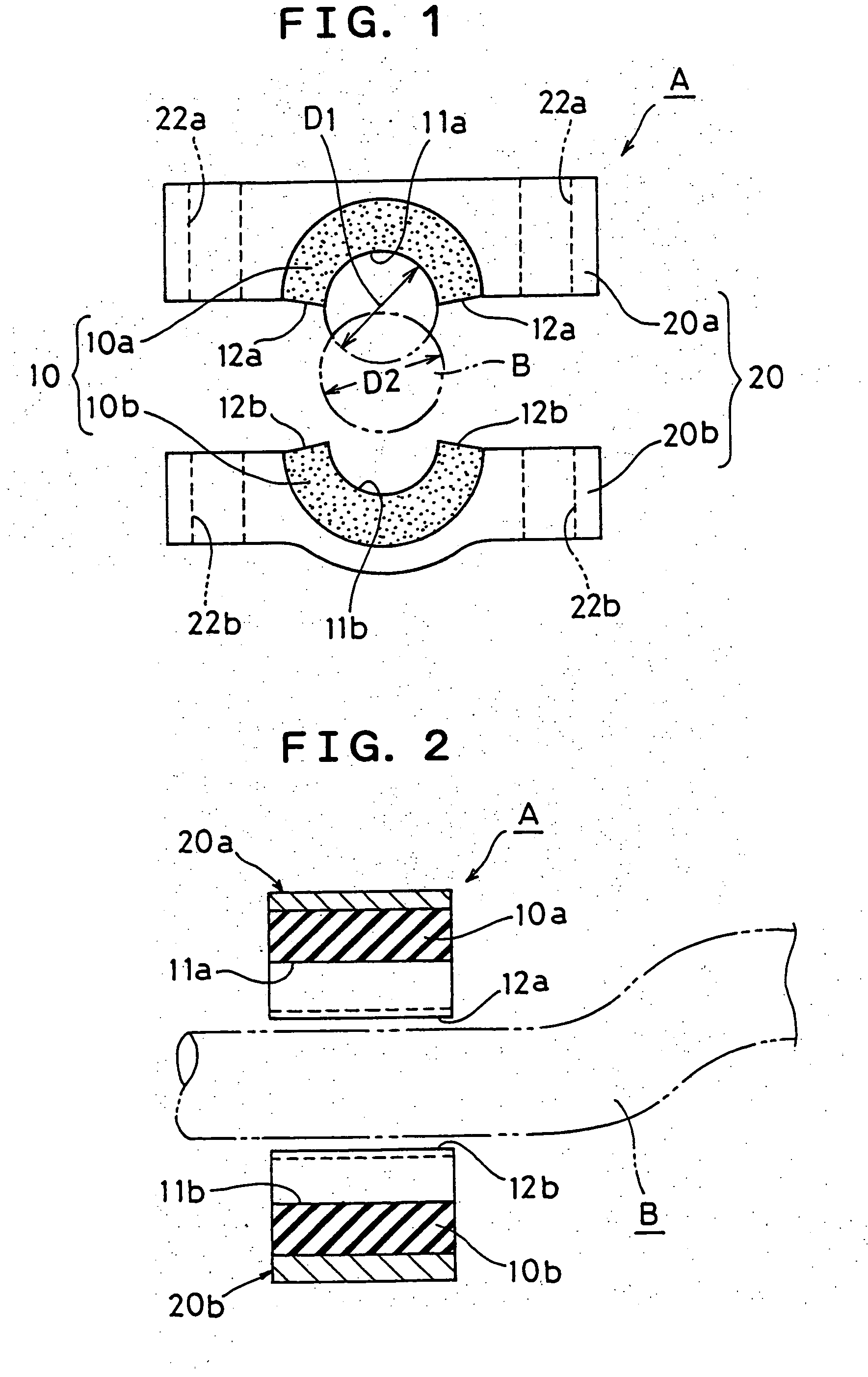
[0029]FIG. 1 is a front elevation of a vibration isolator of this invention showing a separated state prior to its attachment to a bar member;
[0030]FIG. 2 is a longitudinal sectional view of FIG. 1;
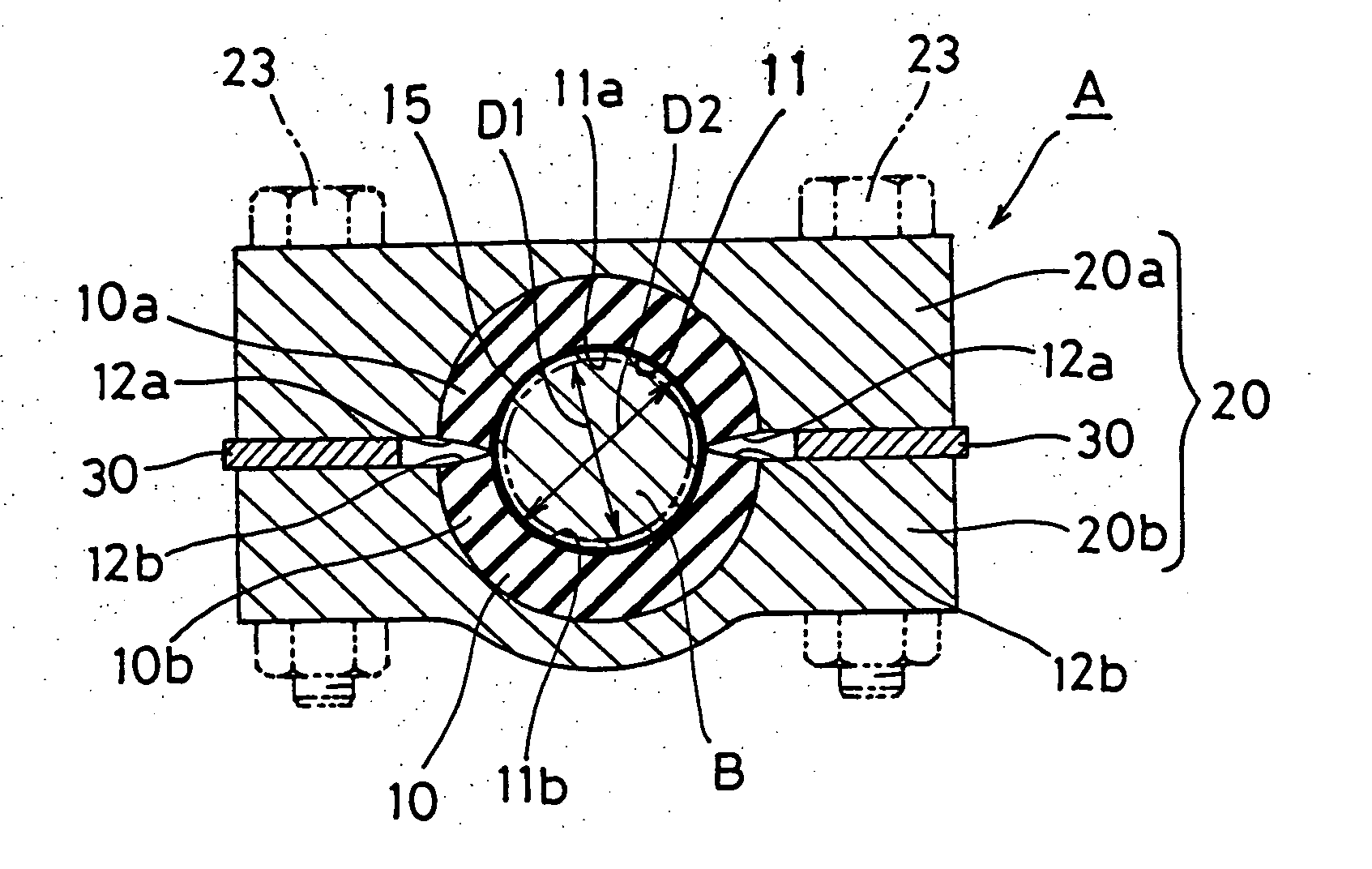
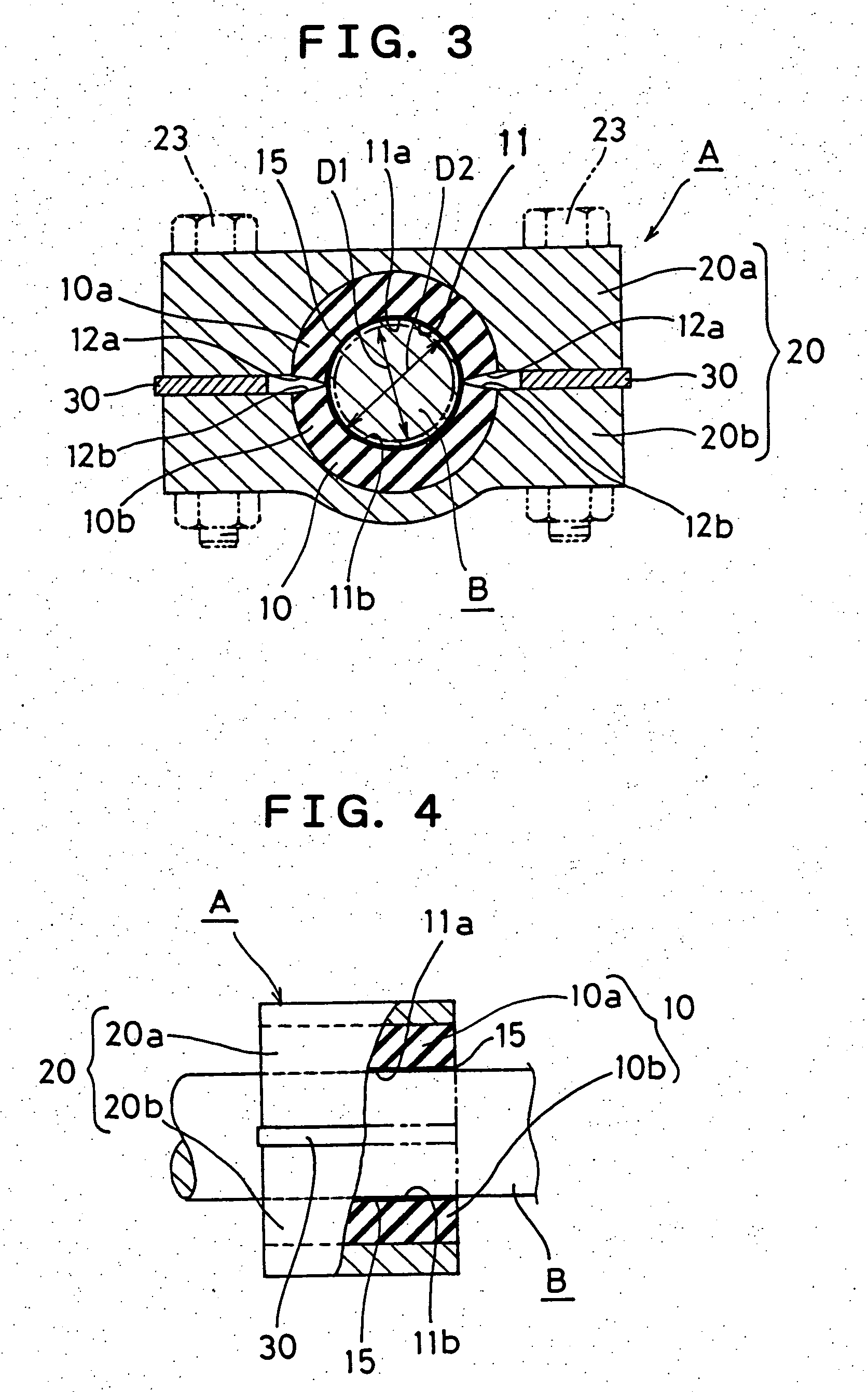
[0031]FIG. 3 is a sectional view of the vibration isolator in FIG. 1 upon adhering to the bar member;
[0032]FIG. 4 is a side elevational view in partial cross-section of the vibration isolator in FIG. 3 in the adhered state; and
[0033]FIG. 5 is a sectional view similar to FIG. 3, but showing the state that half bracket members are completely locked together.
[0034] The illustrated example shows a case of the vibration isolator A used as a stabilizer bushing. The vibration isolator A includes a bushing main body 10 made of rubber elastomer assuming a thick-walled cylinder shape and having a bore 11 through which a bar member B as a stabilizer bar passes, and ...
PUM
| Property | Measurement | Unit |
|---|---|---|
| Thickness | aaaaa | aaaaa |
| Diameter | aaaaa | aaaaa |
Abstract
Description
Claims
Application Information
 Login to View More