Method for controlling sagging of a power transmission cable

a technology of power transmission cable and bare conductor, which is applied in the field of electric power transmission, can solve the problems of slowing down the technology's acceptance, low modulus of elasticity of supporting cores and achieves low elasticity with temperature, low cost, and low modulus of elasticity.

US20070009224A1Inactive Publication Date: 2007-01-11GIFT TECH LLC
34 Cites 14 Cited by

Patent Information

Authority / Receiving Office
US · United States
Current Assignee / Owner
Publication Date
2007-01-11
Estimated Expiration
Not applicable · inactive patent

Smart Images

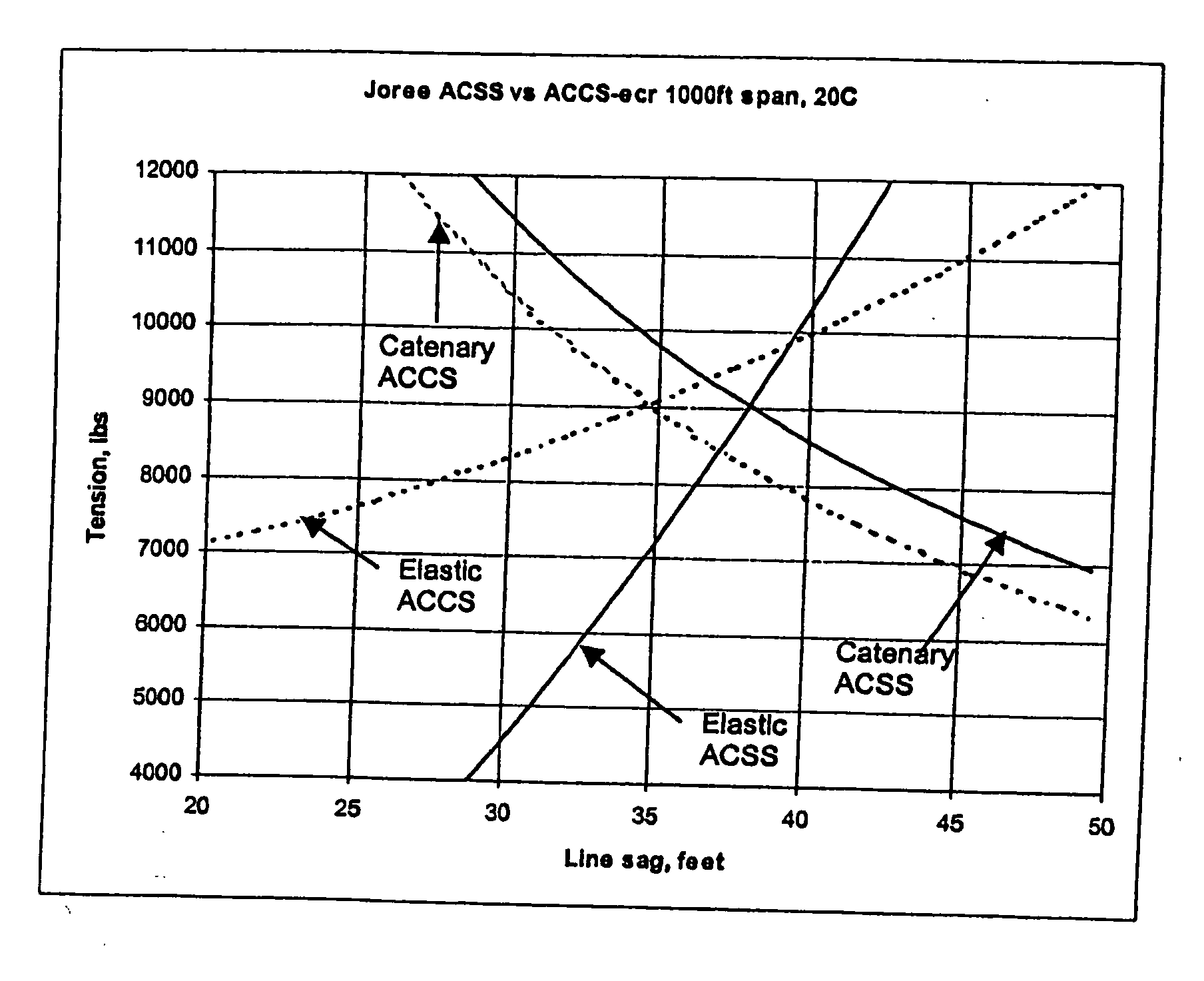
  • Figure 1
    Figure 1
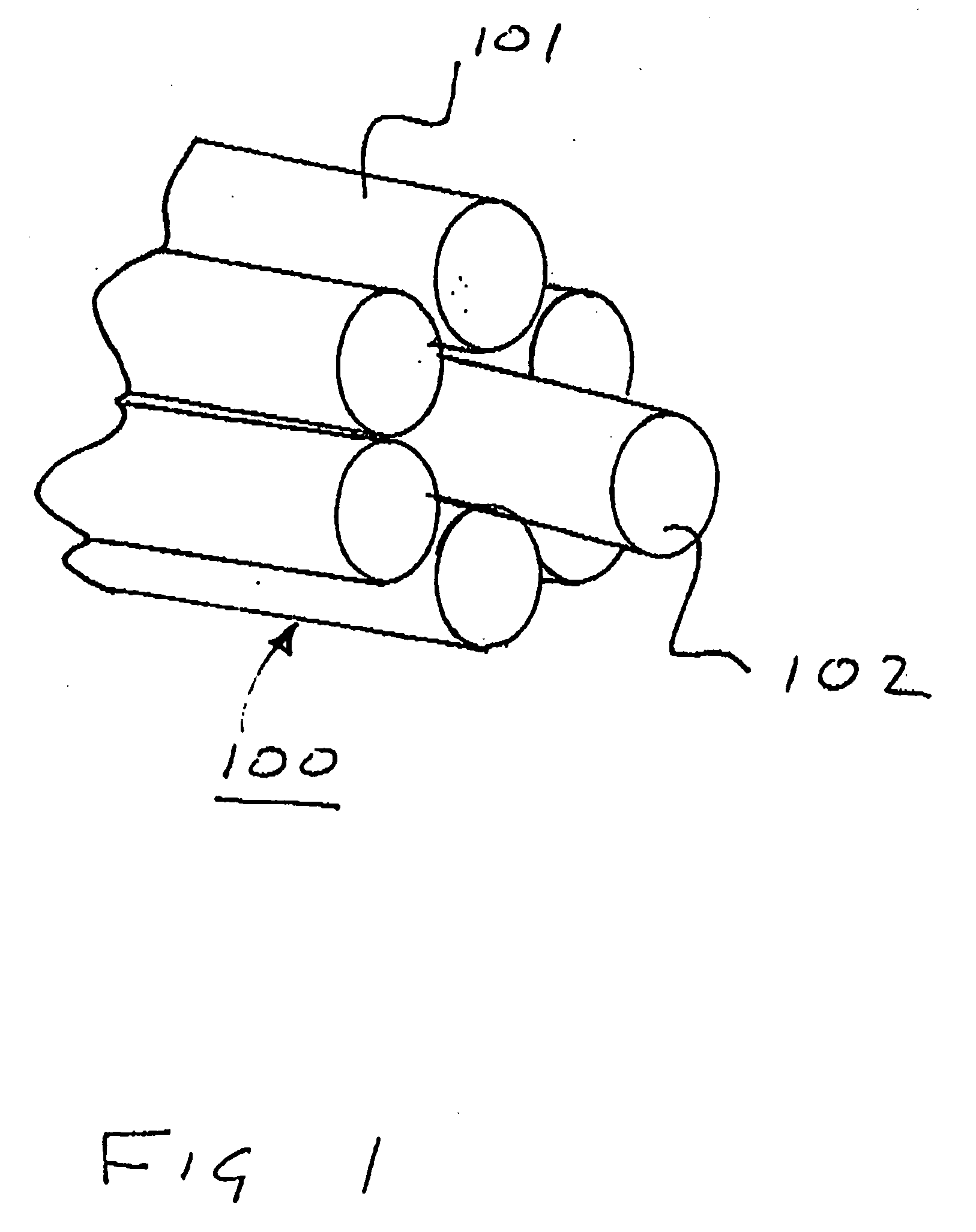
  • Figure 2
    Figure 2
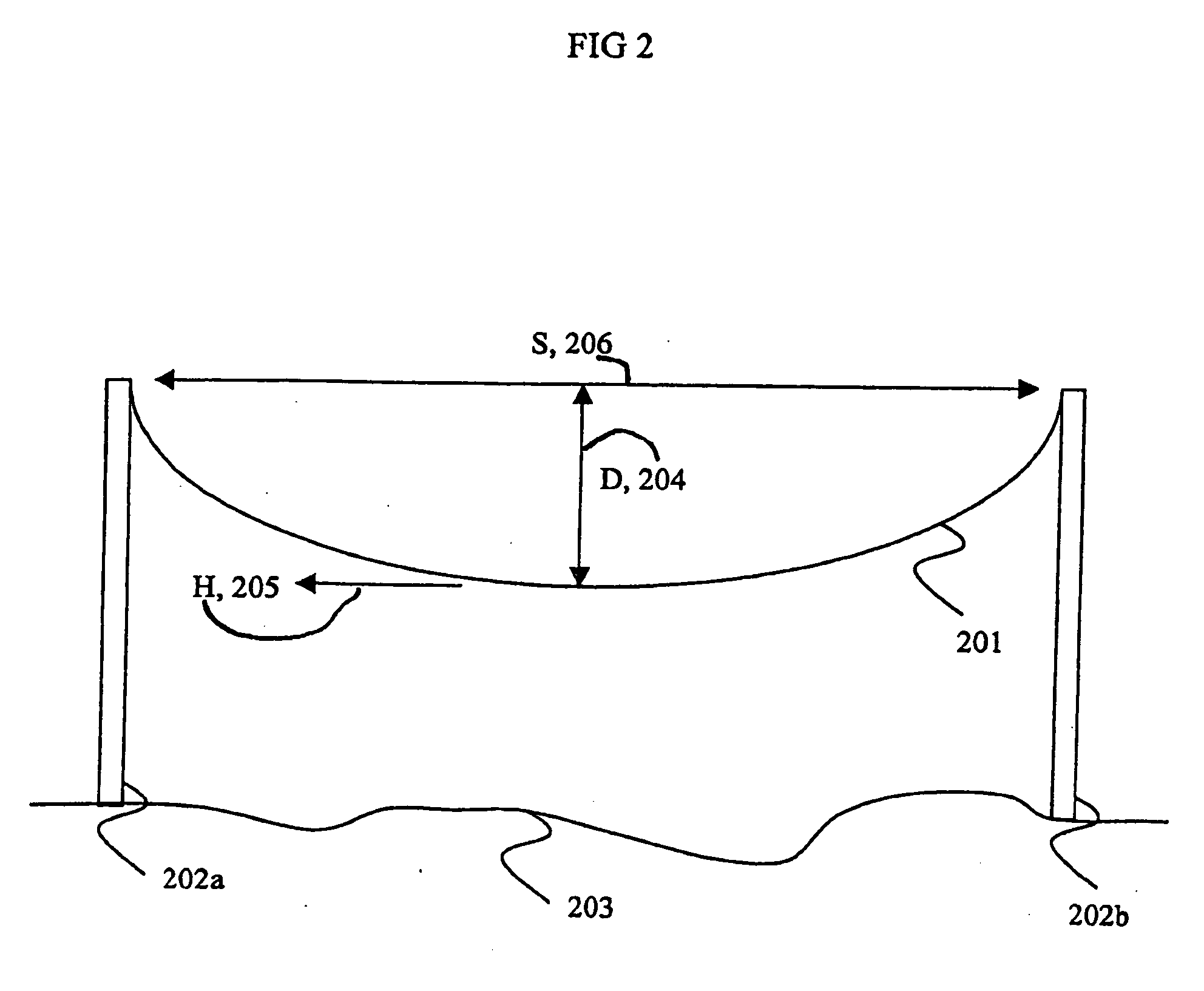
  • Figure 3
    Figure 3
Patent Text Reader

Abstract

A method is provided for controlling the sagging of a power transmission cable hang between two towers. The cable has a first supporting portion and a second conductive portion. The method includes a first act of mounting the cable between the two towers, such that when mounted between the towers the cable has a cable load. The method further includes a second act of stretching the first portion to have a cable sag less than a desired sag, a third act of releasing at least some of the tension to obtain the desired sag, and a fourth act calculating a load magnitude carried by the first portion. If the load magnitude is less than a desired load magnitude the method includes repeating the second, third and fourth acts until the load magnitude is at the desired level.
Need to check novelty before this filing date? Find Prior Art

Description

CROSS-REFERENCE TO RELATED APPLICATION(S)

[0001] This application is based upon and claims priority on U.S. Provisional Application No. 60 / 698,429 filed on Jul. 11, 2005, the contents of which are fully incorporated herein by reference.TECHNICAL FIELD

[0002] The present invention relates generally to electrical power transmission, and more particularly to a high temperature bare conductor cable with an elastic or composite supporting core for electrical power transmission lines and a method for tensioning the conductor cable, and still more particularly to a conductor cable incorporating a composite supporting core with a low temperature coefficient of expansion, and still more particularly to a tensioning method for a composite core cable that reduces the sag induced in the cable by thermal expansion. BACKGROUND INFORMATION AND DISCUSSION OF RELATED ART

[0003] Electrical cables used in high voltage overhead transmission lines are typically bare conductors of aluminum with a central...

Examples

Embodiment Construction

[0024] In FIGS. 1 through 4, like reference numerals refer to like components in the various views.

[0025] Composite core technologies such as glass fiber and carbon fiber in resin have a number of advantages for use as a conductor support core. These advantages include, among other things, low thermal expansion, low weight, low creep, high internal damping, high elasticity, high corrosion resistance, and high ultimate tensile strength.

[0026] Glass fiber also has the advantage that it is of a similar cost to steel while carbon is more expensive. Thus, a high ampacity high temperature glass fiber composite supported cable, Aluminum Conductor Composite Supported, ACCS, cable having a glass fiber composite will enable a transmission system with greater ground clearance under high current load, high resistance to Aeolian vibration, and longer life, for no extra cost.

[0027] In an exemplary embodiment, the invention is characterized by a bare conductor cable with a composite core. The c...