[0010] The cheese shred products obtained by the method and system of the present invention have cross-sectional shapes substantially corresponding to the shapes of the orifices in the die plate.
Processing the cheese
mass at temperatures less than about 50° F. improves the microbiological stability of the product. It also reduces and avoids heat distortions from occurring in the shred product shape. It additionally eliminates the need for rapid
quenching of hot cheese extrudates. This inventive method and system avoids the need for
process control over complex systems incorporating heating jackets or
internal heating systems in the extruder,
piping, pumps, dies, etc. This reduces
process complexity, requirements and costs. The cheese shreds may be deposited directly on
food products or in
food packaging tray cells as part of a food product
manufacturing line. For instance, this
automated method and system eliminates the need to use intensive manual labor to place cheese shreds as toppings upon pizza products or in
food packaging tray cells, or difficult to control conventional shred sprinkling systems like vibratory belts. Alternatively, they may be collected for packaging as a shredded cheese product per se.
[0011] In one particular embodiment, the cheese shreds may be deposited directly onto an intermediate food product, such as a dough-containing products like pizza, facilitating food production such as by minimizing
processing losses and weight variability. The types of cheese which may be processed according to embodiments of this invention include natural cheeses, process cheeses, and cheese analogs or substitutes, or mixtures thereof. In one embodiment, the cheese is mozzarella or other pasta filata cheese, or other varieties of cheese, such as Emmental (Swiss), Cheddar, Gouda, Edam, etc. In one particular embodiment, cheese shreds are produced from refrigerated, high-
moisture content cheese with the method and system of embodiments herein. In a more particular embodiment, the cheese being processed is high
moisture-content pasta filata cheese, such as mozzarella loaves, bricks, etc., having at least about 52%
moisture-content. The methods in accordance with embodiments of this invention make it feasible to extrude high-moisture content cheese at temperatures less than about 50° F. in strand-form.
[0012] In one embodiment, the high-moisture cheese may comprise refrigerated
mozzarella cheese having a moisture content of at least about 52%, which is processed under unheated conditions in the inventive shredding system. In a particular embodiment, the cheese pieces are introduced into, processed within the extruder, and extruded in strand-form at the die plate, at a temperature less than about 45° F., more particularly, less than about 40° F. In one aspect, refrigerated cheese is fed into the extruder chamber, and the cheese
mass formed therefrom in the extruder is conveyed to the die plate, while being maintained under
refrigerated temperature conditions. In one aspect, the temperature of the cheese when extruded at the die plate is about 32° F. to about 45° F., particularly about 35° F. to about 45° F. In this manner, it is possible to directly convert refrigerated or otherwise chilled cheese pieces into shreds of approximately uniform dimensions without the need to heat the cheese to flowable or
molten state to assist
extrusion, which avoids the need to provide post-
extrusion quench procedures to stabilize and avoid shape
distortion from occurring in otherwise hot extruded shapes.
[0016] The extruded cheese, whether shredded or sliced, can be automatically portioned and placed in a food
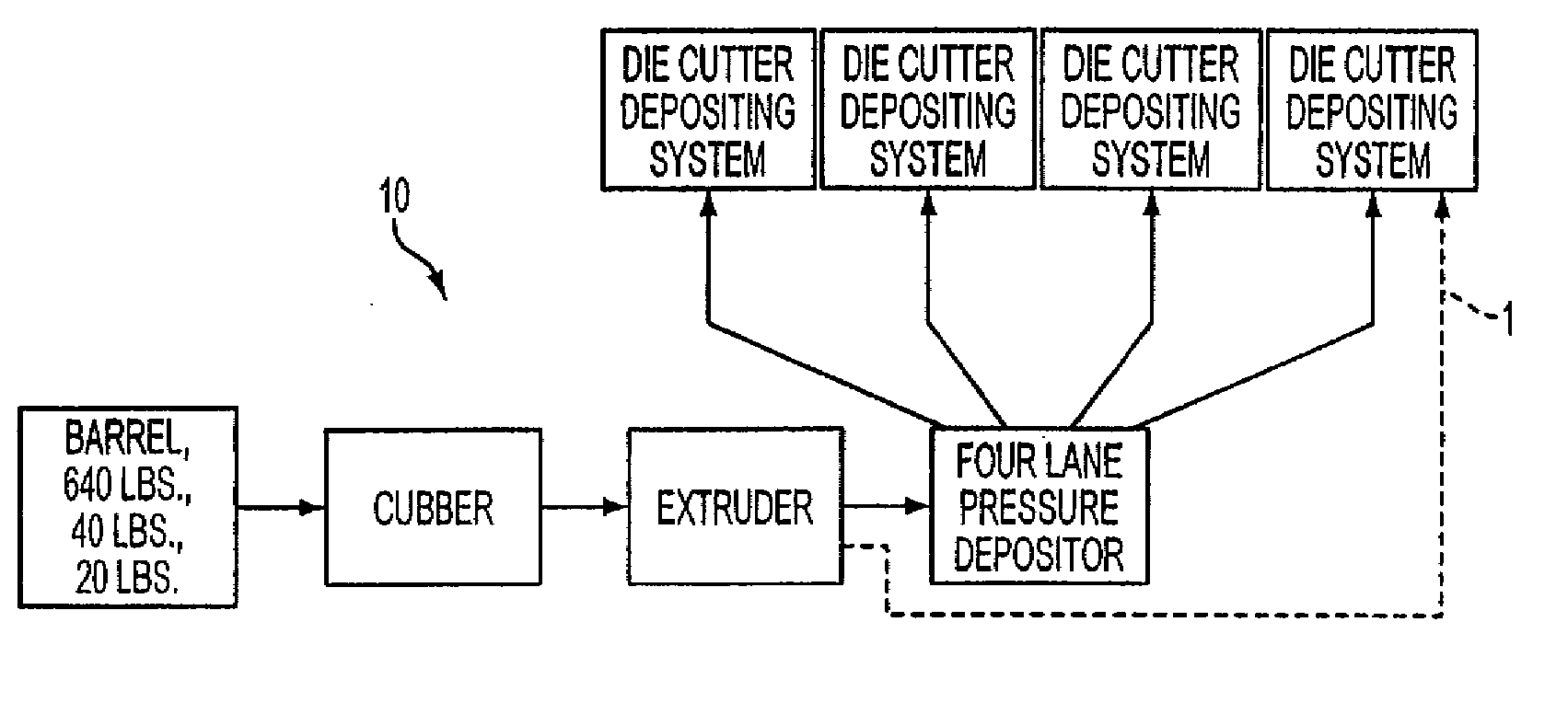
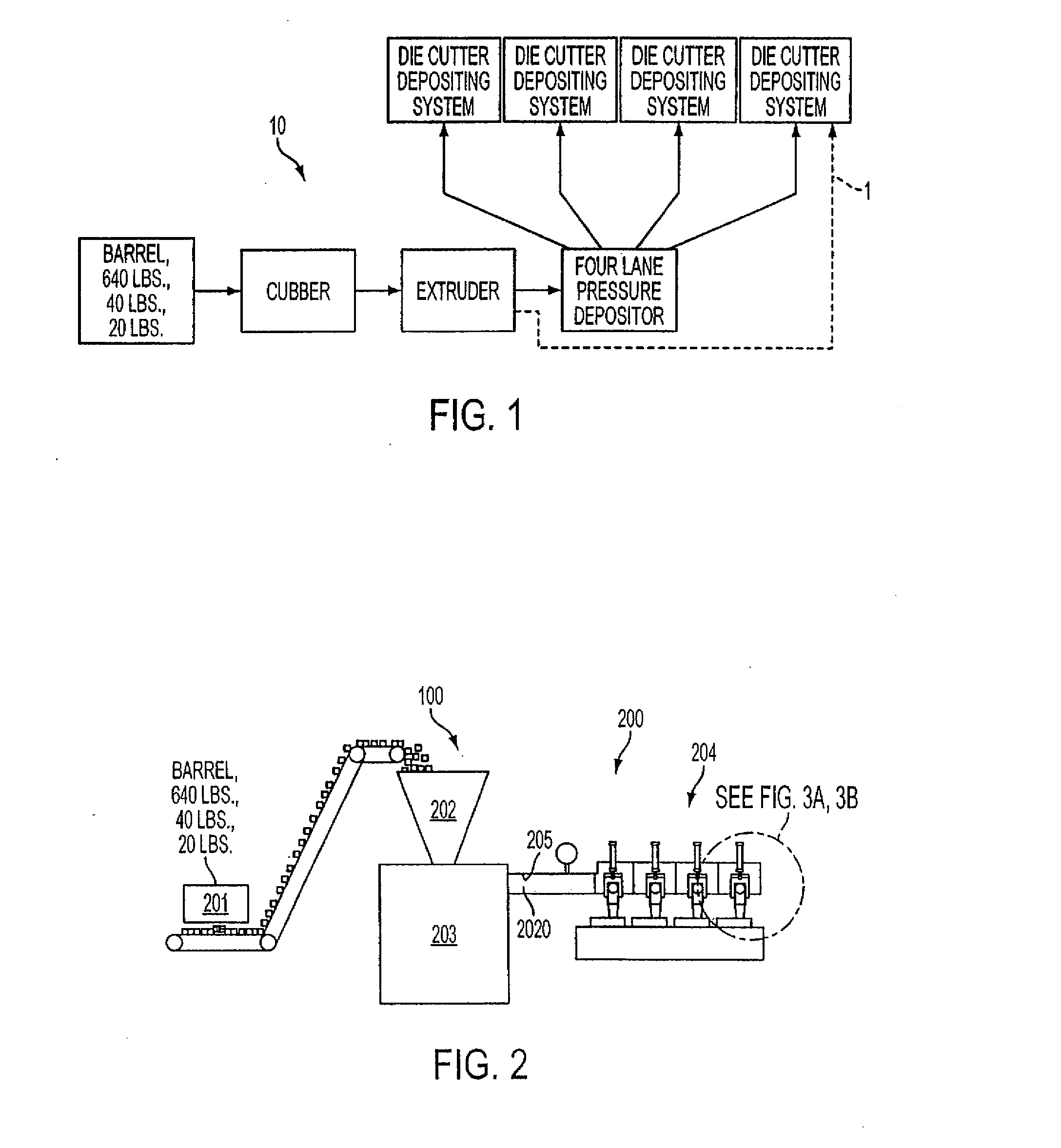
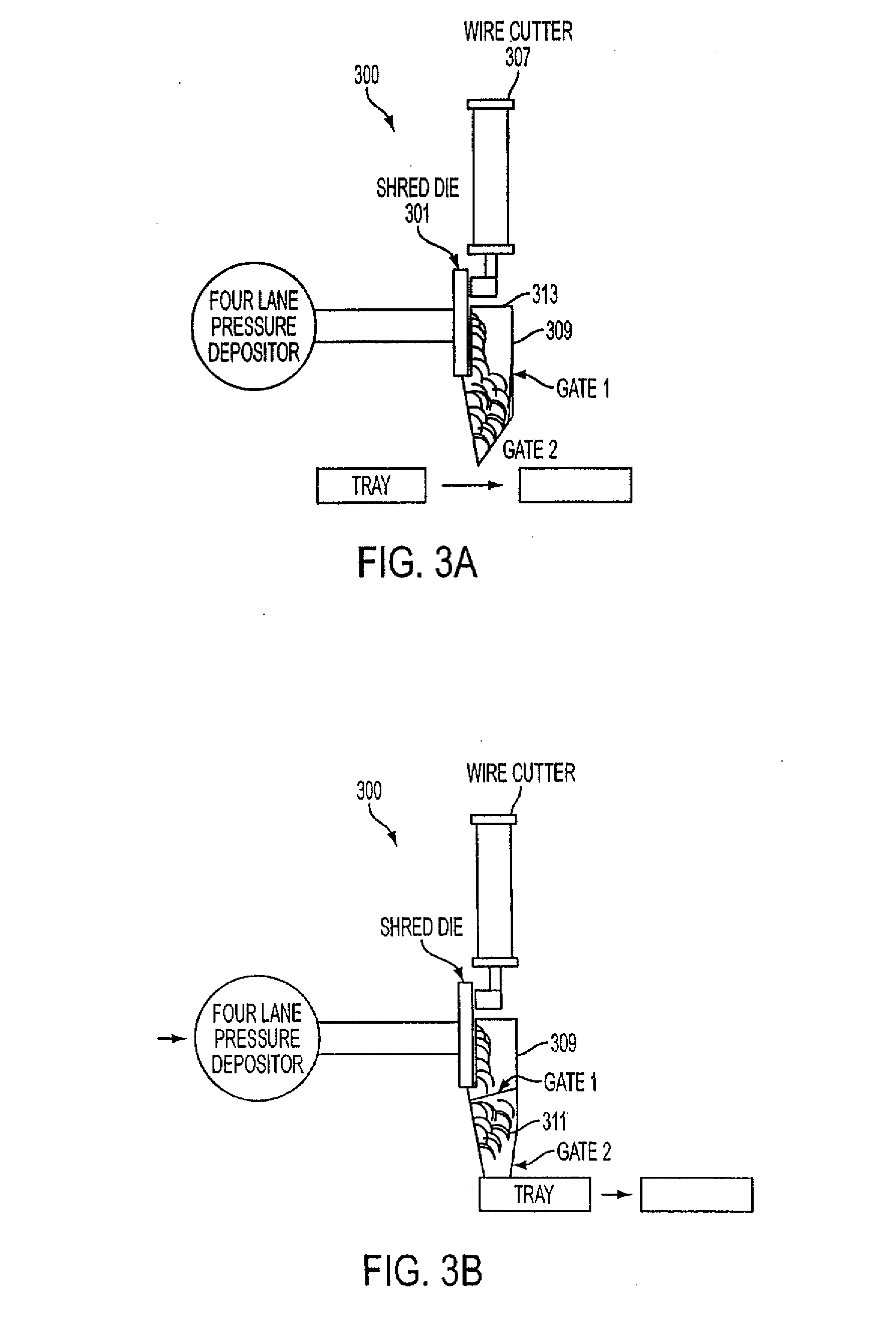
package in order to minimize handling and reduce packaging time and costs. Methods and apparatus for portioning and placing the extruded cheese in a food packaging include advancing the generally homogenous cheese mass into a portioning chamber, followed by blocking an exit of the portioning chamber. Once the exit is blocked, a metering chamber can be filled with some of the generally homogenous cheese mass. Once the metering chamber is filled, the entrance of the portioning chamber can be blocked. Next, the exit of the portioning chamber can be unblocked and the metering chamber emptied to extrude some of the cheese mass through openings. Once extruded through the openings, the extruded cheese can be
cut and dropped into a
package being advanced on a conveyor. Another package can be advanced to a position for receiving the next extruded cheese mass, and the process repeated. One or more portioning chambers and associated equipment can be connected to a common pump, so that multiple conveyor lines of packages can be filled.


 Login to View More
  Login to View More