

Bi-illuminant dichromatic reflection model for image manipulation
a reflection model and dichromatic reflection technology, applied in image enhancement, image analysis, instruments, etc., can solve the problems of not being able to recognize objects by computers, not being able to process images in other directions, and significant possibilities for false positives and false negatives for shadow recognition
- Summary
- Abstract
- Description
- Claims
- Application Information
AI Technical Summary
Benefits of technology
Problems solved by technology
Method used
Image

Examples
Embodiment Construction
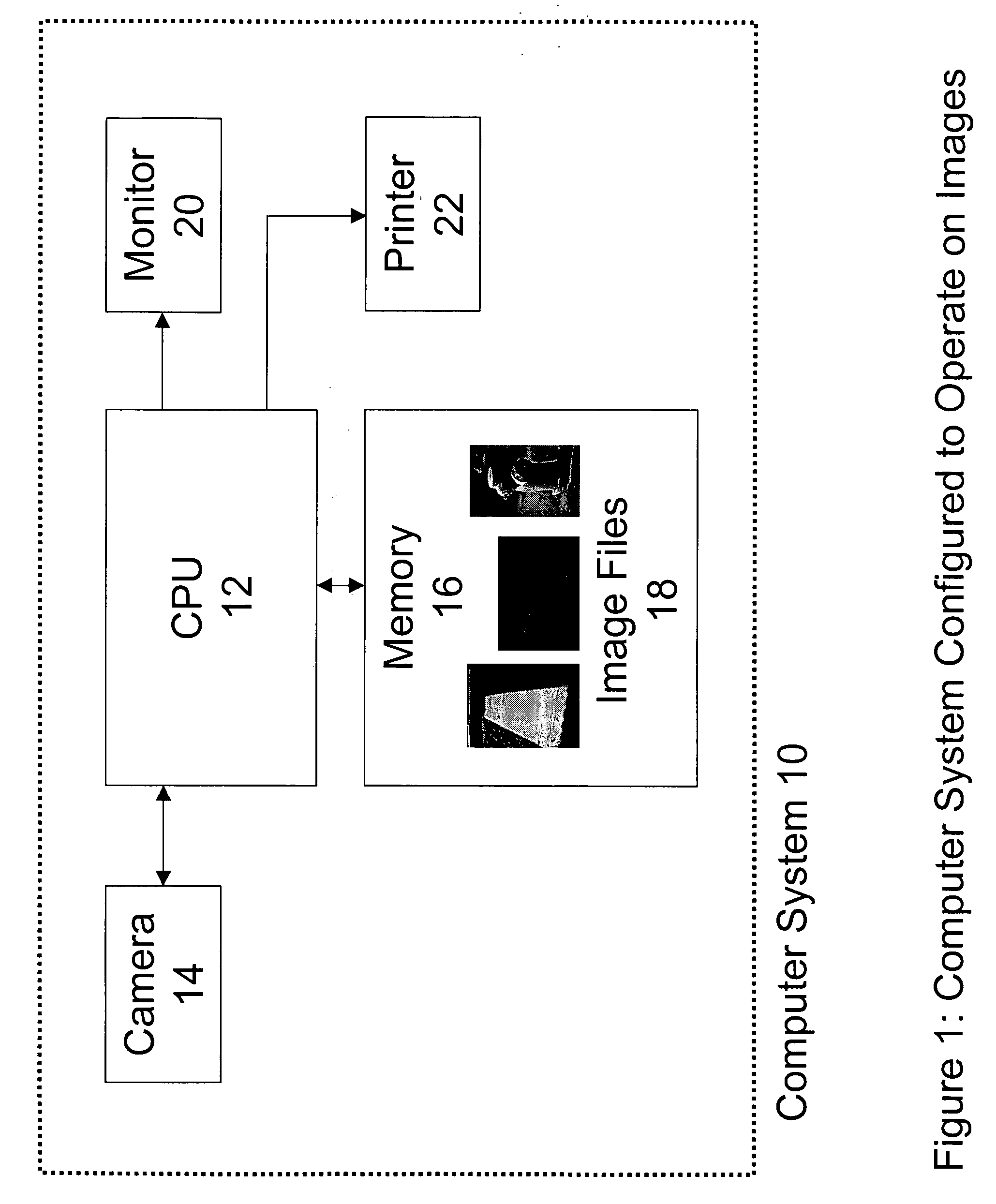
[0026] Referring now to the drawings, and initially to FIG. 1, there is shown a block diagram of a computer system 10 arranged and configured to perform operations related to images. A CPU 12 is coupled to a device such as, for example, a digital camera 14 via, for example, a USB port. The digital camera 14 operates to download images stored locally on the camera 14, to the CPU 12. The CPU 12 stores the downloaded images in a memory 16 as image files 18. The image files 18 can be accessed by the CPU 12 for display on a monitor 20, or for print out on a printer 22.
[0027] Alternatively, the CPU can be implemented as a microprocessor embedded in a device such as, for example, the digital camera 14 or a robot. The CPU can also be equipped with a real time operating system for real time operations relating to images, for example, in connection with a robotic operation or an interactive operation with a user.
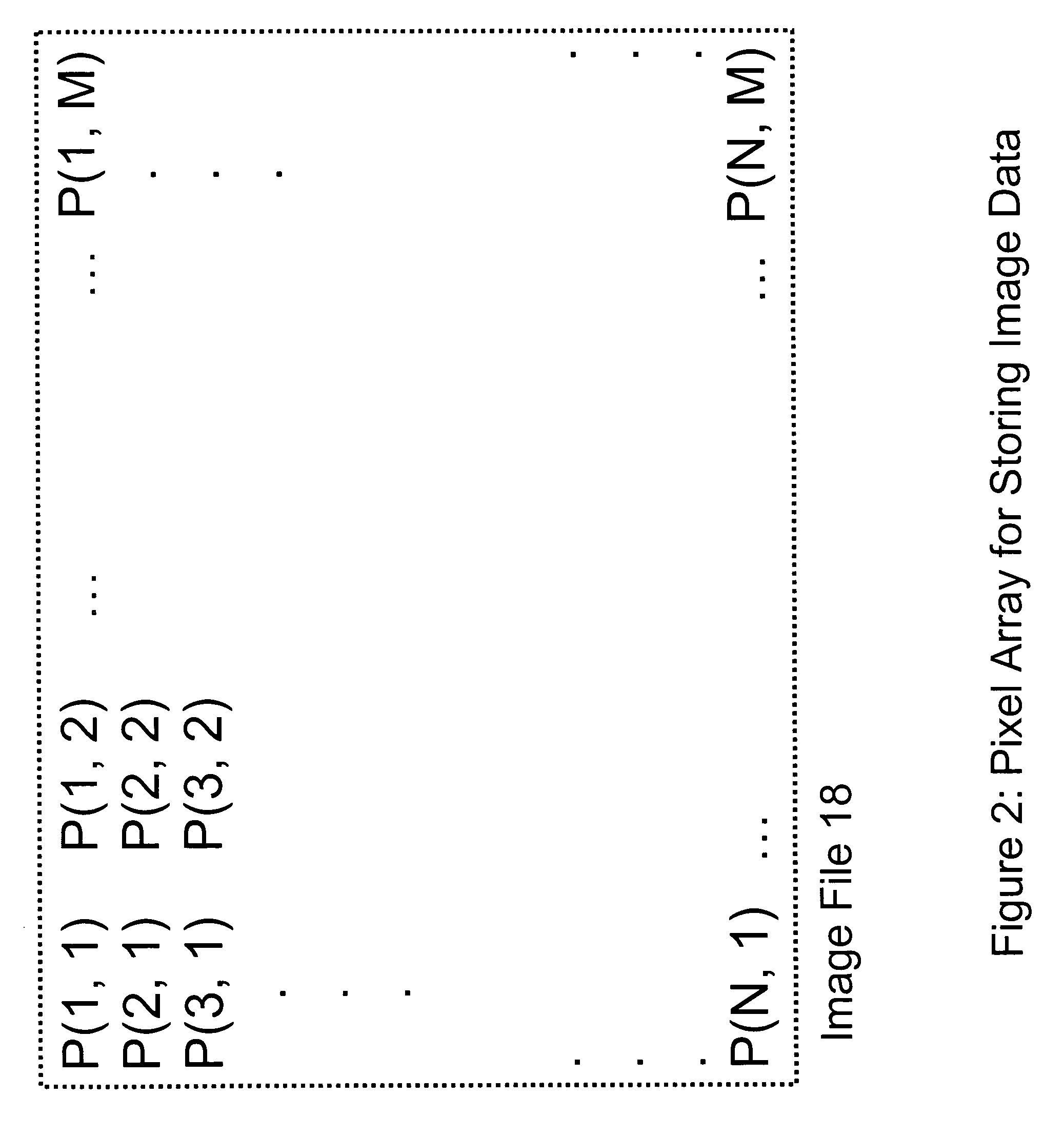
[0028] As shown in FIG. 2, each image file 18 comprises an n X m pixel array. E...
PUM
 Login to View More
 Abstract
Description
Claims
Application Information
 Login to View More