
Dual layer ceramic coating
a ceramic coating and dual layer technology, applied in the direction of coatings, metal material coating processes, chemistry apparatus and processes, etc., can solve the problems of sometimes affected durability of coatings, and achieve the effect of increasing strain tolerance and increasing durability
- Summary
- Abstract
- Description
- Claims
- Application Information
AI Technical Summary
Benefits of technology
Problems solved by technology
Method used
Image

Examples
Embodiment Construction
)
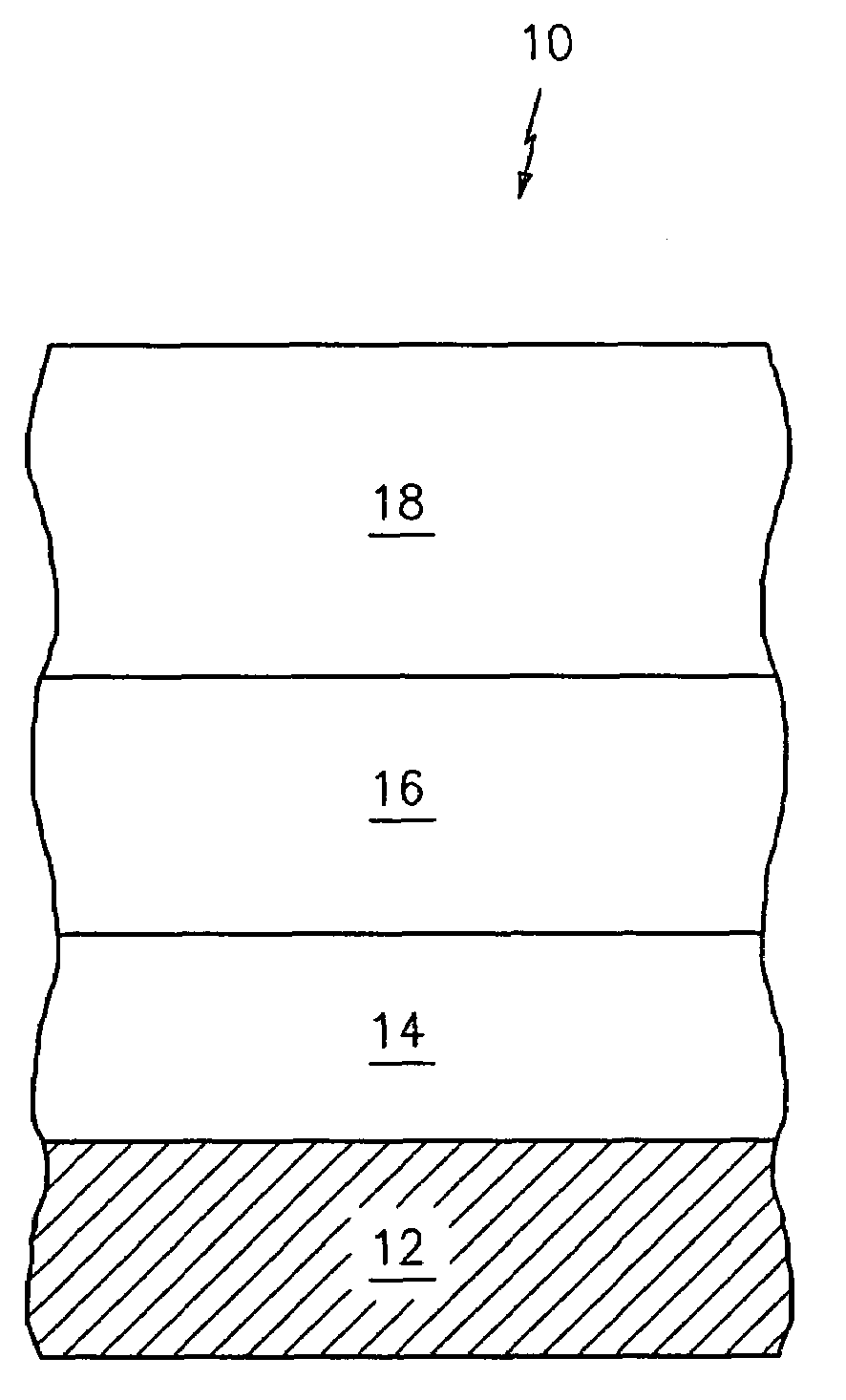
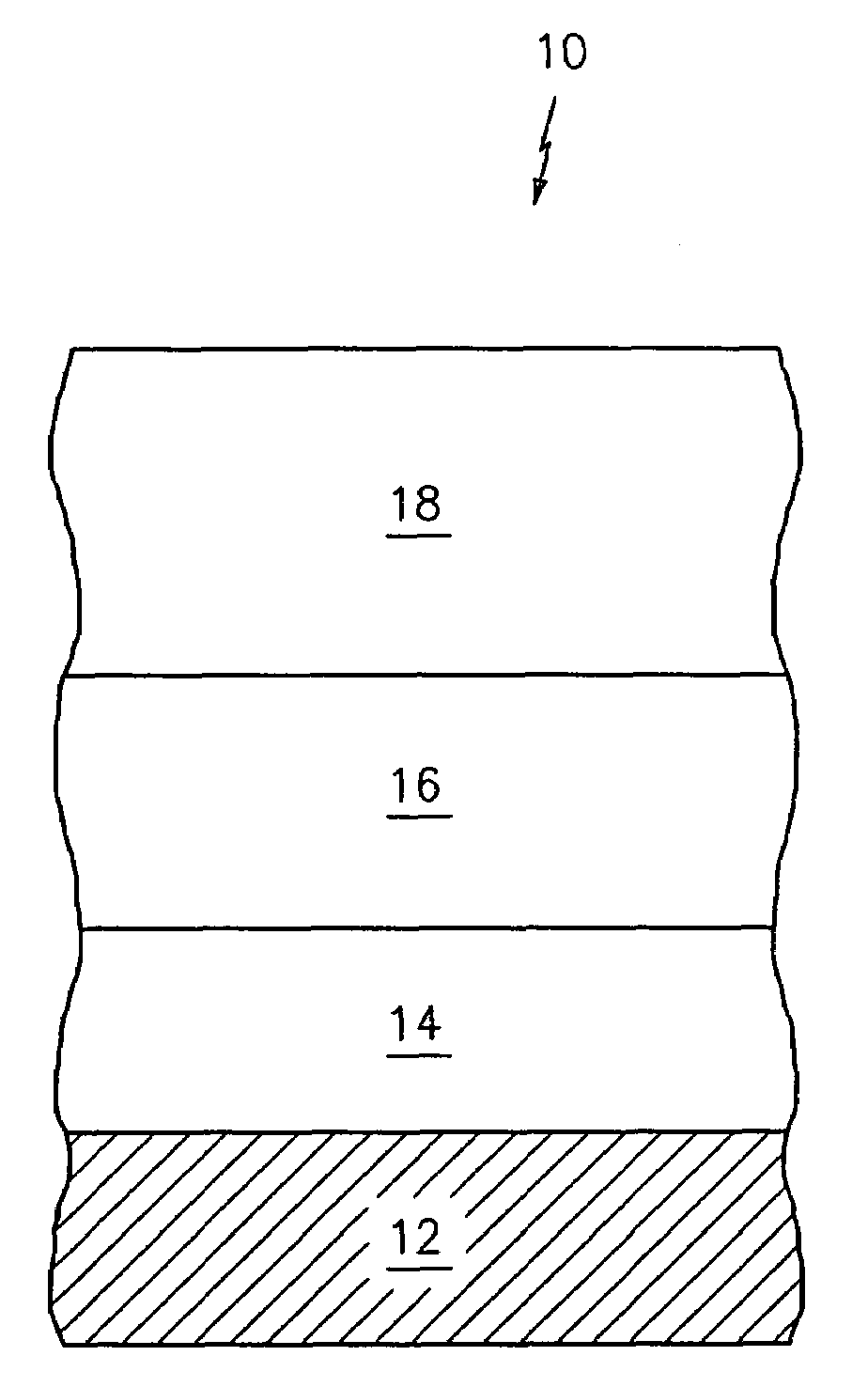
[0010]The present invention relates to a dual layer ceramic coating applied to a turbine engine component such as a blade, vane, a combustor panel or seal. The dual layer ceramic coating is capable of expanding and contracting with thermal cycles, thereby increasing strain tolerance which results in increased durability.
[0011]The turbine engine component 10 comprises a substrate 12 formed from a metallic material such as a nickel based alloy, a cobalt based alloy, a refractory metal alloy, a ceramic based or silica based alloy, or a ceramic matrix composite. A bond coat 14 is applied on top of a surface of said substrate 12. The bond coat 14 may be formed from a material selected from the group consisting of a MCrAlY, an aluminide, such as a platinum aluminide, a ceramic material, and a silica based material. The bond coat 14 may be applied using any suitable technique known in the art. Preferably, the bond coat 14 is preferably deposited using a thermal spray technique. In this te...
PUM
| Property | Measurement | Unit |
|---|---|---|
| thickness | aaaaa | aaaaa |
| temperatures | aaaaa | aaaaa |
| pressure | aaaaa | aaaaa |
Abstract
Description
Claims
Application Information
 Login to View More