
Method of forming copper wiring in semiconductor device
- Summary
- Abstract
- Description
- Claims
- Application Information
AI Technical Summary
Benefits of technology
Problems solved by technology
Method used
Image

Examples
Embodiment Construction
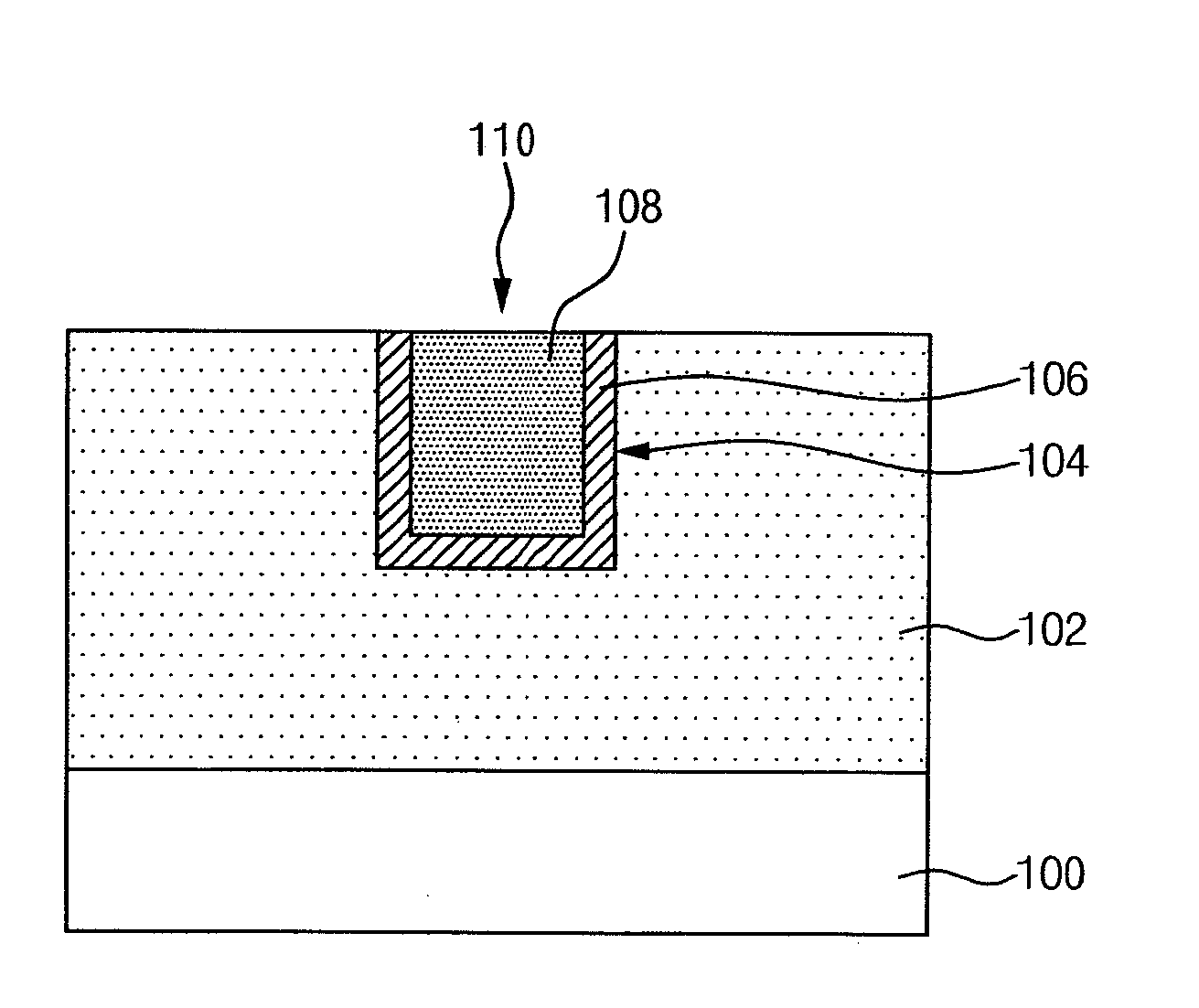
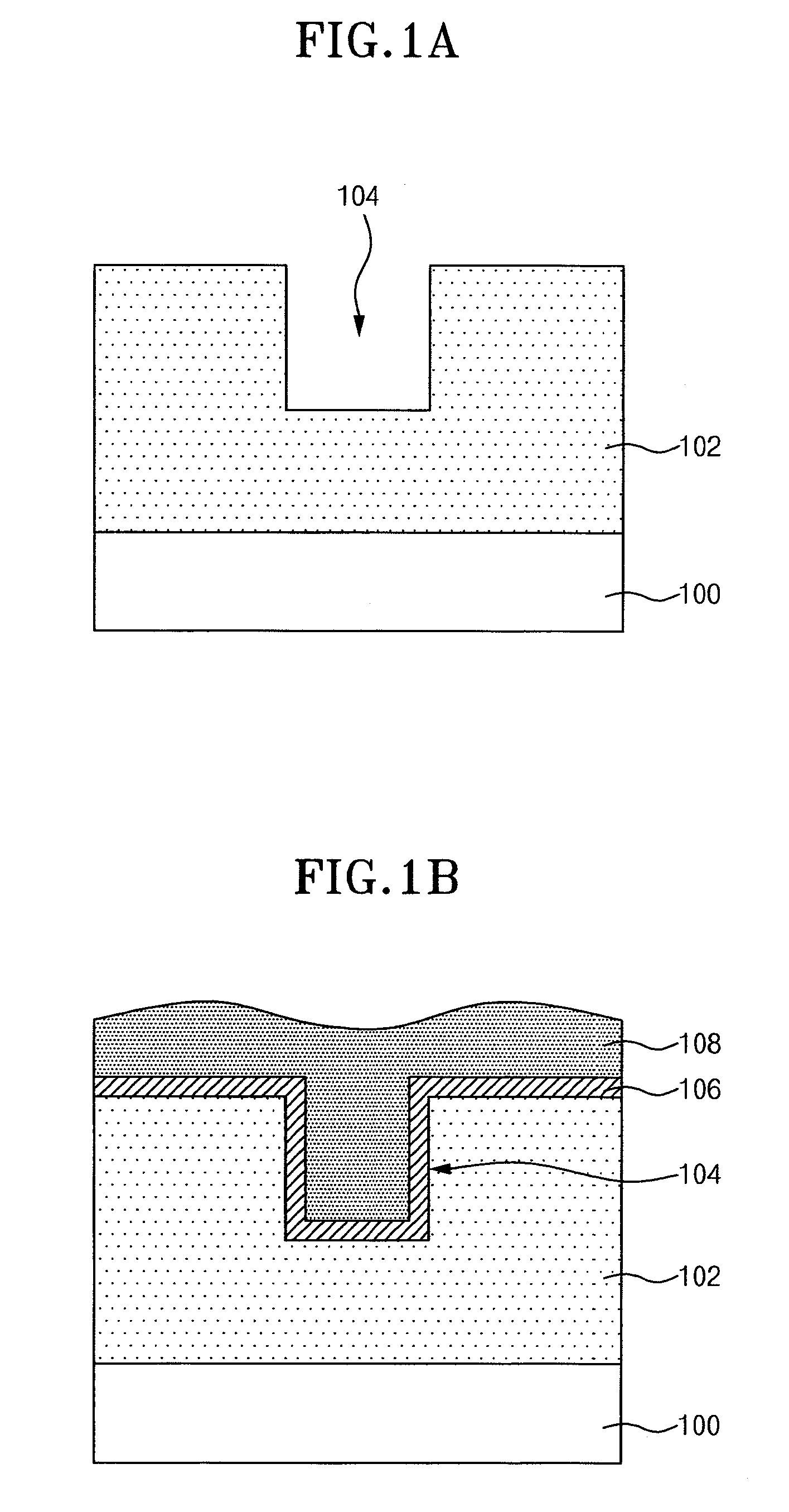
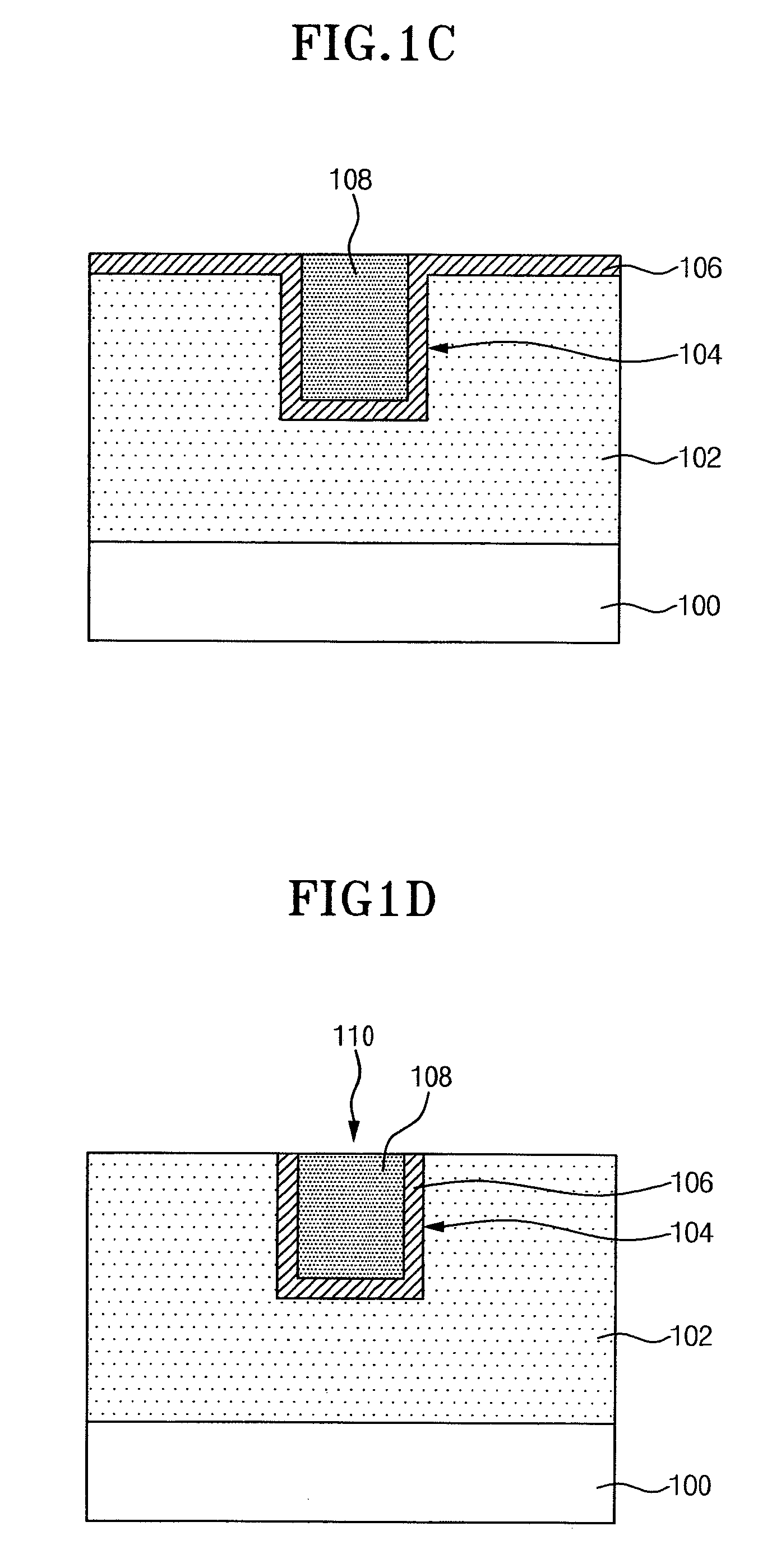
[0028]A preferred embodiment of the present invention is directed to a method of forming a copper wiring, in which a polishing for a copper film and a barrier metal film is performed in an electrochemical mechanical polishing which applies an electric field while supplying abrasive free slurry on a fixed-abrasive pad in which the abrasive particles are fixedly bonded to a pad.
[0029]Therefore, in an embodiment of the present invention, since the slurry without the abrasive particles is used, an over polishing required to remove slurry residue can be reduced and thus it can be possible to proceed a defect free process capable of restricting a dishing. Further, in an embodiment of the present invention, because it is not necessary to use another slurry for polishing a barrier metal film after polishing a copper film, it is possible to prevent complication in process and cost increase and, particularly, it is possible to reduce polishing ununiformity since it is possible to polish both ...
PUM
 Login to View More
 Abstract
Description
Claims
Application Information
 Login to View More