

Signal Space Expansion For a 16 Qam Scheme
a signal space and 16 qam technology, applied in the field of transmission and receiving a data bit stream, can solve the problems of low bit error rate, high complexity of decoder required for tcm, and common non-use of tcm in mobile communication systems, and achieve low complexity and improve the effect of bit error ra
- Summary
- Abstract
- Description
- Claims
- Application Information
AI Technical Summary
Benefits of technology
Problems solved by technology
Method used
Image

Examples
Embodiment Construction
[0083]The following paragraphs will describe various embodiments of the present invention. For exemplary purposes only, most of the embodiments are outlined independent from their implementation in a mobile environment. However, it is to be noted that the invention may be especially applicable to wireless or mobile networks, such as a UMTS communication system, WLAN, etc. in which the mobile devices have limited battery power and processing resources.
[0084]Also the detailed explanations given in the Technical Background section above are merely intended to better understand the exemplary embodiments described in the following and should not be understood as limiting the present invention to the described specific implementations of processes and functions in the mobile communication network.
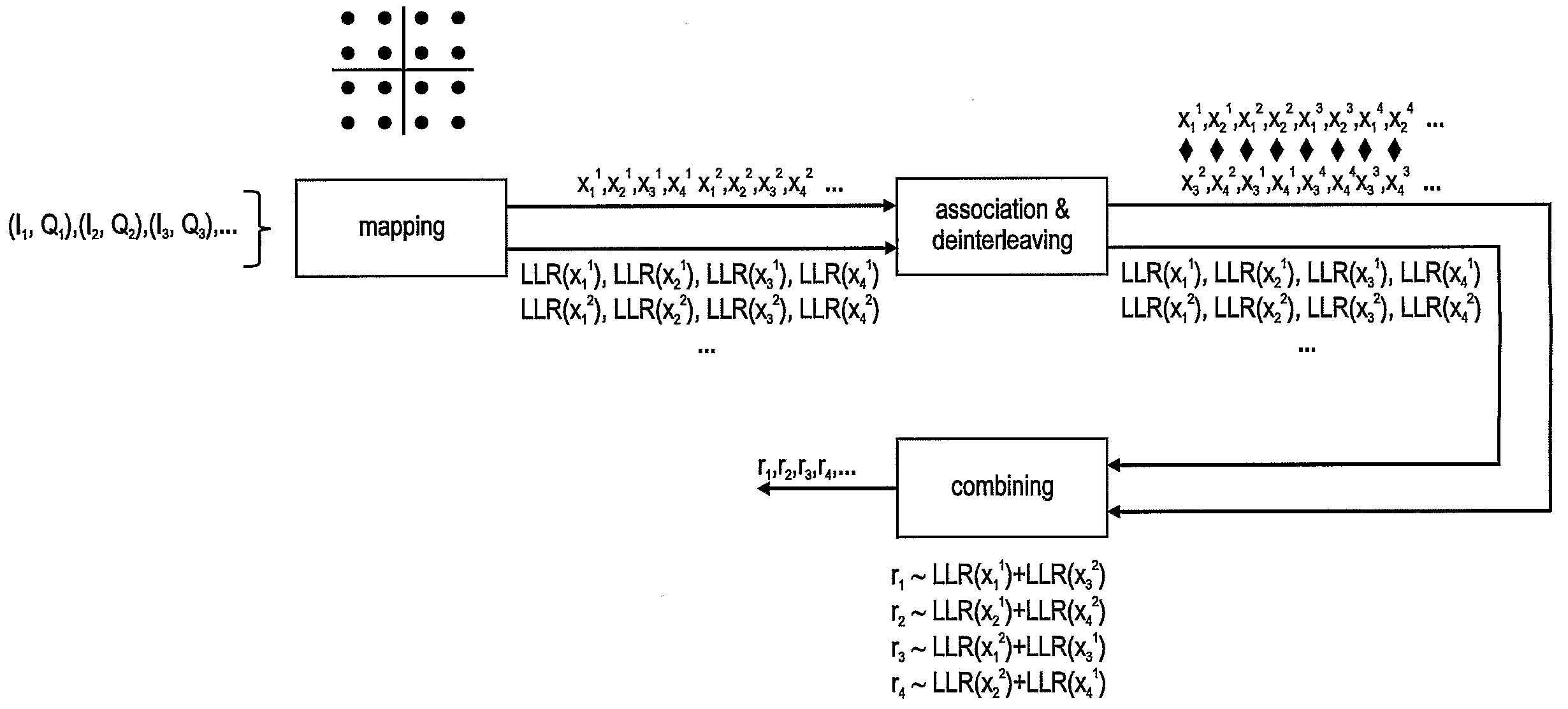
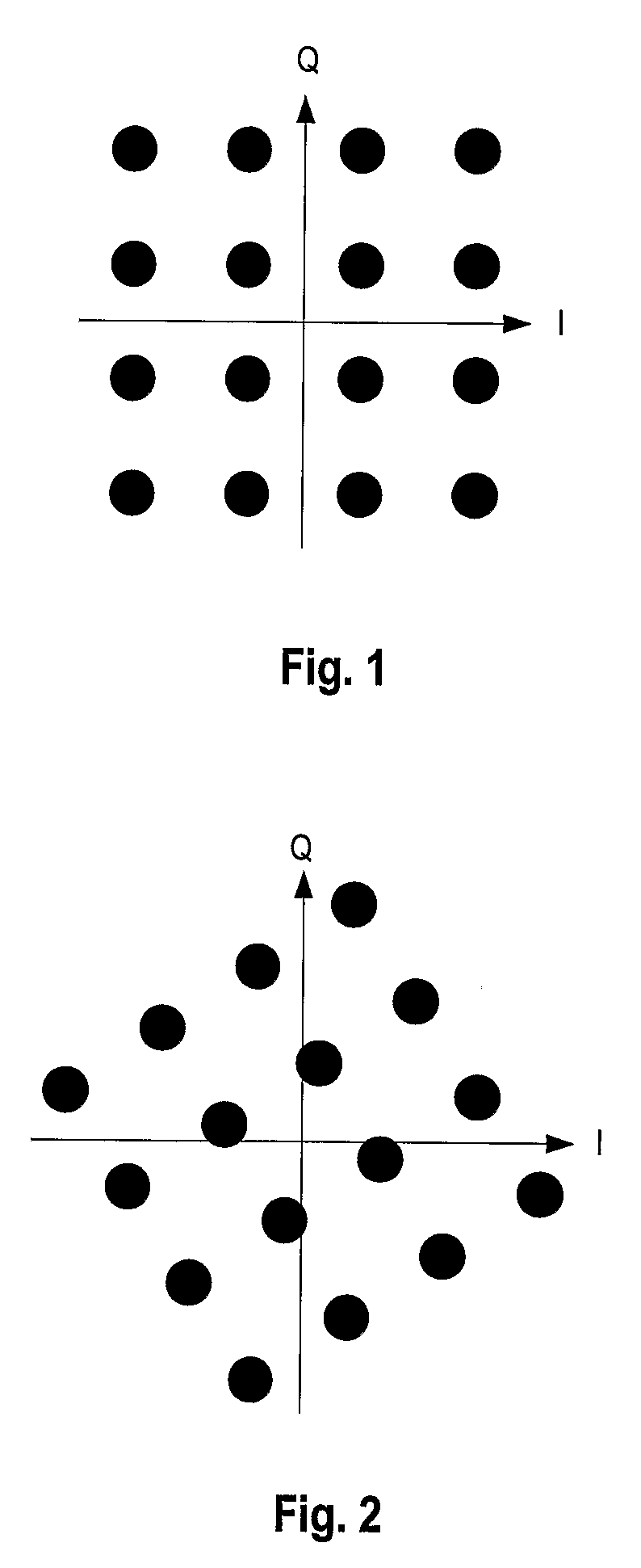
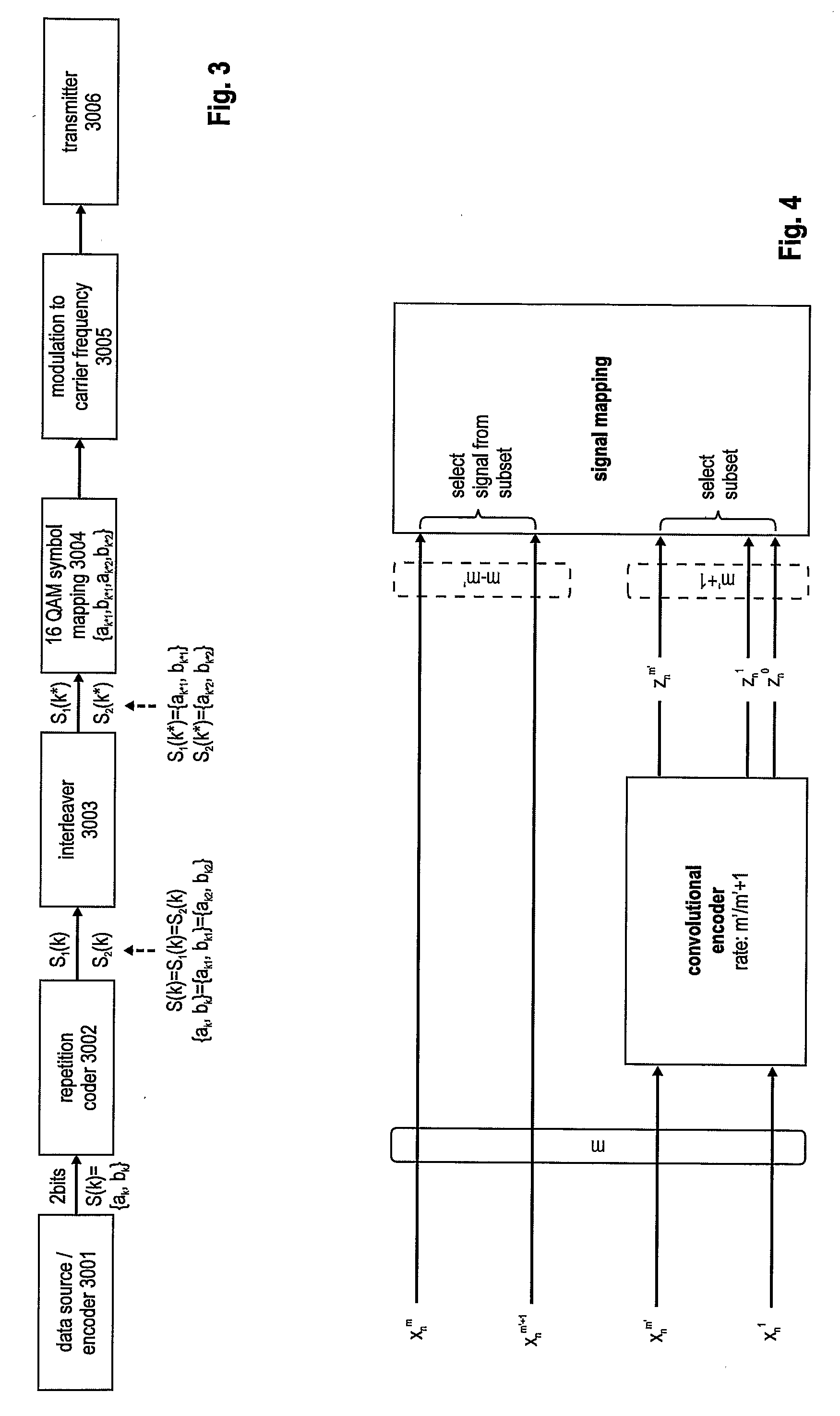
[0085]One main aspect of the invention is to employ a specially selected 16-QAM mapping structure in combination with a simple word repetition (signal space expansion) and interleaving. This comb...
PUM
 Login to View More
 Abstract
Description
Claims
Application Information
 Login to View More