Nonetheless, there currently exist no methods or processes whereby an individual's signature or identity can be authenticated real-time between geographically remote parties enjoined by video conference processes and methods.
Identity
paper based transactions such as a passport or a
license are traditional but cumbersome processes that involves many separate entities, diverse parties and involves multiple documents to consummate the transaction.
Likewise, preparing, transferring and delivering the paper documents for signature on such document-laden transactions remains an expensive, slow, paper-based, offline process.
The problems of excess documents and lapses in time are compounded by the fact that the parties to such type transactions are typically numerous and geographically dispersed.
Therefore, such type transactions incur considerable amounts of time and money to transport the necessary documents between the geographically dispersed parties.
Authoritative identity documents require vast amounts of time and money to process.
By way of example, standing in line for hours to renew a drivers
license or obtain a passport is hardly productive or cost friendly for either party.
Time and money are lost while the documents must be presented physically, in-person for review by the authorized witnessed signatory.
Additionally, such type transactions have been largely unable to take
advantage of on-line transactions because of the preemptive legal /
business practice requirement that a notary public or authorized party authenticate the signature or the identity of an individual to bind the transaction.
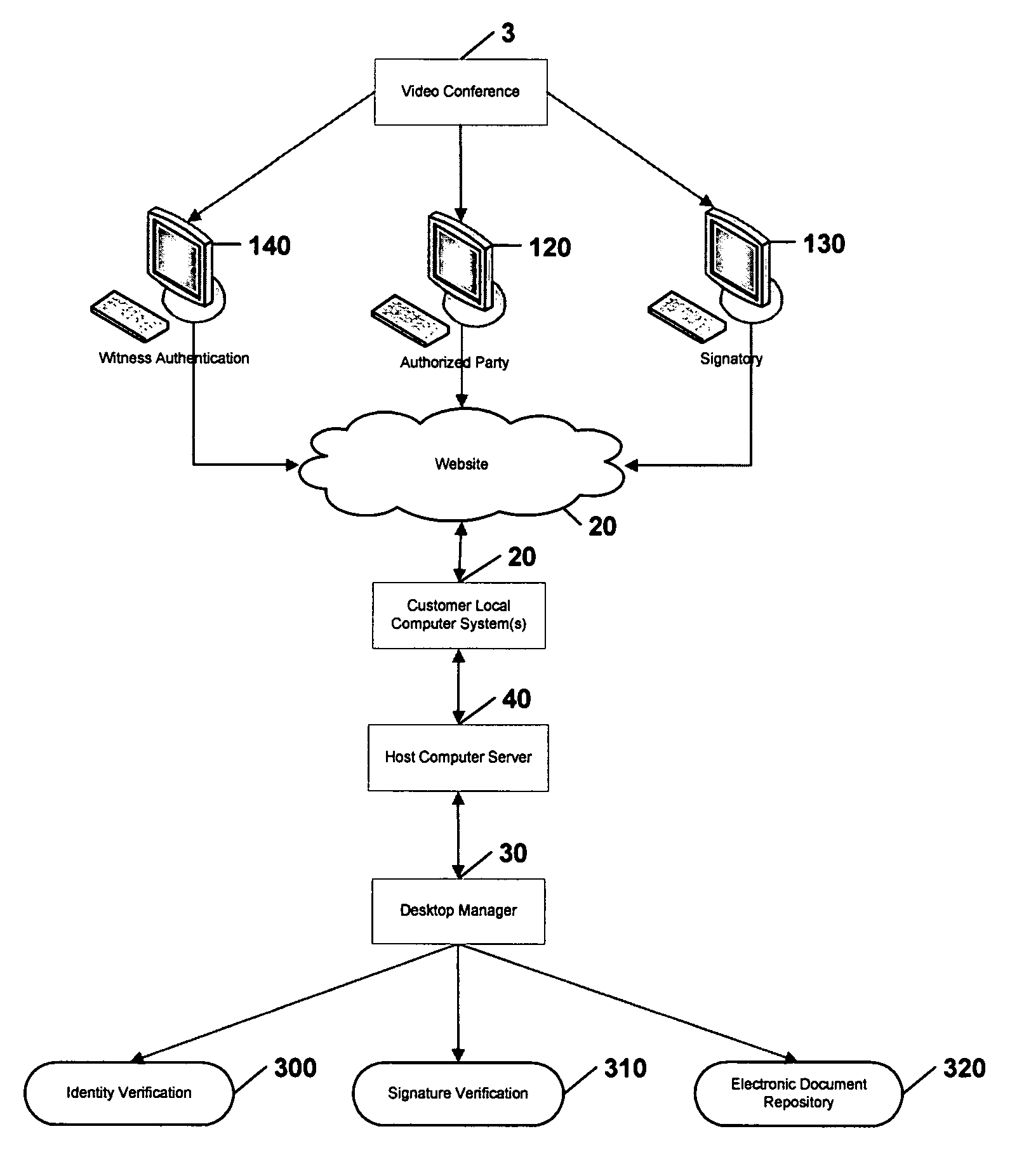
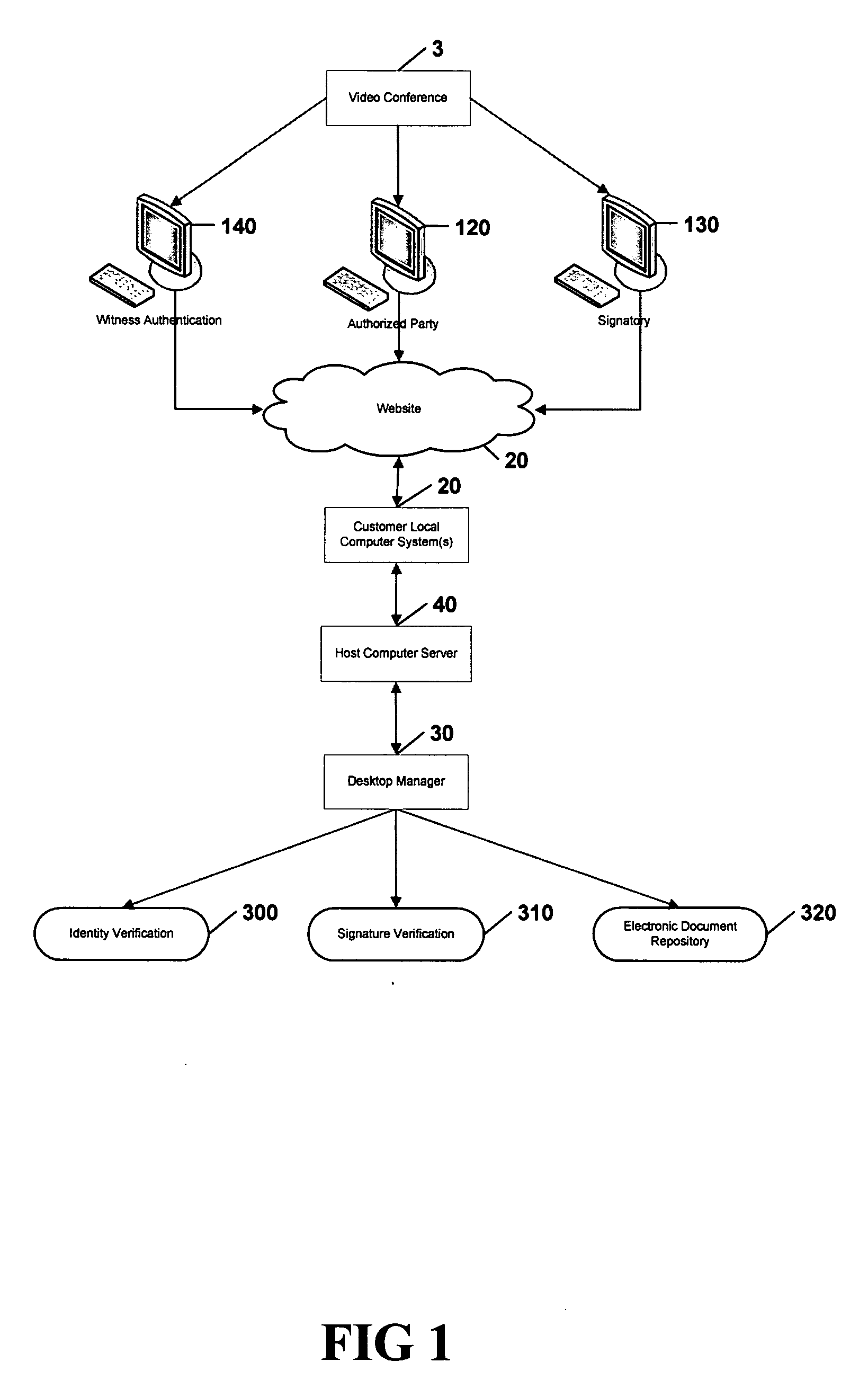
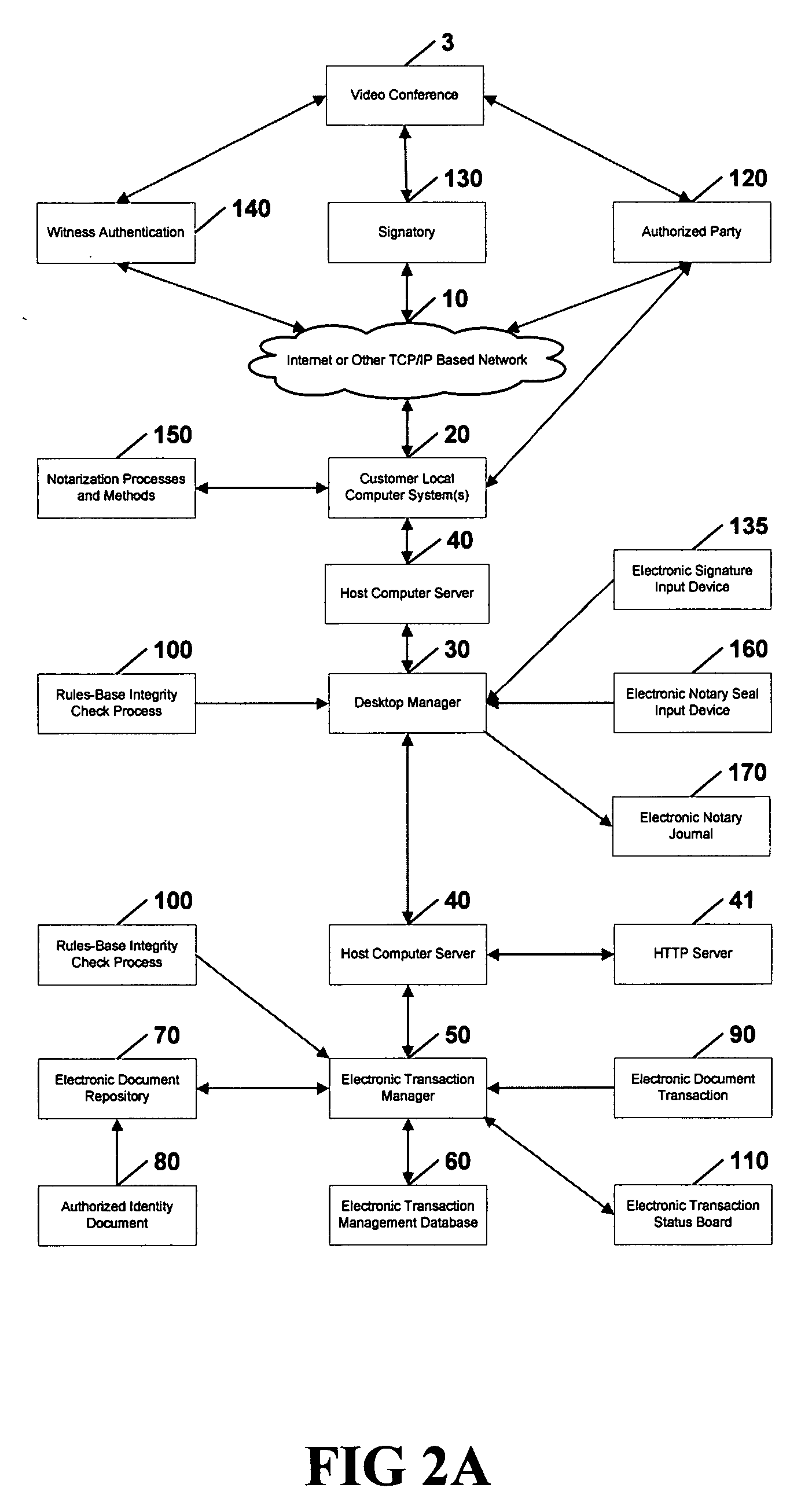
To date, there exists no integrated solution whereby these types of transactions can be conducted on-line via a video conference using a paperless document platform that encompasses the necessary component of signature
verification or identity
verification to conclude the transaction.
Although an increasing number of such type transactions may be initiated online, they are invariably consummated off-line due to the inability to integrate the parties via a video conference.
Further, there exists no method of on-line notarization or witnessed
authentication that meets the expectations or standards of a duly notarized signature done by a licensed notary public.
Moreover, there exists no integrated process or method that integrates the parties and entities to such transactions on-line using a video conference
system that is accessible by all of the parties to the transaction.
The inability of
public key cryptography to guarantee a person's identity has precluded such type transactions from effectively electronic based commerce to conclude such transactions.
A major problem to conducting electronic transactions that requires signature or identity
verification, is that to date there exists no method whereby
electronic identity documents can be electronically notarized using the traditional and legally binding method by a live, licensed notary public via a video conference.
While the devices created by the prior art may be suitable for the particular purpose to which they address, they are not as suitable for signature verification for electronic commerce transactions that typically require the traditional form and security of an in-person notarization.



 Login to View More
  Login to View More