
Tools and method for implanting a subcutaneous device
- Summary
- Abstract
- Description
- Claims
- Application Information
AI Technical Summary
Benefits of technology
Problems solved by technology
Method used
Image

Examples
Embodiment Construction
[0026]A small and easy-to-implant, leadless ILR device will require a minimal incision size, which has patient benefit. Between ½ and 1 inch incisions are preferred to avoid trauma and scarring and reduce the chance of infection. For ease of insertion, the device should be easy to self-position, and preferably elongated in shape to maximize signal strength for a given volume by having electrodes spaced at far ends of the length. The general use, without limitation, of the device is long term ECG event monitoring.
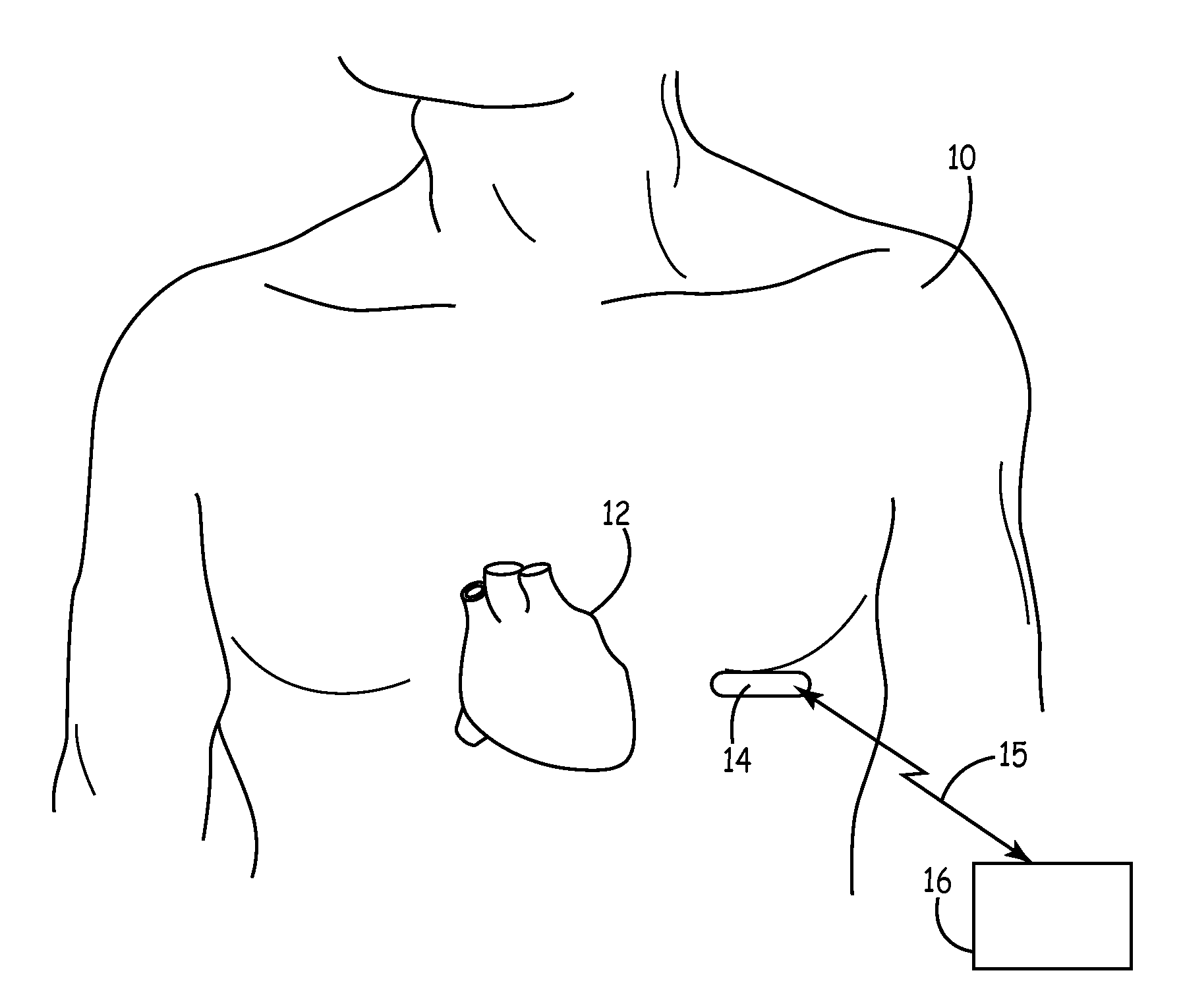
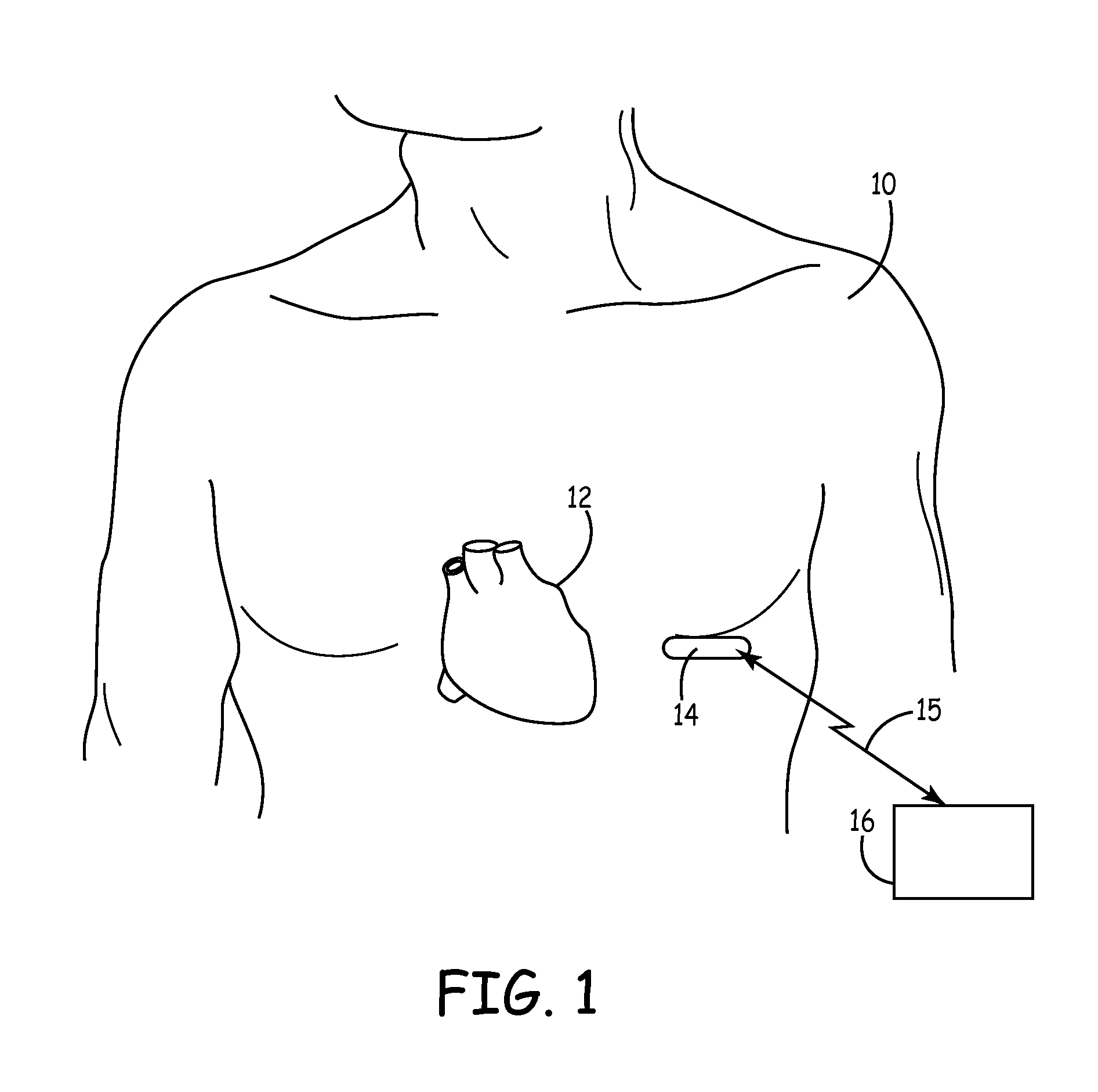
[0027]FIG. 1 is a frontal view of a patient 10 in whom an ILR 14 may be subcutaneously implanted with a typical location referenced thereon (other implant locations may be utilized). The ILR 14 senses cardiac electrical activation signals via electrodes (not shown in FIG. 1) from heart 12. A communication link 15 allows 2-way telemetry communication between ILR 14 and an external device (typically a programmer) 16. Programmer 16 and telemetry systems (15) suitable for use in...
PUM
 Login to View More
 Abstract
Description
Claims
Application Information
 Login to View More