
Device and method for variably adjusting intervertebral distraction and lordosis
a technology of which is applied in the field of devices and methods for variably adjusting intervertebral distraction and lordosis, can solve the problems of post-operative pain, lack of tight fit between any subsequently inserted intervertebral body, and vertebral body, and achieve the effect of facilitating simultaneous correction of curvature abnormalities
- Summary
- Abstract
- Description
- Claims
- Application Information
AI Technical Summary
Benefits of technology
Problems solved by technology
Method used
Image

Examples
Embodiment Construction
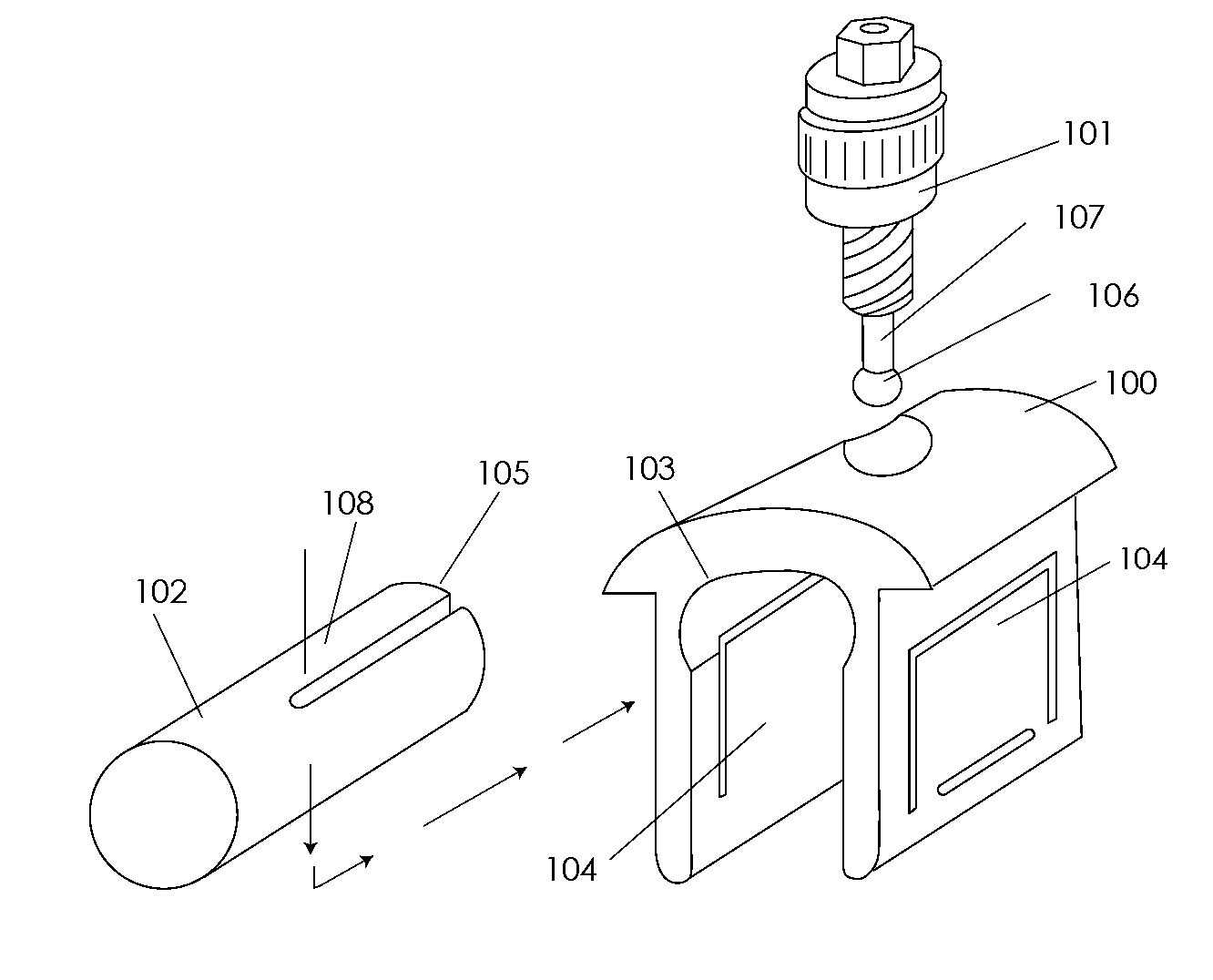
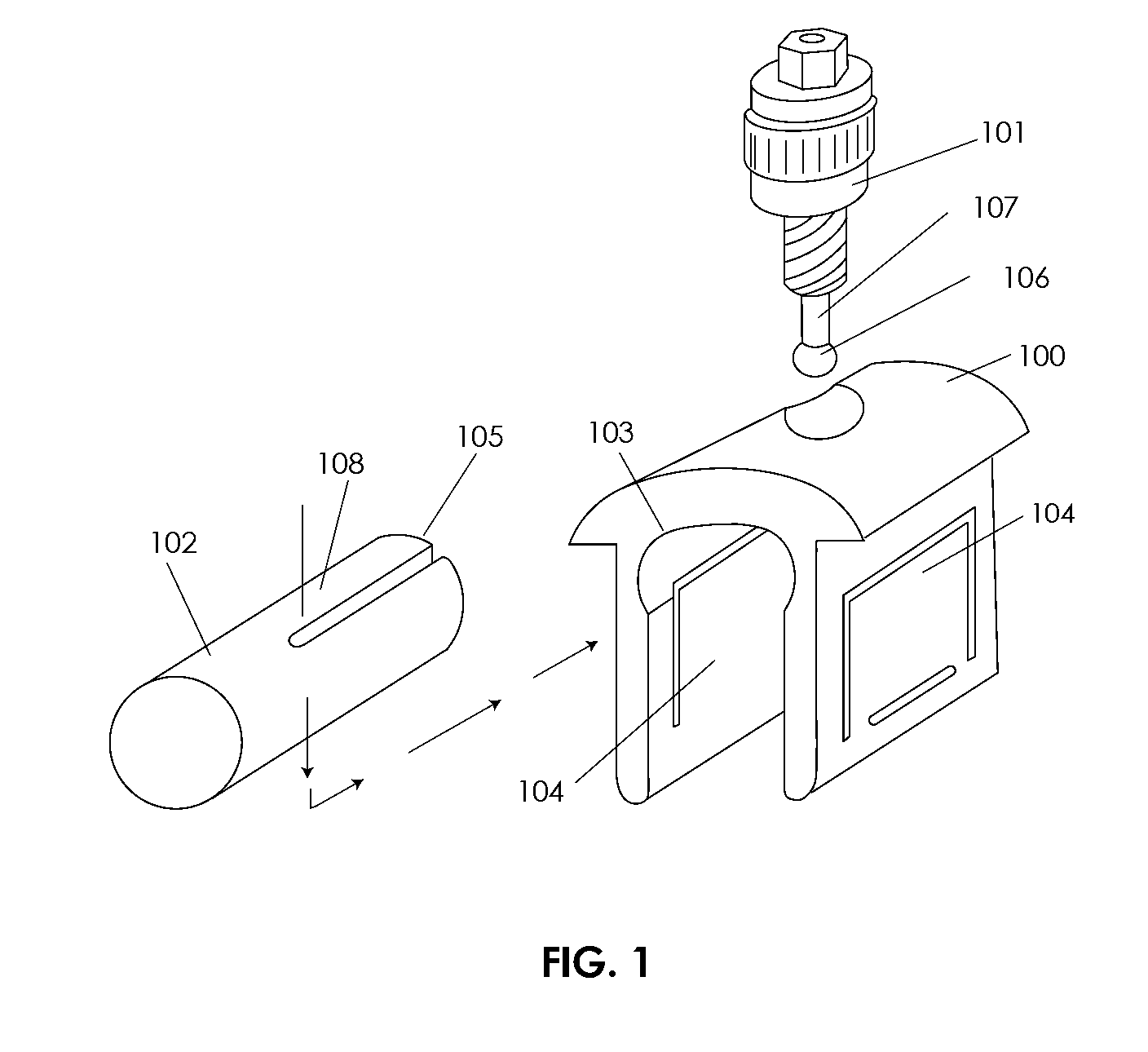
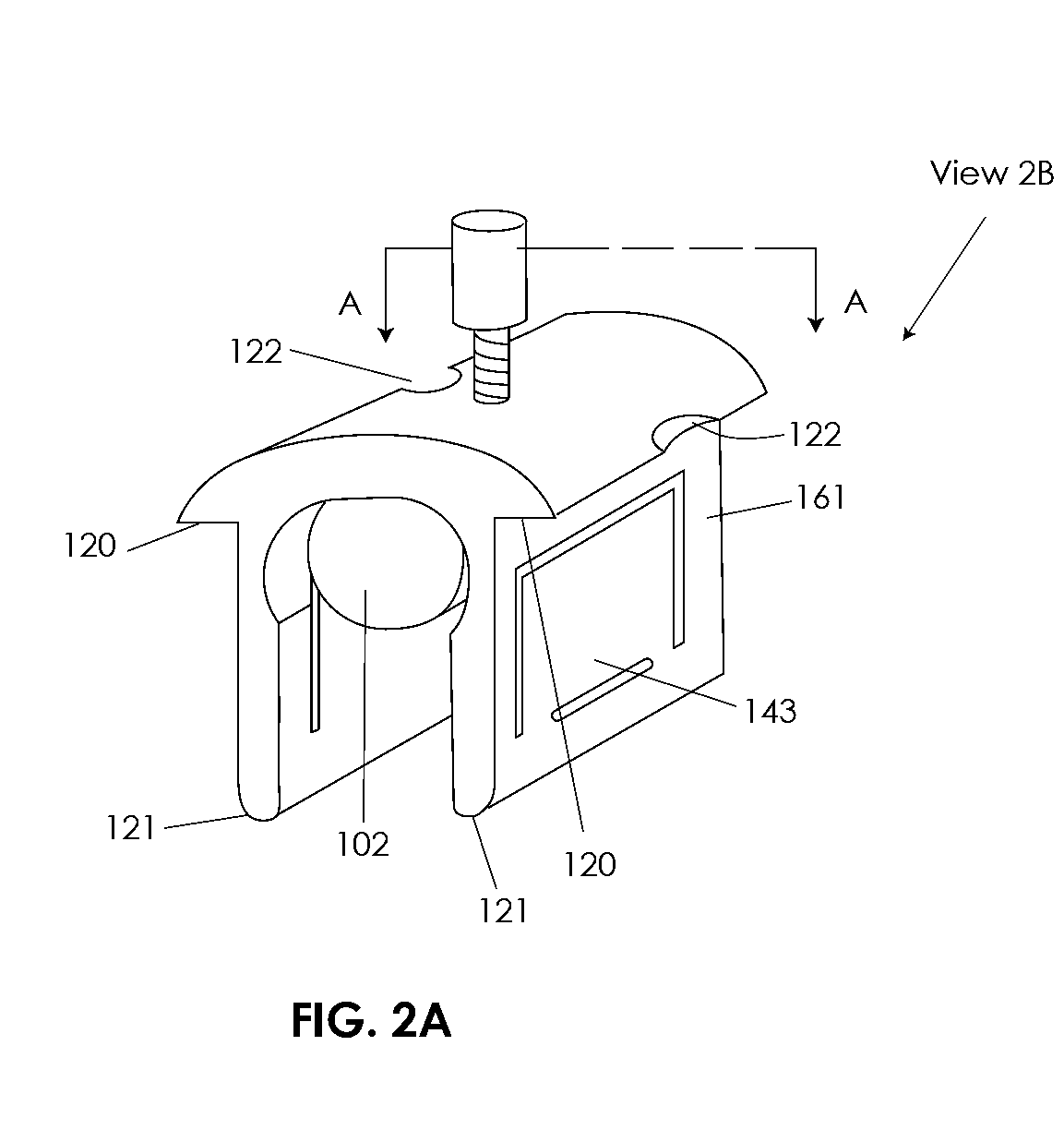
[0065]FIG. 1 is an exploded view of the assembly constructed according to aspects of the invention. The assembly includes a body 100, an adjusting screw 101, and an expansion insert 102. The body 100 is adapted to receive and retain the expansion insert 102 in a measured receiving chamber 103 which positions the wedge 102 relative to a pair of opposing expansion flaps 104. The expansion wedge 102 is slideably engaged on the screw device 101 by means of a receiving slot 105 through which the non-threaded end 107 of the screw 101 slides until it engages the controlled stop surface 108, assuring its correct location relative to the expansion flaps.
[0066]In an alternate embodiment of this device, not shown, the expansion insert 102 is omitted from the assembly and the distal end 106 of the adjustment mechanism 101 slideably engages directly with the expansion flaps. This embodiment may be used in certain situations where the intervertebral distance is small, such as that encountered in ...
PUM
 Login to View More
 Abstract
Description
Claims
Application Information
 Login to View More