
Composition and method for installing a simulated natural surface
a natural surface and composition technology, applied in the field of compositions and methods for producing a simulated natural surface, can solve the problems of increasing the total prior art methods failing to provide a commercially feasible process, and increasing the cost of a project, so as to reduce the amount of trowelling, reduce labor, and the effect of less tim
- Summary
- Abstract
- Description
- Claims
- Application Information
AI Technical Summary
Benefits of technology
Problems solved by technology
Method used
Image

Examples
Embodiment Construction
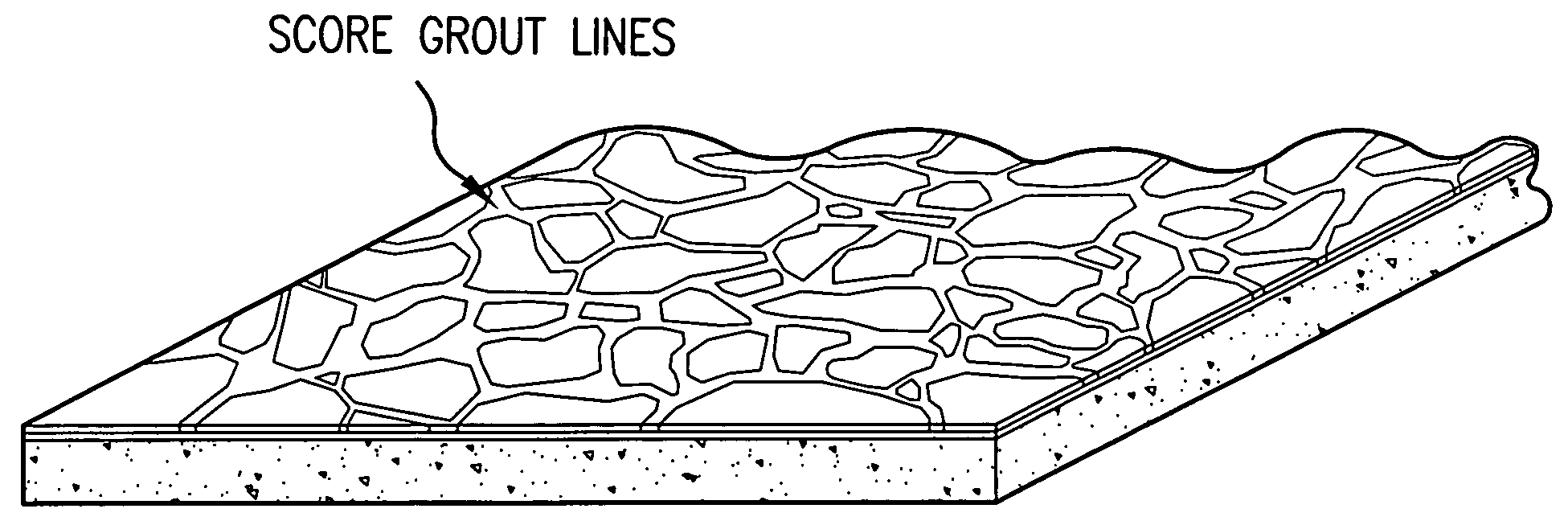
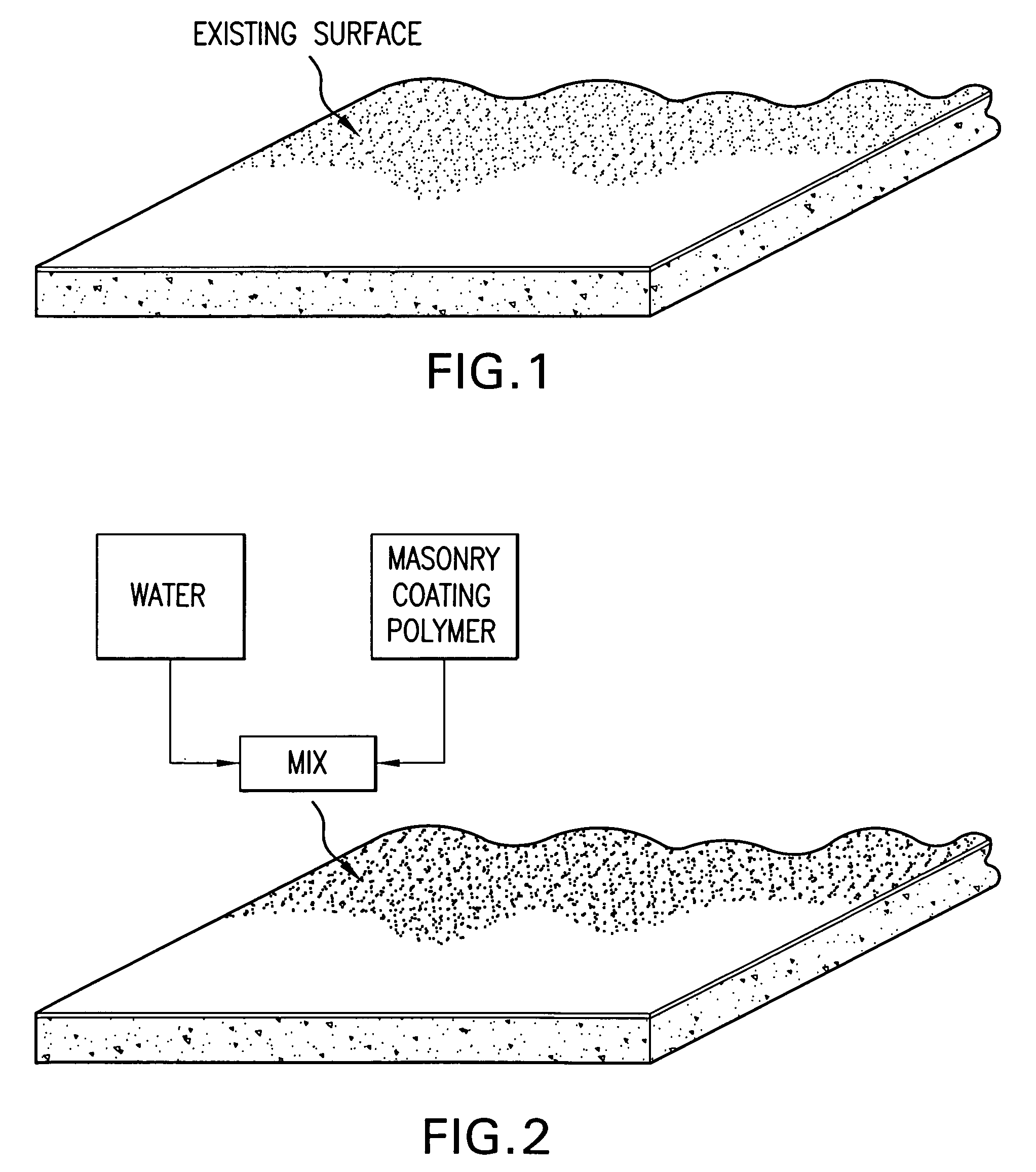
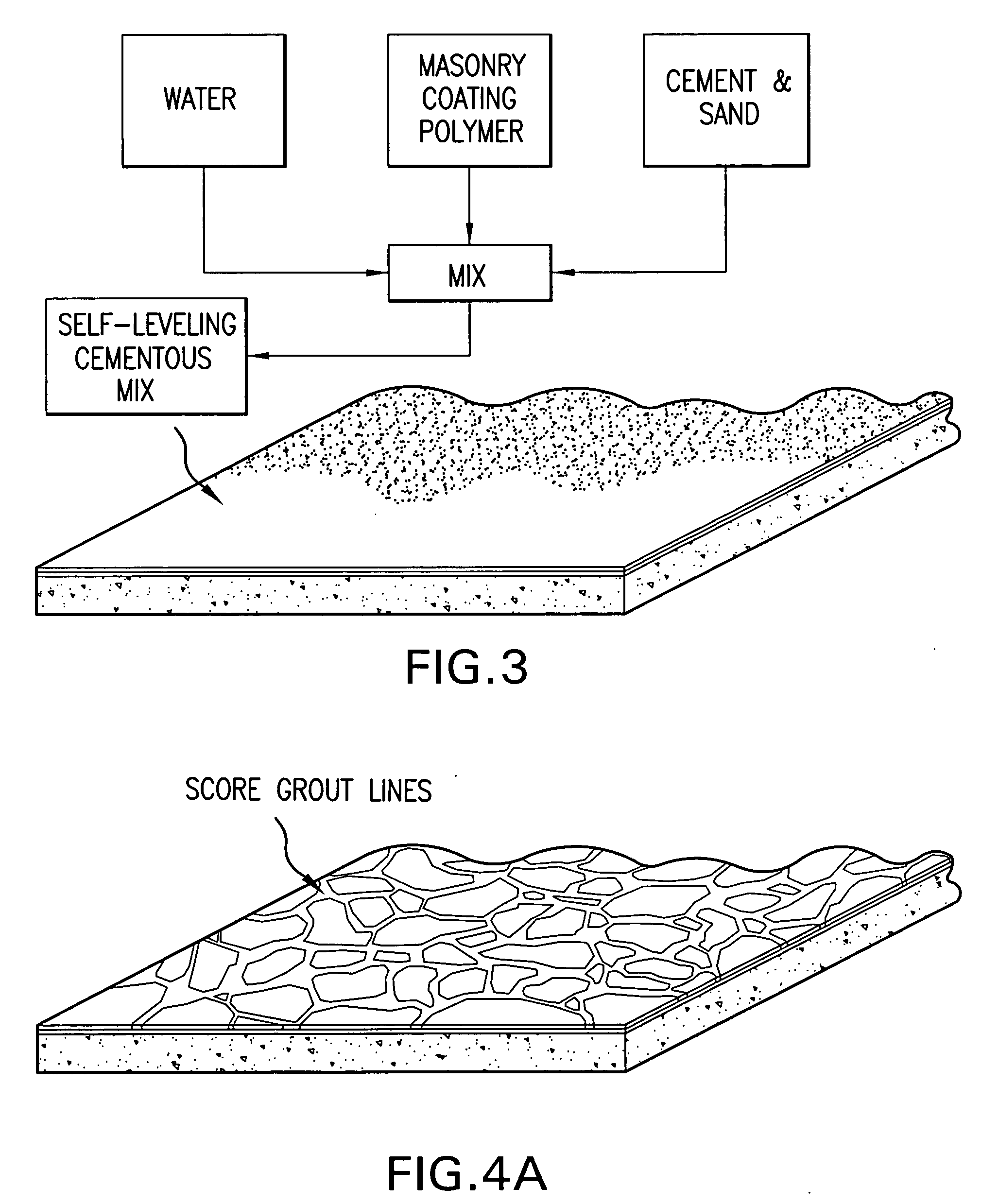
[0018]A first mixture for use in producing a simulated surface is prepared by mixing together a 40% polymer liquid with 60% water. In a preferred embodiment, the polymer liquid is a masonry coating polymer. The first mixture, providing a boding agent, is applied to an existing surface using a roller. Next, a second mixture is prepared by mixing together 80% water with 20% polymer having a self-leveling characteristic. In a preferred embodiment, the polymer is a masonry coating polymer. A cementous mixture comprising 50% Portland cement and 50% sand is combined with the second mixture and fully mixed to provide a self-leveling cementous mixture. The self-leveling cementous mixture is applied to the surface, using a trowel in a minimal action to evenly spread the self-leveling cementous mixture over the surface. When the mixture is partially cured, a tool is used to score in the desired grout pattern by scraping away a portion of the cementous mixture. The created grout lines resemble...
PUM
| Property | Measurement | Unit |
|---|---|---|
| Fraction | aaaaa | aaaaa |
| Fraction | aaaaa | aaaaa |
| Fraction | aaaaa | aaaaa |
Abstract
Description
Claims
Application Information
 Login to View More