

Specific peptide binding to glypican-3
a technology of glypican and glypican, which is applied in the field of specific peptide binding to glypican3 protein, can solve the problems of lack of specificity, difficult to detect tumors when they are small, and significant risk factors of tumor siz
- Summary
- Abstract
- Description
- Claims
- Application Information
AI Technical Summary
Benefits of technology
Problems solved by technology
Method used
Image

Examples
example 1
Cell Culture
[0050]Human hepatocellular carcinoma cell lines (HepG2, Huh-7), melanoma cell line (SkMe 128), and renal cell line (HEK293, Cos-7) were purchased from American Type Culture Collection, Manassas (ATCC, Manassas, Va., USA) and used. Cells were incubated in D-MEM medium supplemented with 10% fetal bovine serum (Hyclone, Co.) and 1% antibiotic-antimycotic (GIBCO, co.).
example 2
Amplification of Glypican-3 (GPC-3) Gene
[0051]Human GPC-3 gene was purchased from NGIC (Korea unigene). The gene had been inserted into a pDNR-LIB vector (Clonetech, Mountain View, Calif., USA) and was subjected to gene amplification by polymerase chain reaction (PCR) to obtain a GPC-3 gene with desired restriction enzyme sites XbaI and EcoRI.
[0052]The base sequences of a primer for amplification of only a desired site are: forward primer 5″-AATTAGAATTCCAGGATGGCCGGGACCGTC-3″ (SEQ ID No. 8) and reverse primer 5″-TTACTCTAGAGTAGCACATGTGCTGGGCA-3″ (SEQ ID No. 9).
example 3
Construction of a GPC-3 Expression Vector
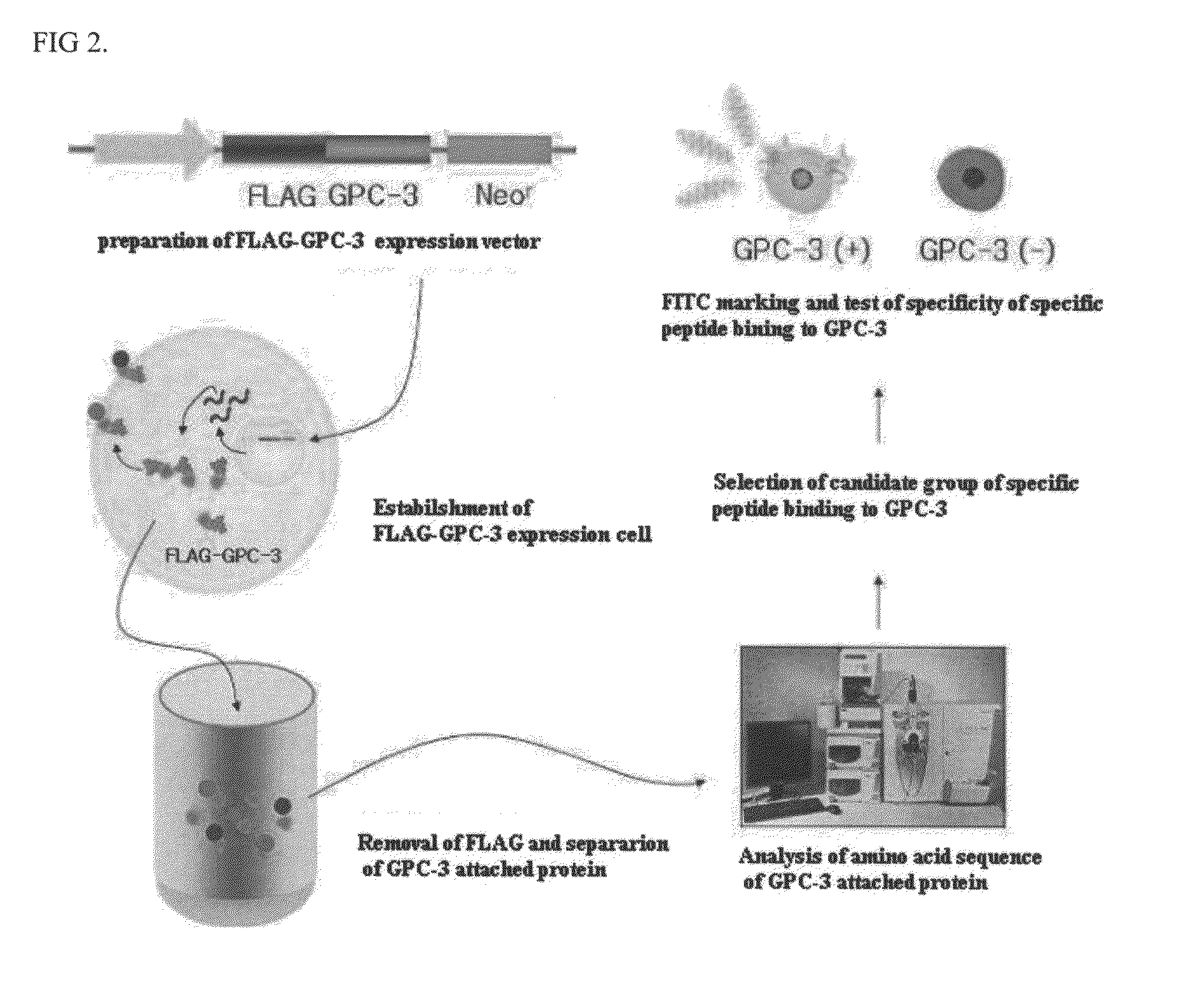
[0053]A GPC-3 product constructed from PCR in Example 2 was ligated to a p3×FLAG-Tagged vector (Sigma-Aldrich, USA) including a cytomegalovirus (CMV) promoter to construct a FLAG-Tagged GPC-3 vector.
PUM
| Property | Measurement | Unit |
|---|---|---|
| Luminescence | aaaaa | aaaaa |
Abstract
Description
Claims
Application Information
 Login to View More