
Imaging apparatus and imaging method
- Summary
- Abstract
- Description
- Claims
- Application Information
AI Technical Summary
Benefits of technology
Problems solved by technology
Method used
Image

Examples
Embodiment Construction
[0016]Various exemplary embodiments, features, and aspects of the invention will be described in detail below with reference to the drawings.
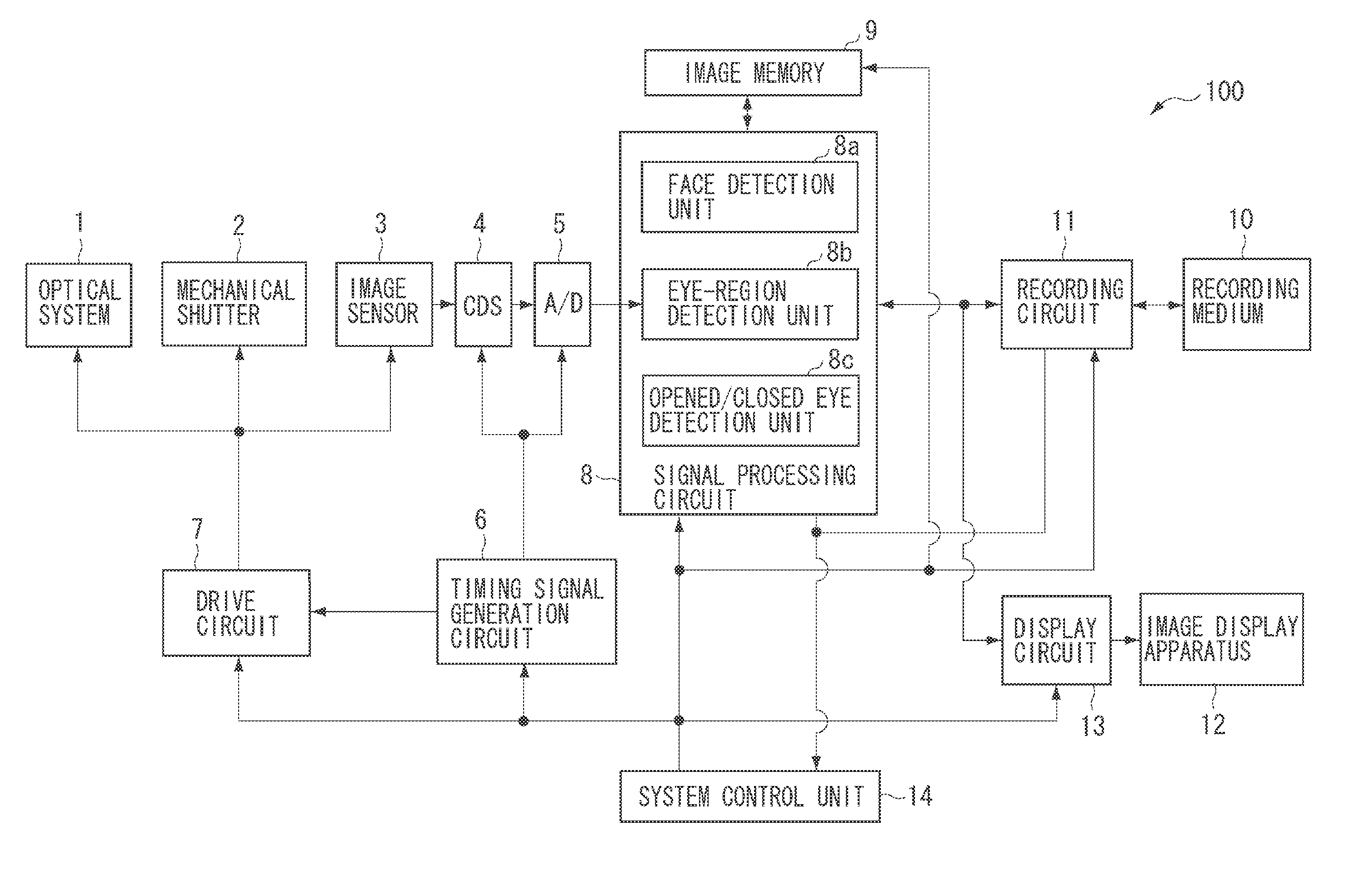
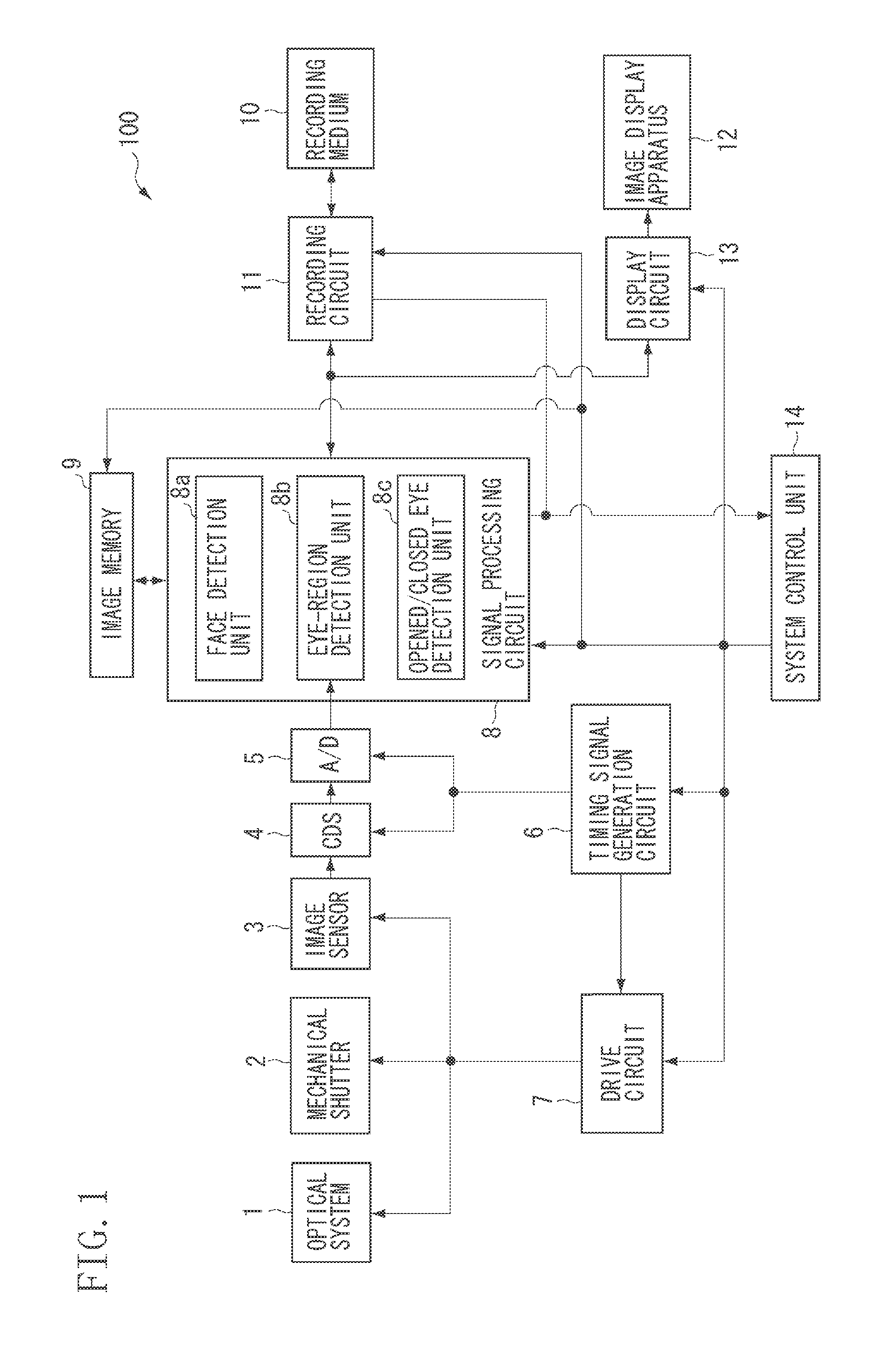
[0017]FIG. 1 is a block diagram illustrating a configuration of an imaging apparatus 100 according to an exemplary embodiment of the present invention.
[0018]In FIG. 1, an object image passing through an optical system 1 including a lens and a diaphragm is converted into an electric signal by an image sensor 3 including a photoelectric conversion element such as a charge-coupled device (CCD) or a complementary metal-oxide semiconductor (CMOS) sensor. A mechanical shutter 2 can block an object image from reaching the image sensor 3. A correlated double sampling (CDS) circuit 4 performs analog signal processing on image data generated by the image sensor 3, and an analog / digital (A / D) converter 5 converts an analog signal output from the CDS circuit 4 into a digital signal. A timing signal generation circuit 6 generates signals to control the imag...
PUM
 Login to View More
 Abstract
Description
Claims
Application Information
 Login to View More