Memory Device

US20110134579A1Inactive Publication Date: 2011-06-09HSU YEN WEI +1
2 Cites 4 Cited by

Patent Information

Authority / Receiving Office
US · United States
Current Assignee / Owner
Publication Date
2011-06-09
Estimated Expiration
Not applicable · inactive patent

Smart Images

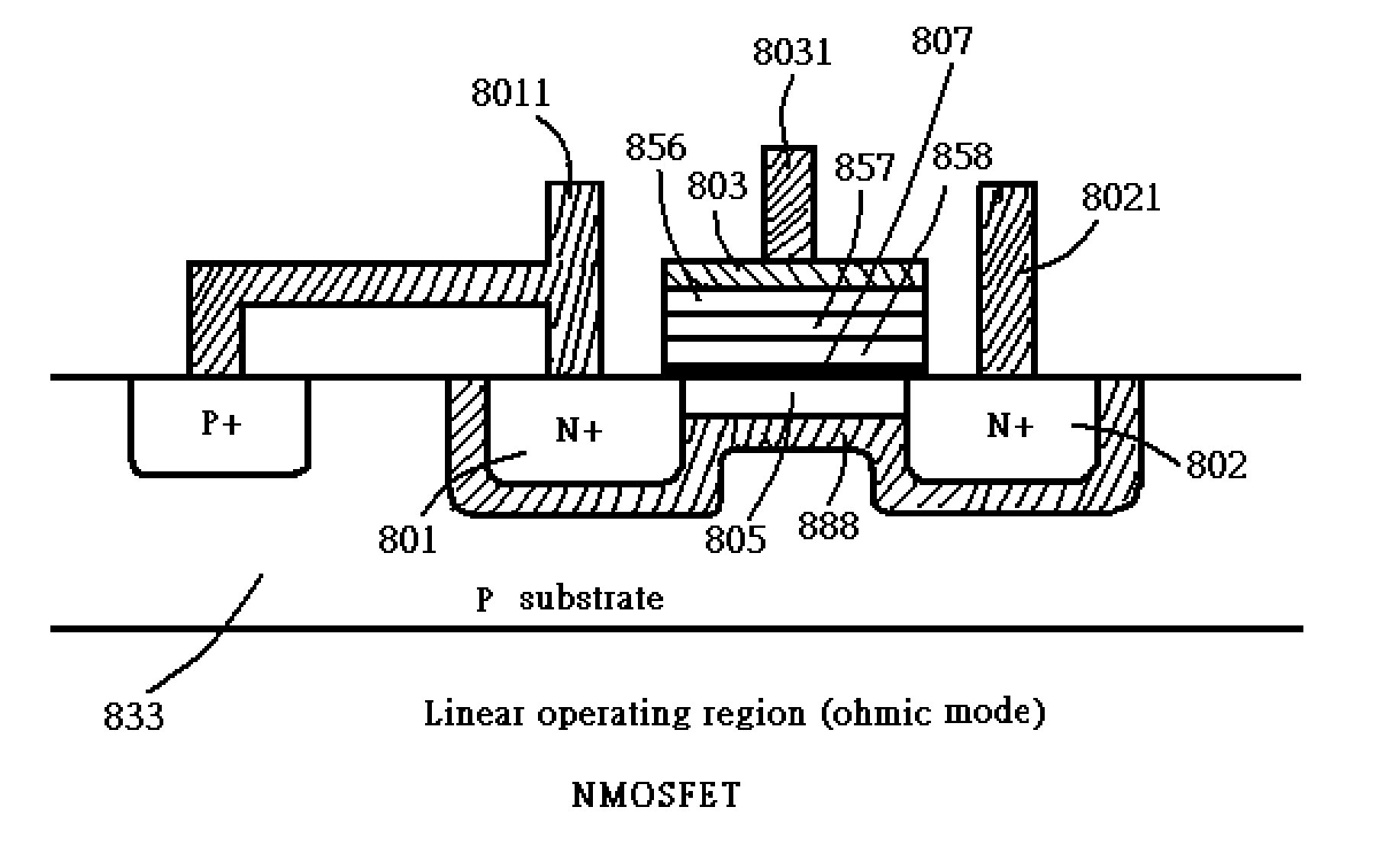
  • Figure 1
    Figure 1
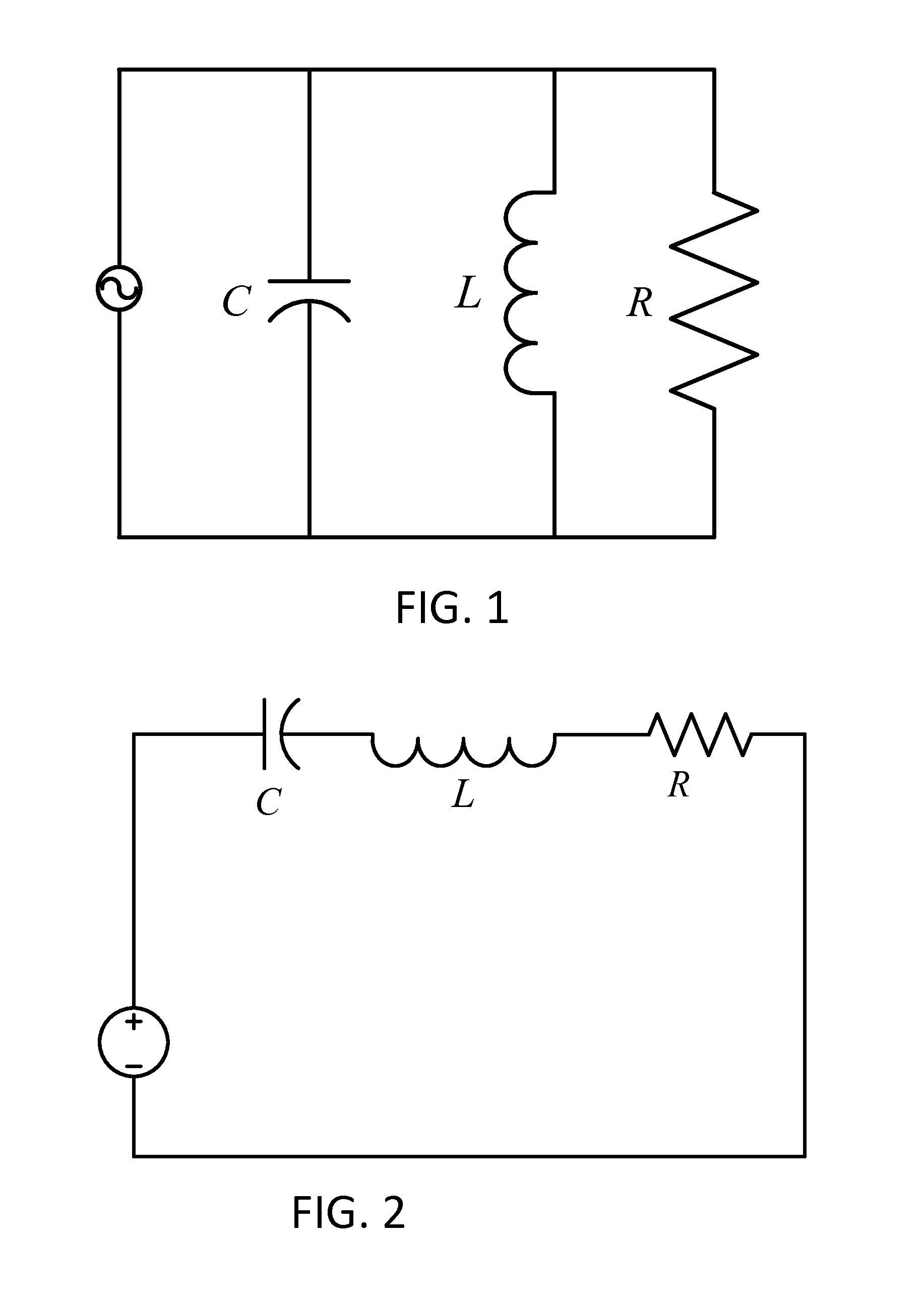
  • Figure 2
    Figure 2
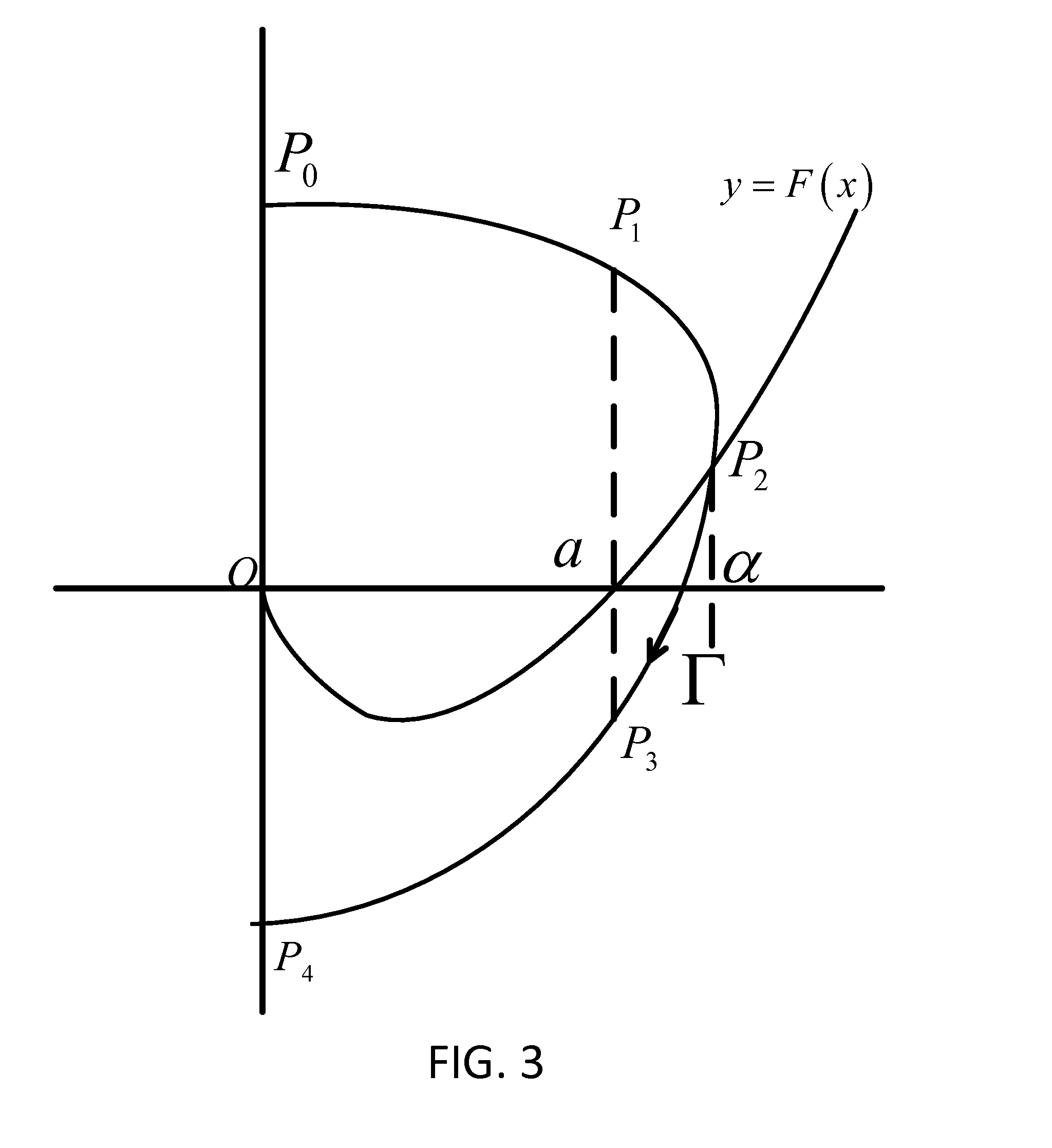
  • Figure 3
    Figure 3
Patent Text Reader

Abstract

This invention relates to a high-speed volatile and non-volatile memory assemblies. And, an inventive FET and capacitor are also revealed and introduced into the memory assembly to enhance its performance. Further, the memory assembly has physical addressing capability with CPU so that operating system stored in the memory assembly can be quickly booted.
Need to check novelty before this filing date? Find Prior Art

Description

FIELD OF INVENTION

[0001] This invention relates to a high-speed volatile and non-volatile memory assemblies. And, an inventive PNDR FET, PPNDR FET, PNDR capacitor and PPNDR capacitor are also revealed and introduced into the memory assembly to enhance it performance. Further, the memory assembly has physical addressing capability with CPU so that operating system stored in the memory assembly can be quickly booted.BACKGROUND MATERIALSIntroduction

[0002] Referring to [4],

[33] , [41, Vol. 1 Chapter 50] and [23, Page 402], the nonlinear system response produces many un-modeled effects: jump or singularity, bifurcation, rectification, harmonic and subharmonic generations, frequency-amplitude relationship, phase-amplitude relationship, frequency entrainment, nonlinear oscillation, stability, modulations (amplitude, frequency, phase) and chaoes. In the nonlinear analysis fields, it needs to develop the mathematical tools for obtaining the resolution of nonlinearity. Up to now, there exists t...

Examples

Embodiment Construction

[0110]The impedance of a closed circuit has been discussed in the analytic continuation of the background information section. For any close loop the impedance function can be written in the complex form having real and imaginary parts shown as the equation (11), and the following three equations (17), (18) and (21) hold simultaneously. Equations (17), (18) and (21) are the intrinsic properties in any closed loop. Equations (17) and (18) are respectively defined as positive differential resistance (or PDR in short) and negative differential resistance (or NDR in short) in the present invention, and, equation (21) is defined as pure resistance. A device having PDR or NDR is respectively called PDR device or NDR device in the present invention. A device having pure resistance is called pure resistor in the present invention. Revealed in the “Positive and Negative Differential Resistances” in the background information section, the PDR and NDR devices can vary with temperature field T,...