
Outstandingly abrasion resistant and pollution resistant coating composition and coating film
Inactive Publication Date: 2012-02-23
LG CHEM LTD
View PDF12 Cites 6 Cited by
- Summary
- Abstract
- Description
- Claims
- Application Information
AI Technical Summary
Benefits of technology
[0012]According to the present invention, provided are a coating composition and a coating film that have excellent abrasion resistance, and excellent contamination resistance such as fingerprint trace removability and scribbling resistance to easily remove contaminants of oil components such as fingerprints or scribbles, and in particular, excellent dust removability.
Problems solved by technology
In the case of various displays, there are problems in that an image is easily deformed or the quality of appearance is reduced by fingerprints.
However, upon abrasion or friction, these fluorine-containing surface treatment agents generate static electricity to deteriorate dust removability or abrasion resistance.
However, lamination of the above two layers is difficult to satisfy all of antistatic property, abrasion resistance, and light transmission.
If the weight ratio of conductive inorganic particles is low, the sufficient antistatic property may not be achieved.
Method used
the structure of the environmentally friendly knitted fabric provided by the present invention; figure 2 Flow chart of the yarn wrapping machine for environmentally friendly knitted fabrics and storage devices; image 3 Is the parameter map of the yarn covering machine
View moreImage
Smart Image Click on the blue labels to locate them in the text.
Smart ImageViewing Examples

Examples
Experimental program
Comparison scheme
Effect test
example 2
[0021]The coating film was produced in the same manner as Example 1, except for using 20 g of antimony doped zinc oxide (AZO, manufactured by Nissan, particle diameter of about 20 nm) used in Example 1.
example 3
[0022]The coating film was produced in the same manner as Example 1, except for using 20 g of tin oxide (manufactured by Nissan, particle diameter of about 20 nm) instead of antimony doped zinc oxide.
example 4
[0023]The coating film was produced in the same manner as Example 1, except for using 20 g of tin-doped indium oxide (ITO, manufactured by AMP, particle diameter of about 100 nm) instead of antimony doped zinc oxide.
the structure of the environmentally friendly knitted fabric provided by the present invention; figure 2 Flow chart of the yarn wrapping machine for environmentally friendly knitted fabrics and storage devices; image 3 Is the parameter map of the yarn covering machine
Login to View More PUM
| Property | Measurement | Unit |
|---|---|---|
| Percent by mass | aaaaa | aaaaa |
| Percent by mass | aaaaa | aaaaa |
| Percent by mass | aaaaa | aaaaa |
Login to View More
Abstract
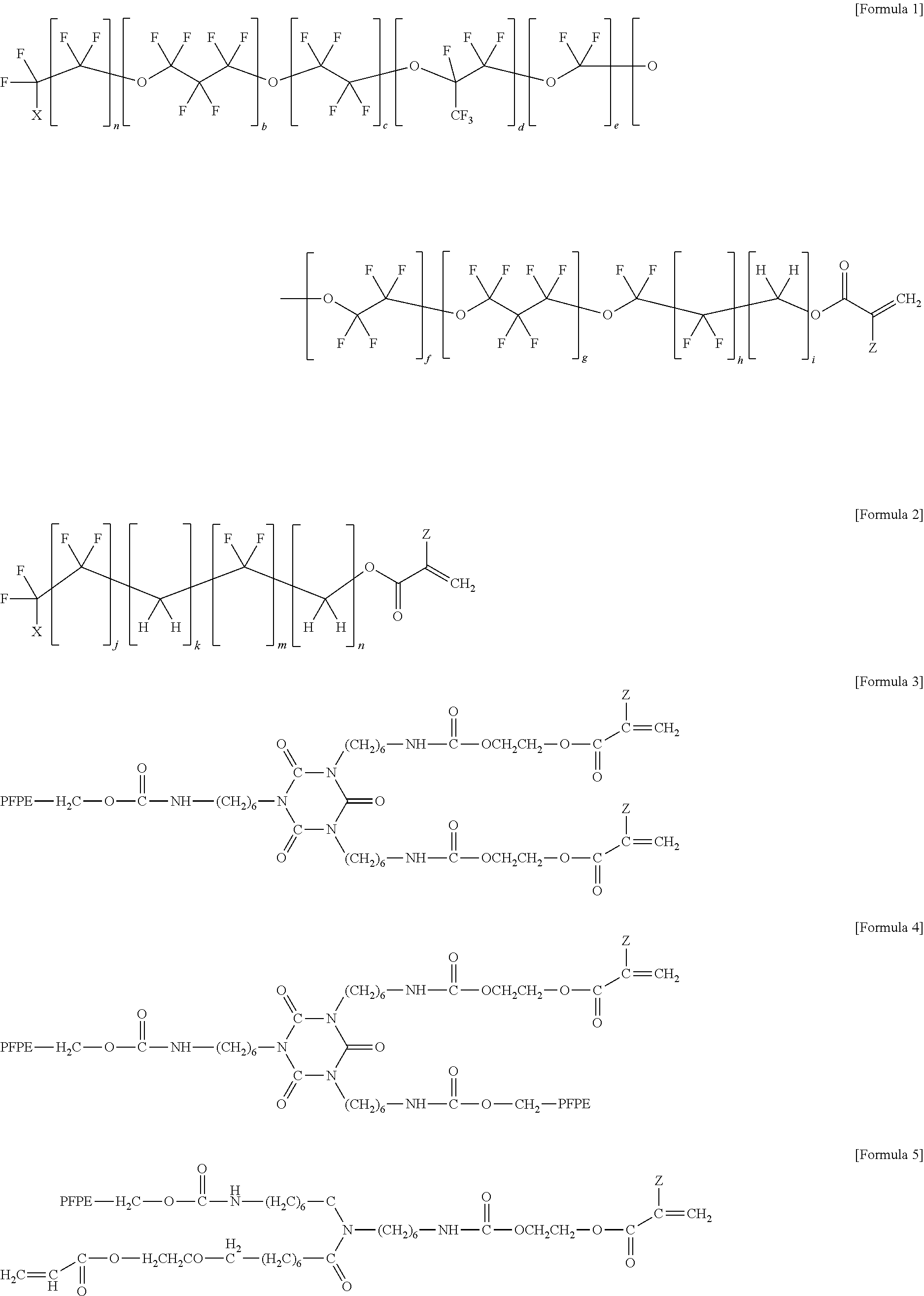
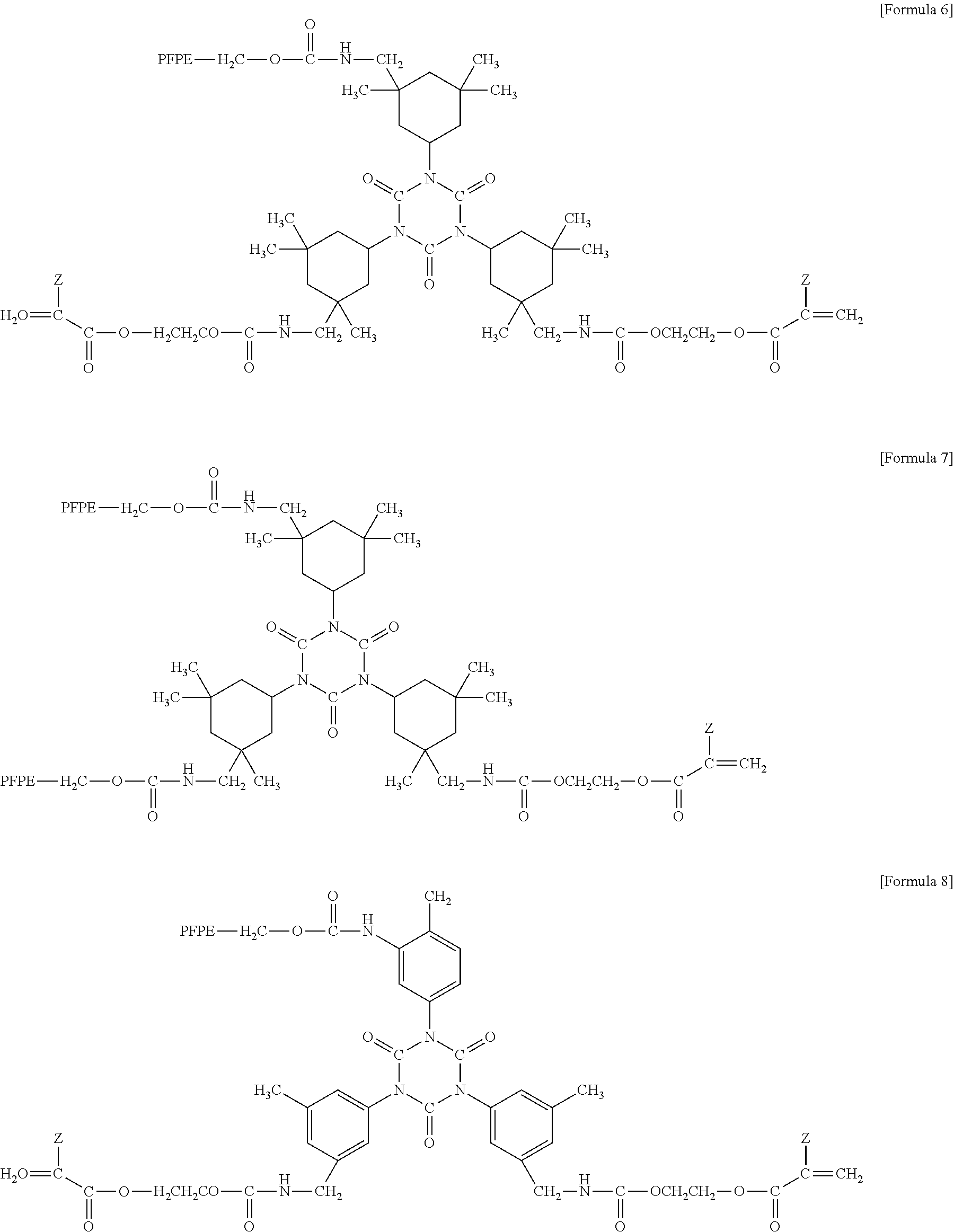
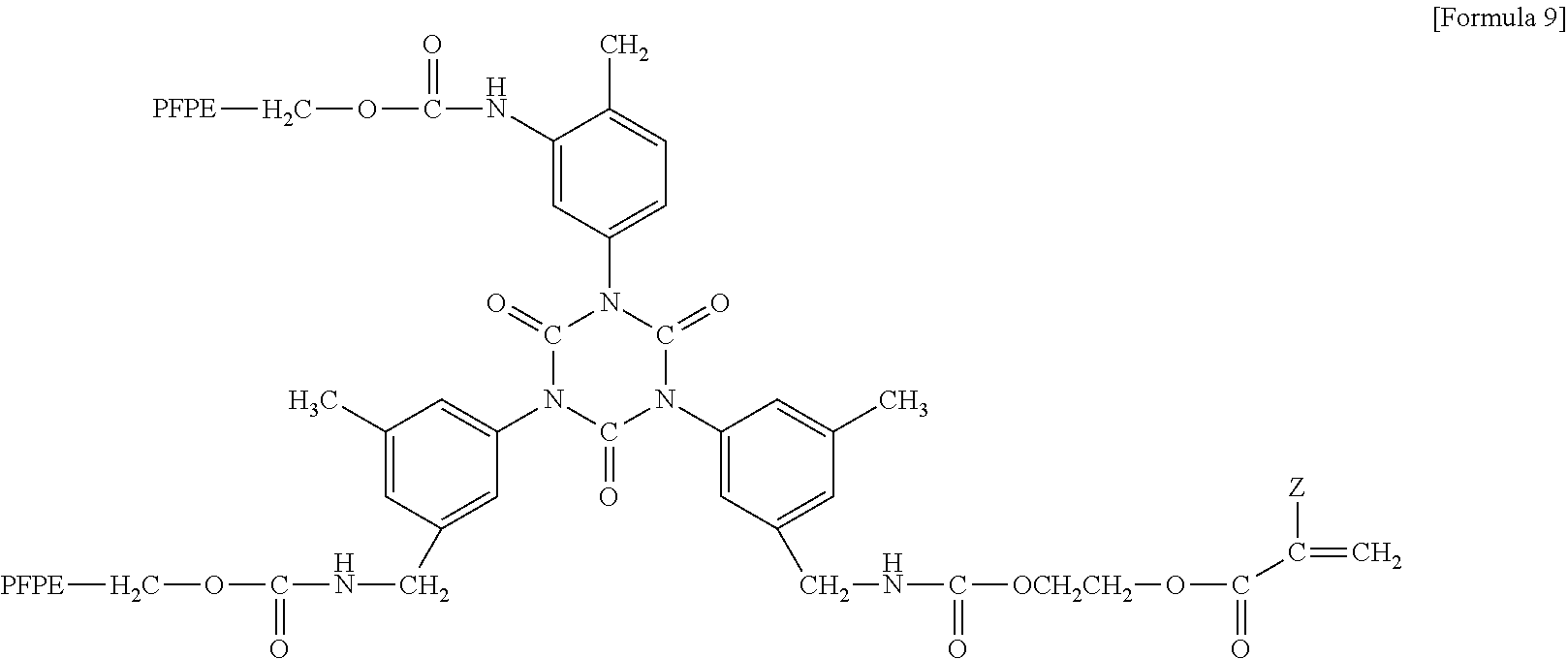
The present invention provides a coating composition and a coating film, which comprises a) a binder resin containing a UV-curable functional group; b) a compound containing a fluorine UV-curable functional group; c) a photoinitiator; d) nano-sized particles; and e) conductive inorganic particles.
Description
TECHNICAL FIELD[0001]The present invention relates to a coating composition and a coating film that are capable of being applied to displays such as TVs, monitors for computers, laptops or laptop computers, mobile phones and the like. More particularly, the present invention relates to a coating composition and a coating film that have excellent abrasion resistance, and excellent contamination resistance such as fingerprint trace removability and scribbling resistance to easily remove contaminants of oil components such as fingerprints or scribbles, and in particular, excellent dust removability.[0002]This application claims priority from Korean Patent Application Nos. 10-2009-0017229 and 10-2010-0017432 filed on Feb. 27, 2009 in the Korean Intellectual Property Office, the disclosure of which is incorporated herein by reference in its entirety.BACKGROUND ART[0003]In the case of various displays, there are problems in that an image is easily deformed or the quality of appearance is ...
Claims
the structure of the environmentally friendly knitted fabric provided by the present invention; figure 2 Flow chart of the yarn wrapping machine for environmentally friendly knitted fabrics and storage devices; image 3 Is the parameter map of the yarn covering machine
Login to View More Application Information
Patent Timeline
 Login to View More
 IPC IPC(8): B32B27/06B32B23/04B05D3/06B32B9/04H01B1/20B32B33/00C09K19/58B82Y30/00C09D7/62
CPCC08K3/16Y10T428/1055C08K3/36C08K9/06C09D5/1612C09D5/24C09D7/1225C09D7/1266C08F222/1006C08F230/08C09D133/14C08K3/22Y10T428/269C08F220/24C08K9/02C09D7/62C09D7/67Y10T428/31935Y10T428/31855Y10T428/31971Y10T428/31504Y10T428/31786C09K2323/04C08F222/106
InventorCHANG, YEONG-RAEKANG, JOON-KOOHONG, KYUNG-KIJUNG, SOON-HWAKIM, HYE-MINLEE, SOO-KYOUNGYOO, EUN-SANGKIM, SUNG-SUHONG, YOUNG-JUNKIM, JU-YOUNG
OwnerLG CHEM LTD