

Modular Building System
a modular building and building technology, applied in the field of modular building systems, can solve the problems of inability to offer the flexibility of open space design, finish and precision, and prefab buildings are container-based,
- Summary
- Abstract
- Description
- Claims
- Application Information
AI Technical Summary
Benefits of technology
Problems solved by technology
Method used
Image

Examples
Embodiment Construction
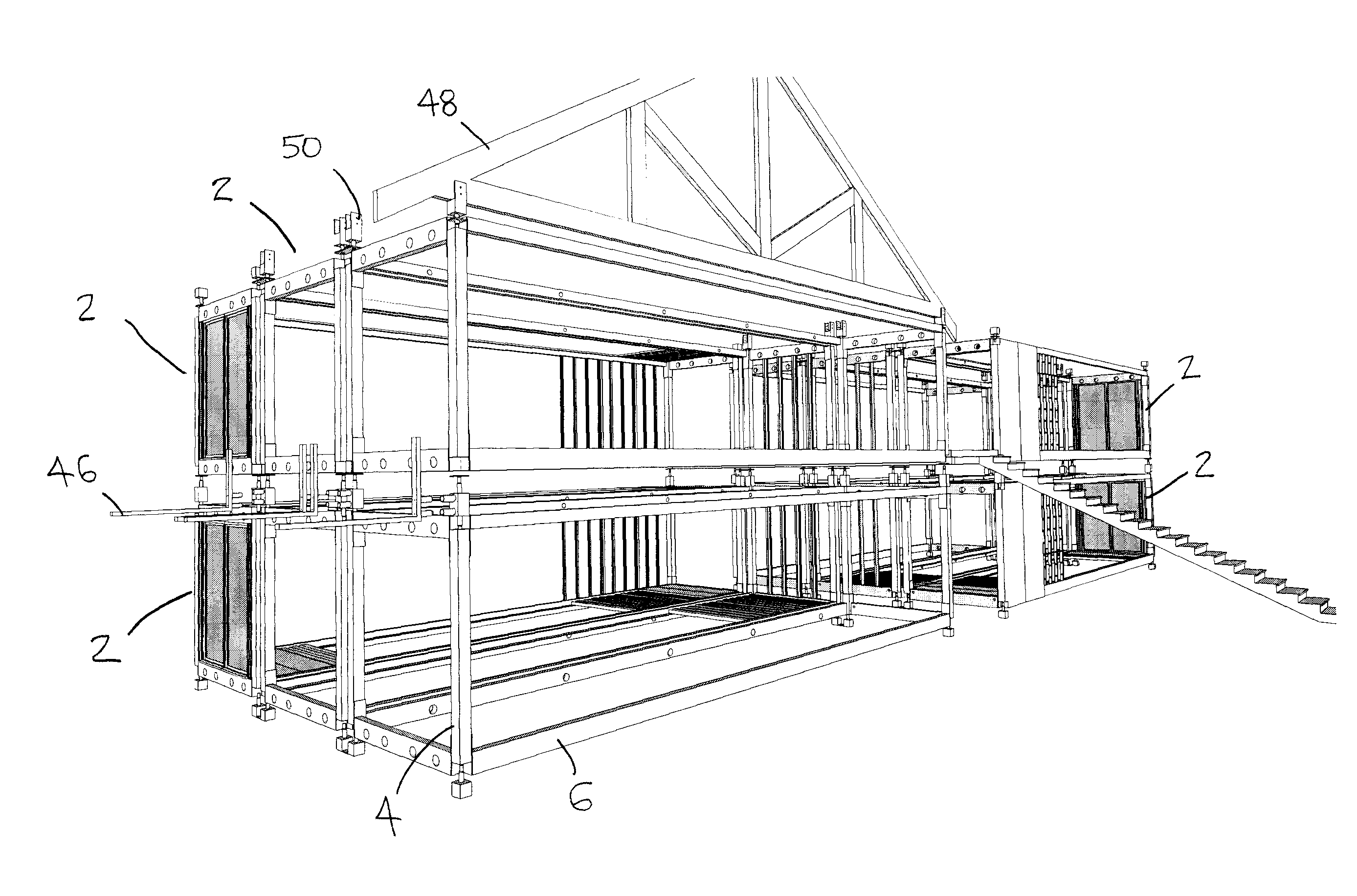
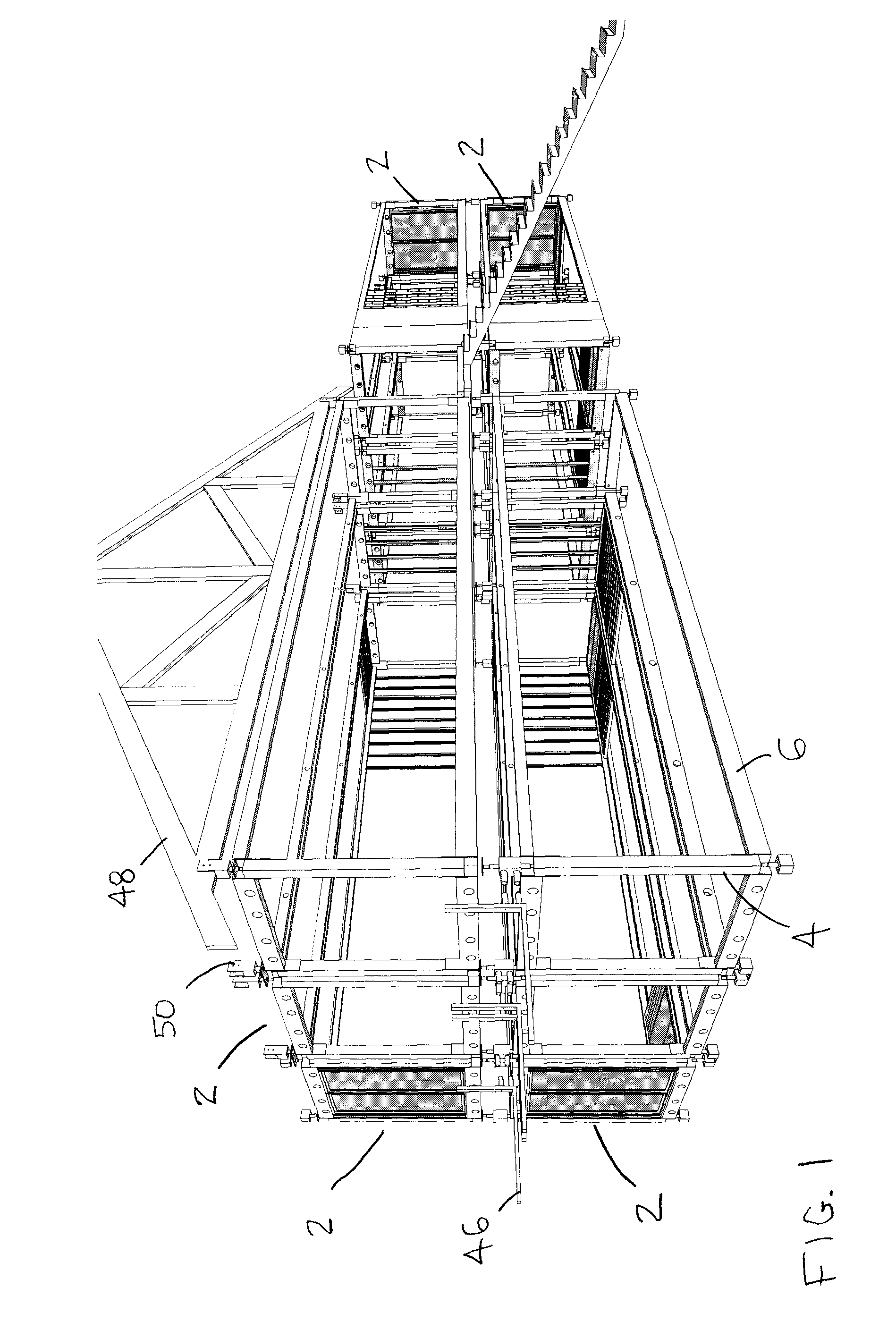
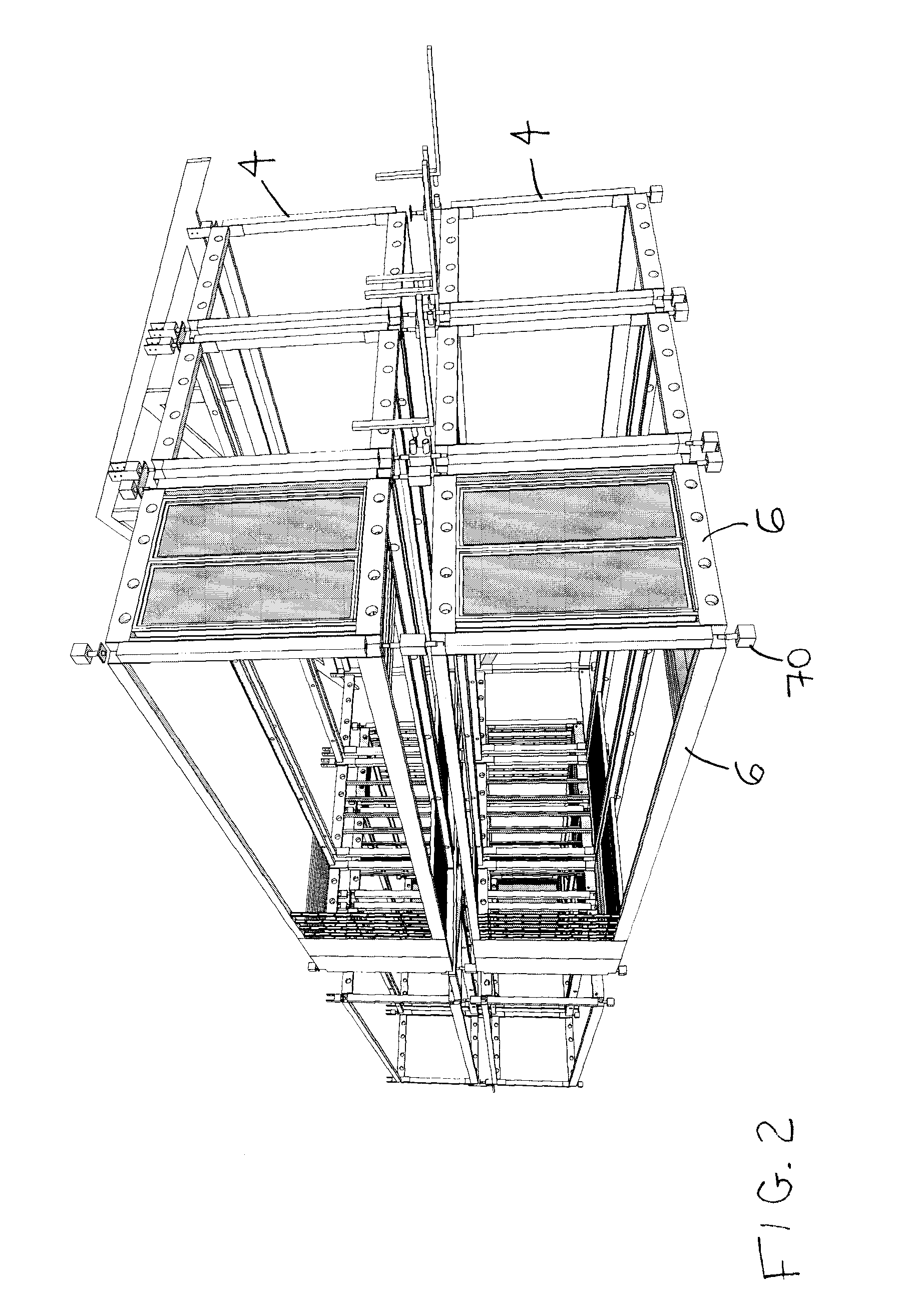
[0095]According to one embodiment of the present invention, there is provided a modular building system comprising individual building modules manufactured and assembled at a manufacturing facility. The modules and related modular components are optimized for transportation, and are transported to a building site by conventional ocean, rail, air and truck delivery systems using temporarily attached standard ISO shipping adaptors. Once on site, the modules may be modularly assembled into conventional-looking buildings.
[0096]The individual modules are the core units of the modular building system of the present invention. Buildings may be assembled by attaching together a plurality of the structurally self-supporting modules. The modules may be attached horizontally adjacent to one another, stacked vertically above and below one another, or both horizontally attached and vertically stacked using a variety of specialized, interchangeable adaptors between adjacent and stacked modules. T...
PUM
 Login to View More
 Abstract
Description
Claims
Application Information
 Login to View More