
Transformation of a Three-Dimensional Flow Image
- Summary
- Abstract
- Description
- Claims
- Application Information
AI Technical Summary
Benefits of technology
Problems solved by technology
Method used
Image

Examples
Embodiment Construction
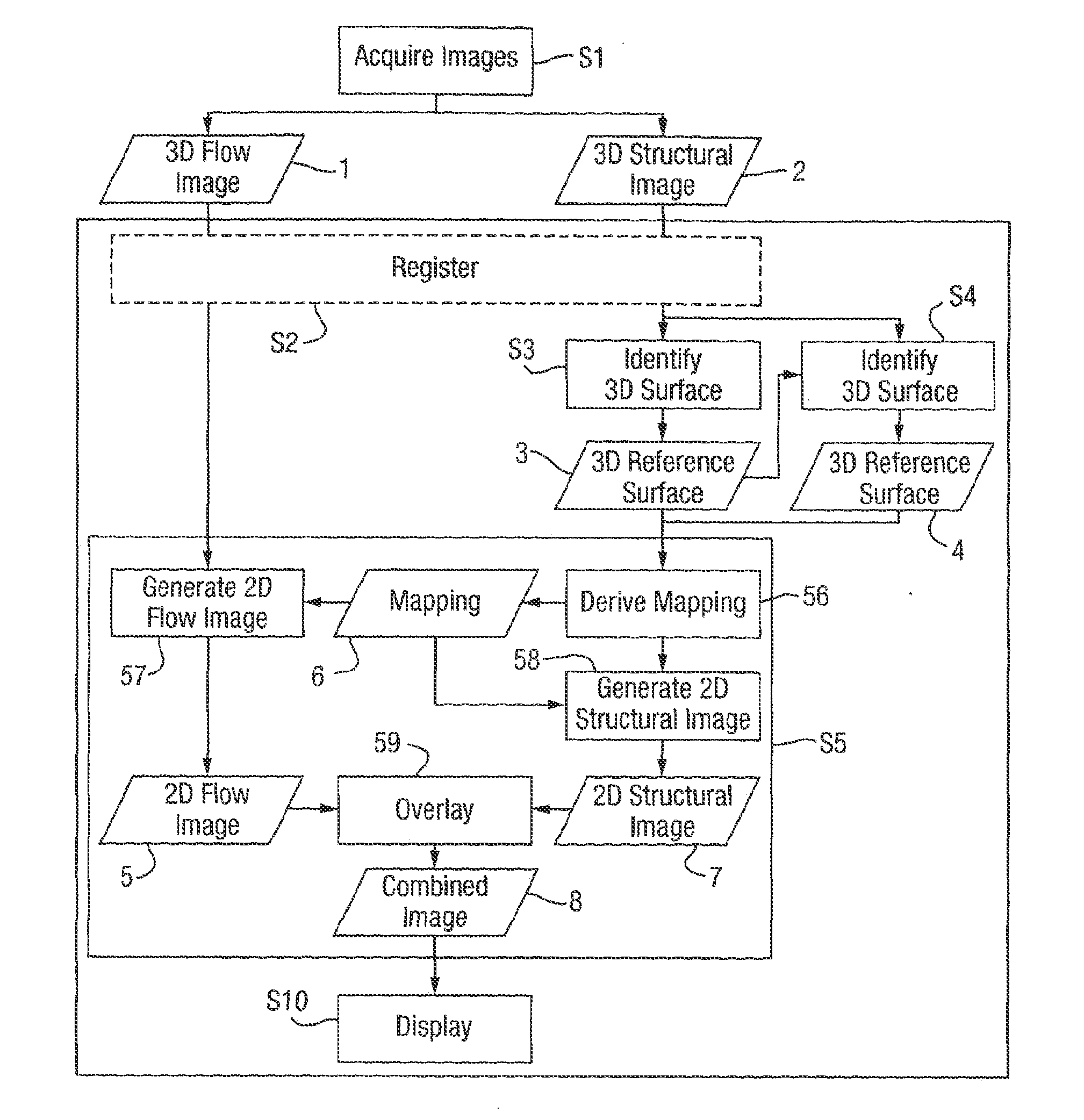
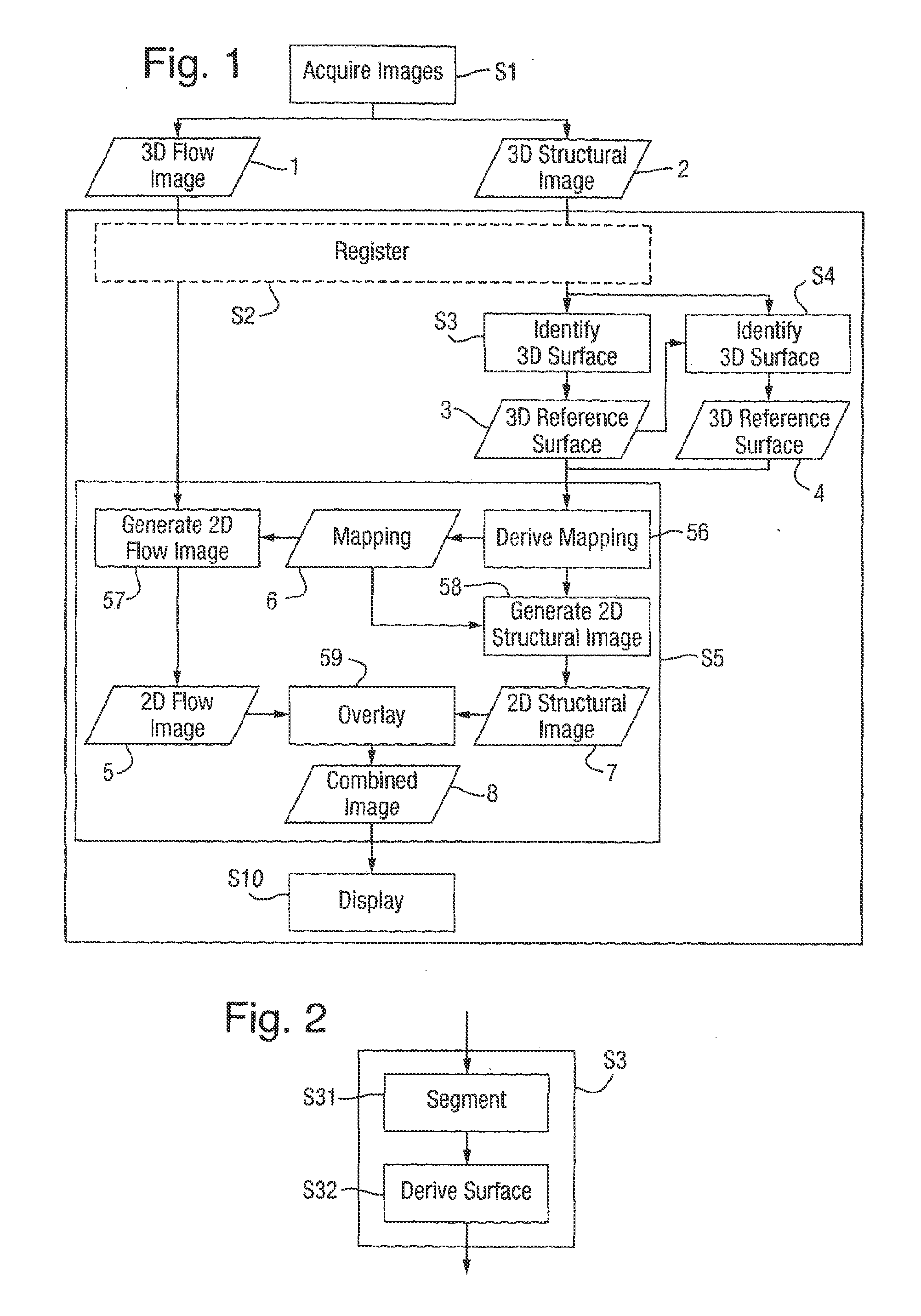
[0037]FIG. 1 shows a method of acquiring and transforming a three-dimensional (3D) flow image 1, in which a three dimensional structural image 2 is also acquired and used.
[0038]In step 1, a subject is imaged to acquire the 3D flow image 1 and the 3D structural image 2, each comprising a set of values for respective voxels (3D pixels) in a field of view. The 3D flow image 1 represents flow within the subject. The 3D structural image 2 has a common field of view with the 3D flow image 1 and represents structure within the same subject.
[0039]Any type of imaging technique that acquires the 3D flow image 1 and the 3D structural image 2 may be used. Step S1 may be performed using known techniques with appropriate imaging apparatus.
[0040]One type of imaging technique that may be applied to both the 3D flow image 1 and the 3D structural image 2 is ultrasonography. In this case, the 3D flow image 1 is an ultrasound intensity image, in which the image data represents the intensity of the meas...
PUM
 Login to View More
 Abstract
Description
Claims
Application Information
 Login to View More