System and methods for depth detection in laser-assisted ophthalmic procedures

a laser-assisted ophthalmic and depth detection technology, applied in laser surgery, medical science, surgery, etc., can solve the problems of adding cost, adding system cost, and pre-surgical measurements that may not account for the internal geometry of the eye, and achieve accurate and precise incisions.

US20140276679A1Active Publication Date: 2014-09-18AMO DEVMENT
8 Cites 4 Cited by

Patent Information

Authority / Receiving Office
US · United States
Patent Type
Applications(United States)
Current Assignee / Owner
Publication Date
2014-09-18

Smart Images

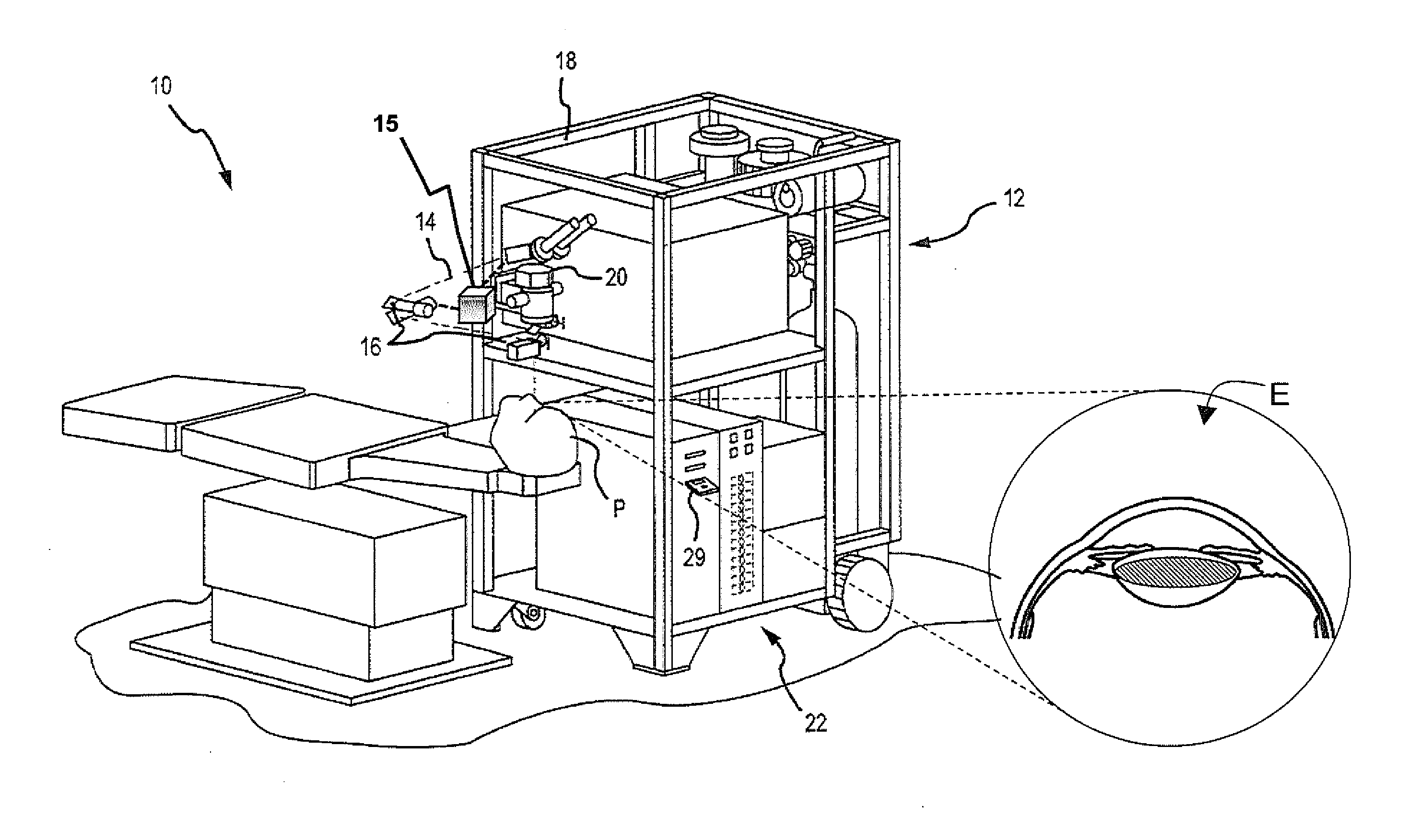
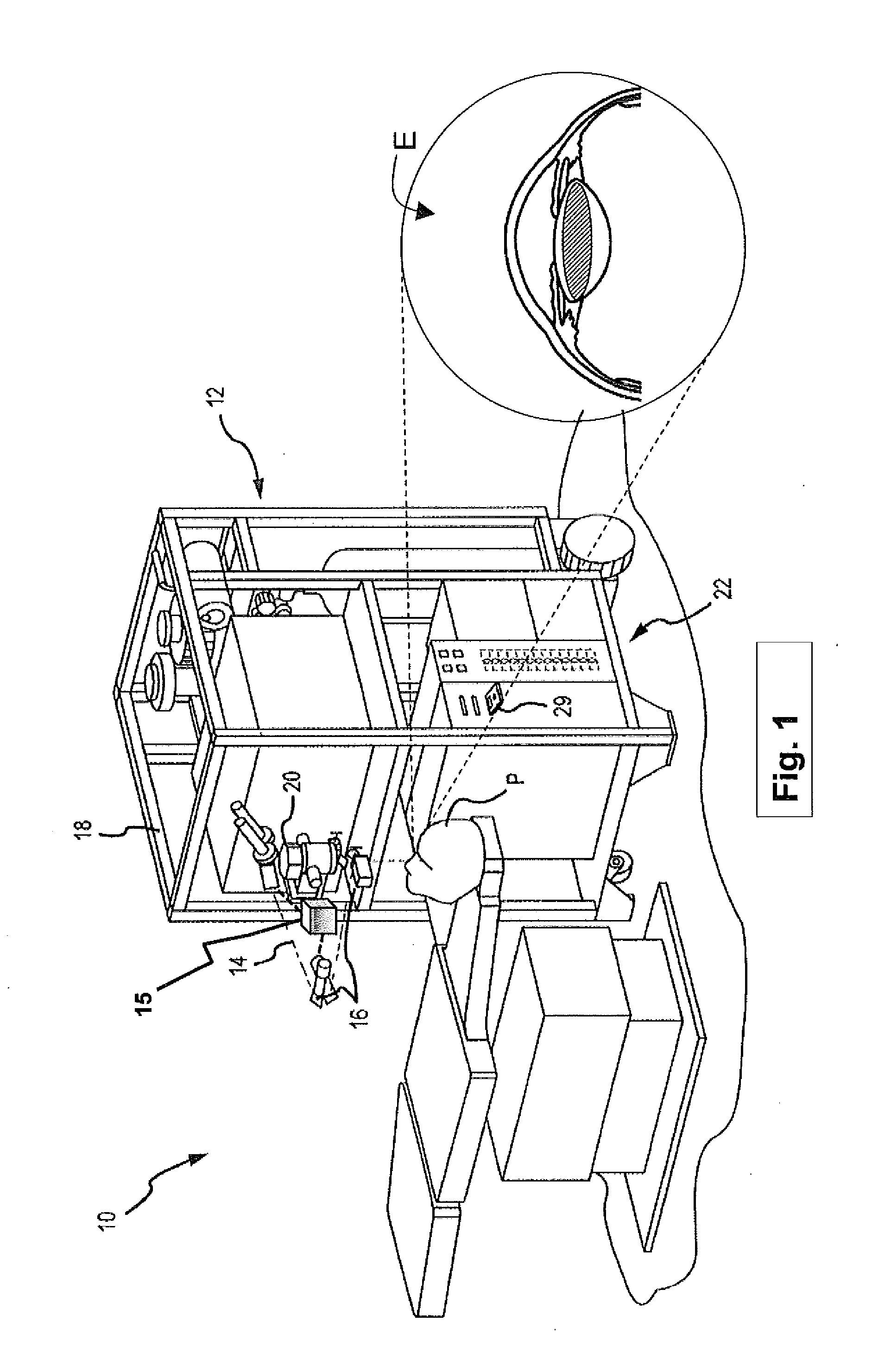
  • Figure 1
    Figure 1
  • Figure 2
    Figure 2
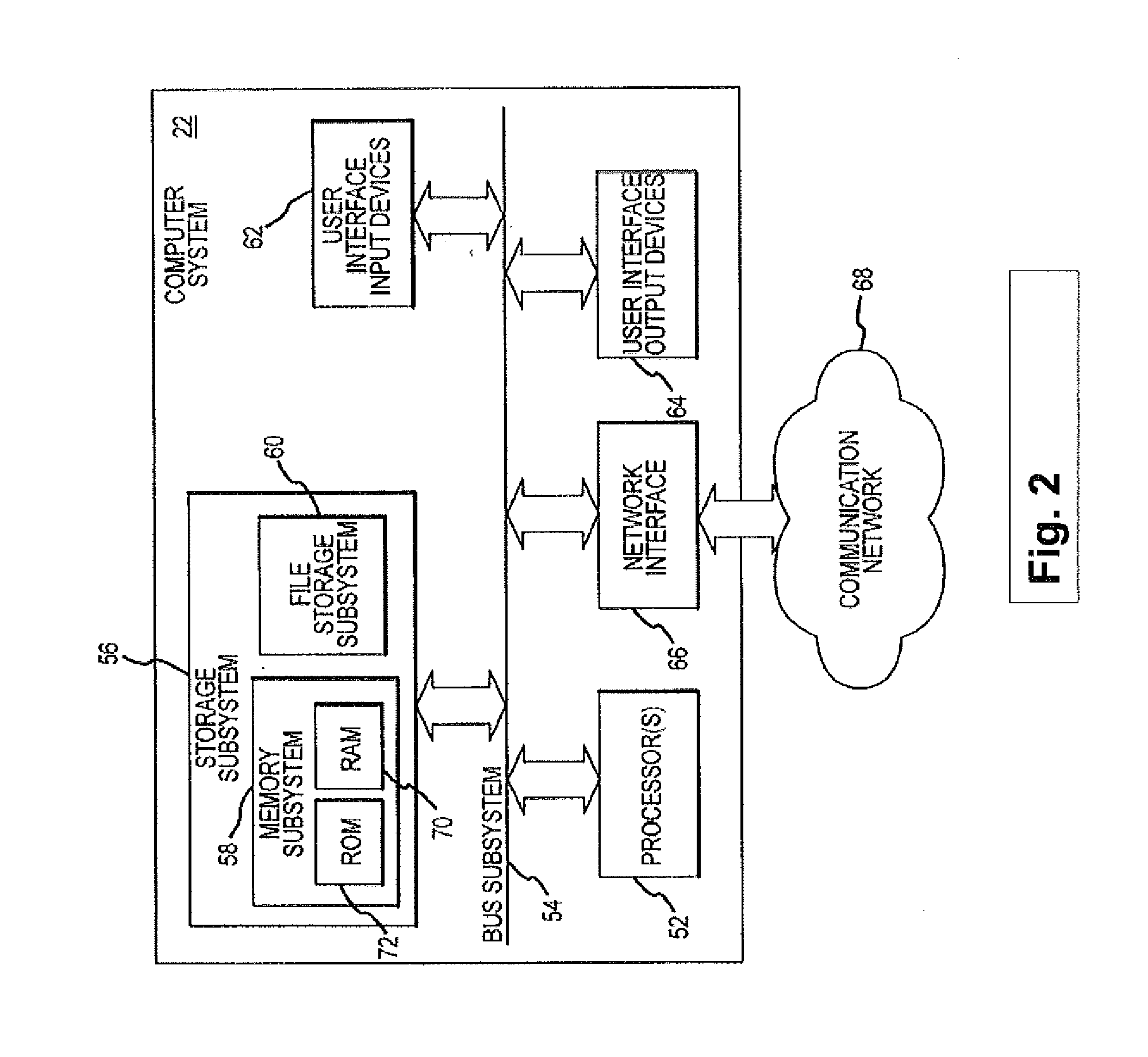
  • Figure 3
    Figure 3
Patent Text Reader

Abstract

Embodiments of this invention relate to systems and methods for automatic depth (or Z) detection before, during, or after laser-assisted ophthalmic surgery. When performing ophthalmic laser surgery, the operator (or surgeon) needs to make accurate and precise incisions using the laser beam. With the automatic depth detection systems and methods, the same laser used for the surgical procedure may be used for depth measurement of the surgical incisions. The surgical laser system may include a laser delivery system for delivering a pulsed laser beam to photoalter an eye, a mirror to transmit at least a portion of reflected light of the pulsed laser beam, a lens positioned to focus the transmitted reflected lighted on to a detector, (such as a CCD), and a depth encoder configured to automatically detect depth according to one or more of color, intensity, or shape of the focused spot on the CCD.
Need to check novelty before this filing date? Find Prior Art

Description

TECHNICAL FIELD

[0001] Embodiments of the present invention generally relate to laser-assisted ophthalmic procedures, and more particularly, to systems and methods for depth detection during laser-assisted ophthalmic surgery.BACKGROUND OF THE INVENTION

[0002] With significant developments in laser technology and its application to ophthalmology, laser surgery has become the technique of choice for ophthalmic procedures, such as refractive surgery for correcting myopia, hyperopia, astigmatism, and so on, and cataract surgery for treating and / or removing a cataractic lens. Laser eye surgery generally uses different types of laser beams, such as ultraviolet lasers, infrared lasers, and near infrared, ultra-short pulsed lasers, for various procedures and indications.

[0003] A surgical laser beam is preferred over manual tools like microkeratomes because it can be focused precisely on extremely small amounts of ocular tissue, thereby enhancing accuracy and reliability. For example, in the comm...

Examples

Embodiment Construction

[0014]Embodiments of this invention are generally directed to systems and methods for ophthalmic laser surgery, and more particularly to systems and methods for depth (or Z) detection before, during, or after laser-assisted ophthalmic surgery. In one embodiment, the same laser used for the surgical operation is also utilized for the depth measurement for the surgical incision before, during, or after the surgery.

[0015]According to an embodiment, the depth (or Z) position of a patient's ocular lens capsule is detected during a laser cataract surgery (“femtophaco”) procedure performed with a surgical laser system, such as for example, the Abbott Medical Optics iFS™ Advanced Femtosecond Laser or IntraLase™ FS Laser, as well as other systems in the market providing ultra-short pulsed laser beams for laser-assisted cataract surgery. The plasma light of the ultra-short pulsed laser delivered at a focal point within the patient's eye is collected and collimated by the surgical laser system...