
MR Imaging Apparatus And Method For Generating A Perfusion Image With Motion Correction
a technology of perfusion image and imaging apparatus, which is applied in the field of method and system for generating magnetic resonance images, can solve the problems of high-resolution 3d mr imaging being susceptible to motion corruption, mr images based on asl differences often suffer from image noise, and can be noisy and noisy,
- Summary
- Abstract
- Description
- Claims
- Application Information
AI Technical Summary
Benefits of technology
Problems solved by technology
Method used
Image

Examples
example
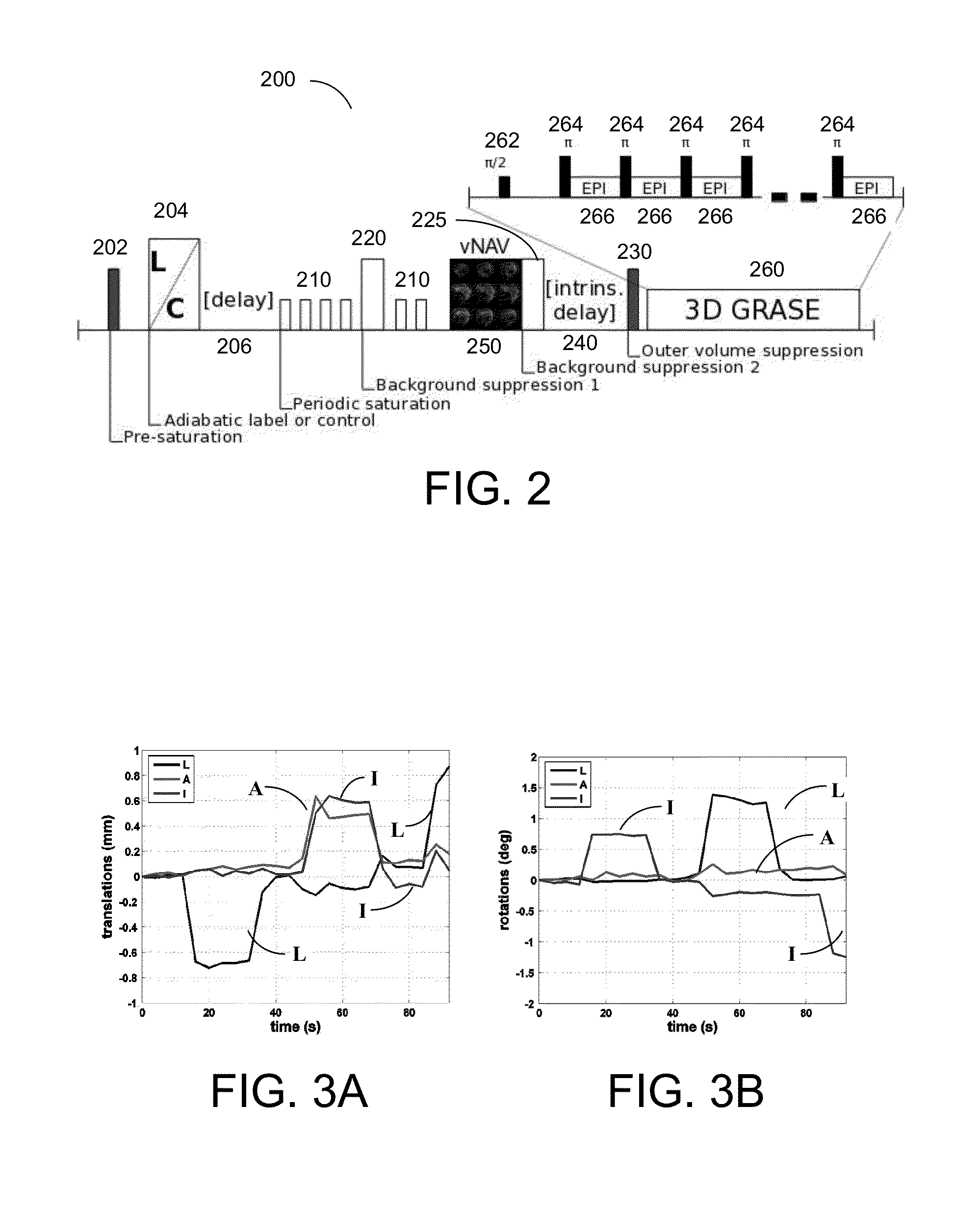
[0062]The system and method described herein were tested in a healthy human volunteer to assess the efficacy of the disclosed 3D navigator-based real-time motion correction for artery spin labeled imaging using a 3D GRASE readout. The imaging of blood perfusion activity in the subject's brain was done using a 3T MR scanner (MAGNETOM Skyra, Siemens Healthcare, Erlangen) with a 32 channel head coil.
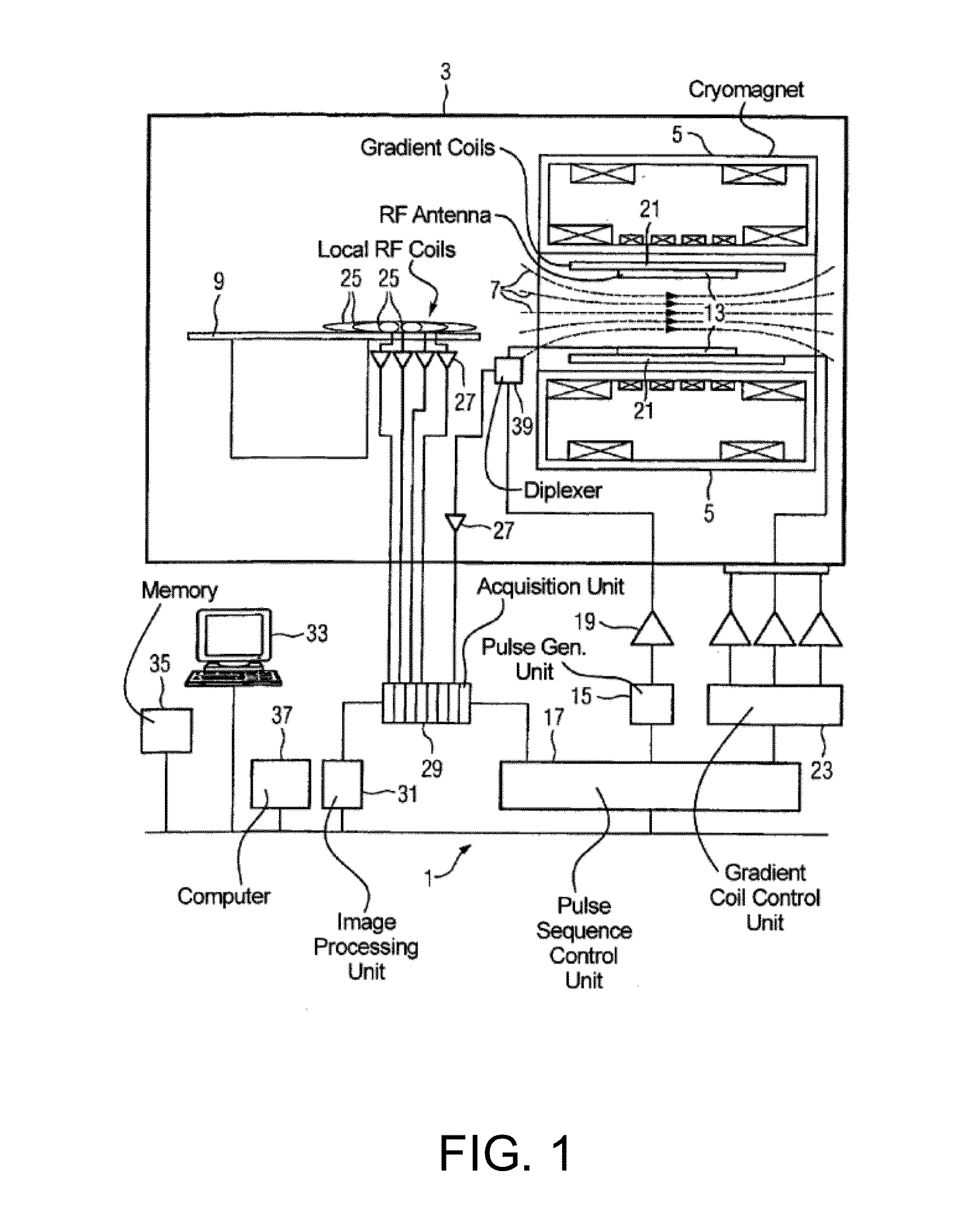
[0063]A pulse sequence substantially corresponding to that illustrated in FIG. 2 was used for generating and acquiring perfusion image data. This sequence 200 includes a 3D segmented GRASE readout sequence 260 with pulsed ASL (PASL) preparation that includes flow-sensitive alternating inversion recovery with a quantitative imaging of perfusion using a single subtraction, second version, with thin-slice T1 periodic saturation (FAIR Q2TIPS), as described in the Luh et al. reference cited herein. Exemplary parameters that were used for the imaging procedure were: TR=4 s; TI=2.4 s (for gray / whi...
PUM
 Login to View More
 Abstract
Description
Claims
Application Information
 Login to View More