Image processing device that synthesizes a plurality of images, method of controlling the same, storage medium, and image pickup apparatus

a processing device and image technology, applied in the field of image processing devices, can solve the problems of inability to accurately detect the motion vector with respect to each of the blocks, and the inability to accurately correct the image shift, so as to achieve accurate correction of the image shift

US20160100103A1Active Publication Date: 2016-04-07CANON KK
1 Cites 17 Cited by

Patent Information

Authority / Receiving Office
US · United States
Patent Type
Applications(United States)
Current Assignee / Owner
Publication Date
2016-04-07

Smart Images

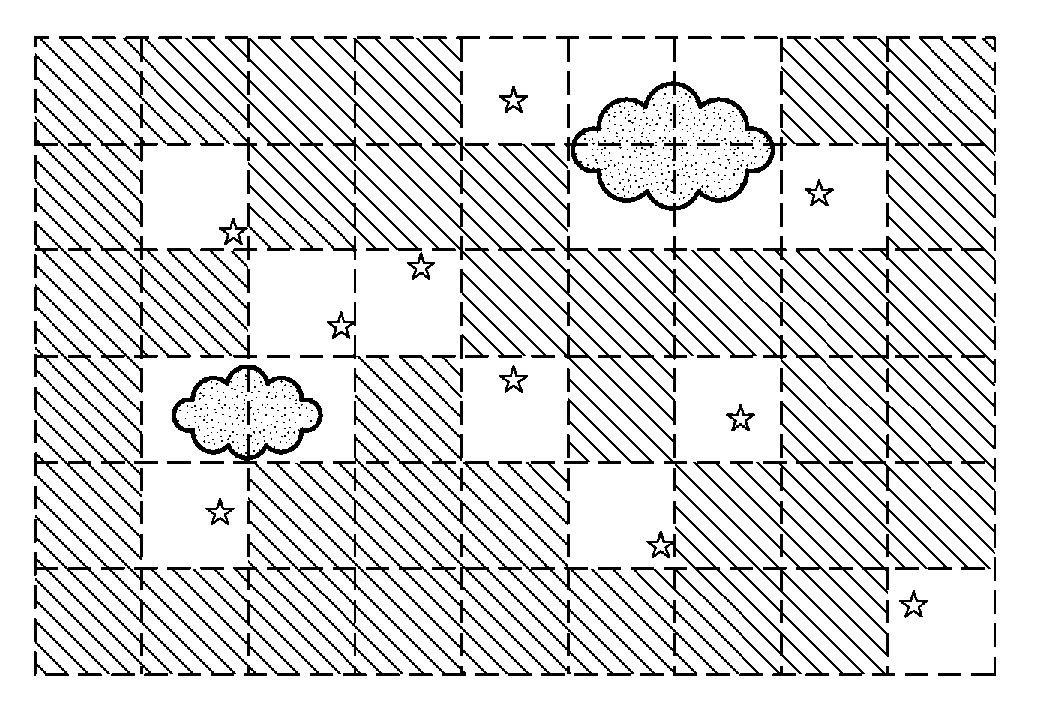
  • Figure 1
    Figure 1
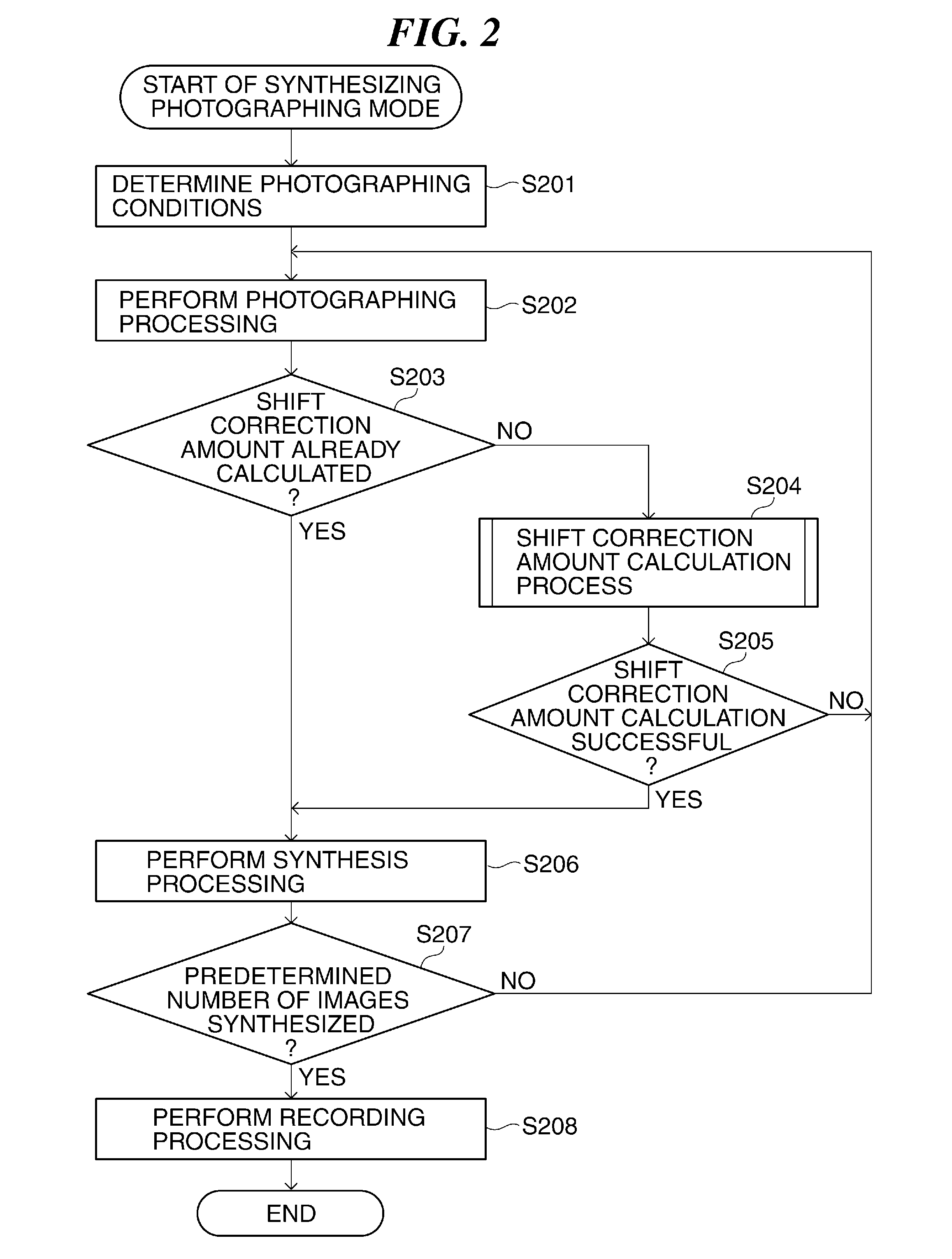
  • Figure 2
    Figure 2
  • Figure 3
    Figure 3
Patent Text Reader

Abstract

An image processing device that is capable of synthesizing a plurality of images by accurately correcting an image shift even in a photographing scene with a lot of external disturbances, such as noise. An image processing device synthesizes a plurality of images obtained by photographing an object that moves at a predetermined speed to thereby obtain a synthesized image. Each of the plurality of images is divided into a plurality of blocks, and a motion vector is detected from each of the blocks. Selection from the motion vectors is performed based on a focal length and an exposure interval applied when the plurality of images are obtained. Synthesis processing is performed by aligning the plurality of images based on the selected motion vectors, whereby the synthesized image is obtained.
Need to check novelty before this filing date? Find Prior Art

Description

BACKGROUND OF THE INVENTION

[0001] 1. Field of the Invention

[0002] The present invention relates to an image processing device, a method of controlling the same, a storage medium, and an image pickup apparatus, and more particularly to an image processing device for synthesizing a plurality of images.

[0003] 2. Description of the Related Art

[0004] In general, when photographing celestial objects, exposure over a long time period e.g. 30 seconds or one minute is performed by taking into consideration the fact that the amount of light from each star is very small. However, each celestial object performs diurnal motion in accordance with the Earth's rotation, and hence the long-time exposure results in forming light trails instead of forming spot images of stars (celestial object).

[0005] To avoid formation of light trails, a plurality of images are photographed with such an exposure time period as will prevent stars from forming light trails, the shift of each star between images caused by th...

Examples

Embodiment Construction

[0025]The present invention will now be described in detail below with reference to the accompanying drawings showing embodiments thereof.

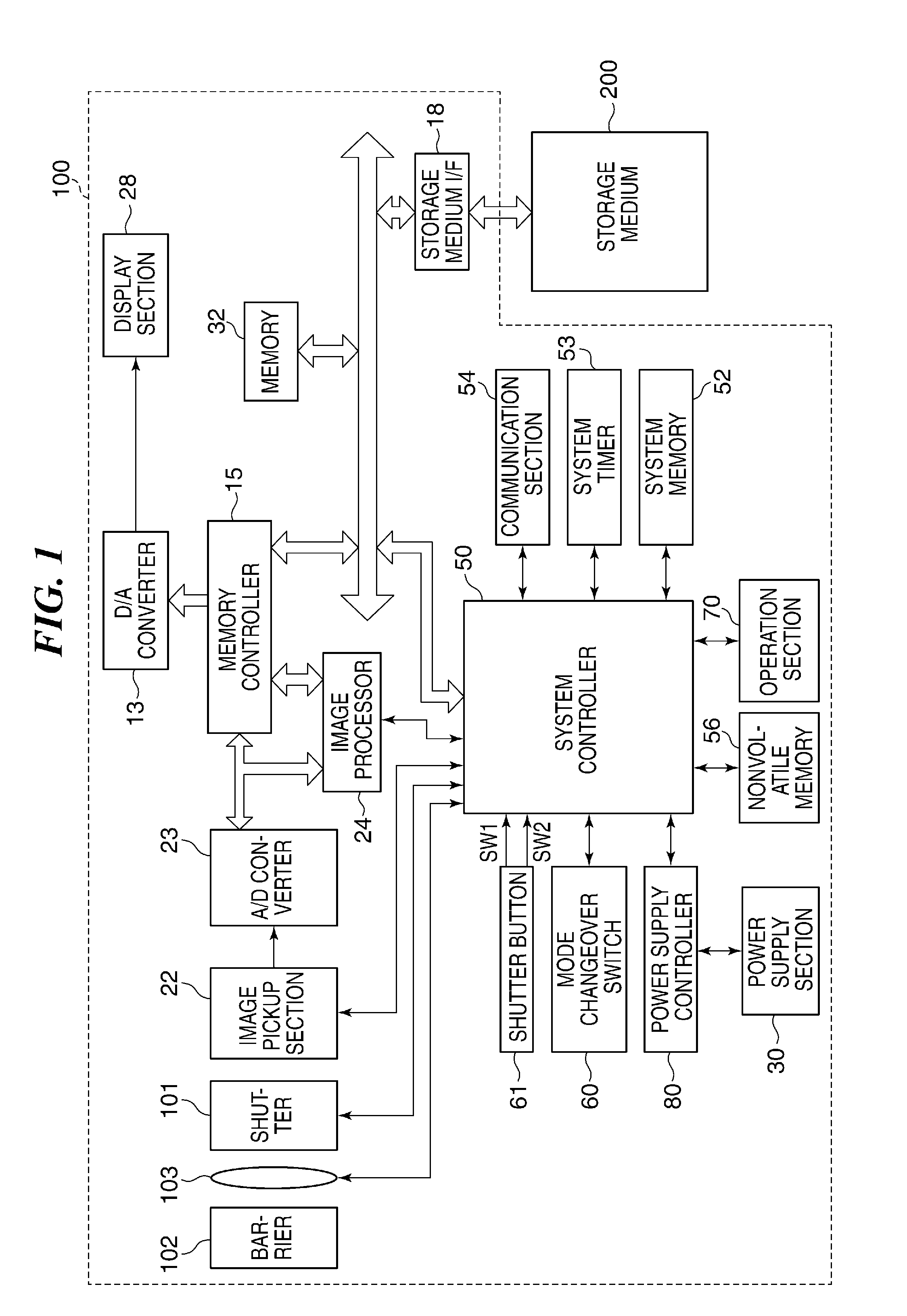
[0026]FIG. 1 is a block diagram of an image pickup apparatus including an image processing device according to an embodiment of the present invention.

[0027]The image pickup apparatus shown in FIG. 1 is e.g. a digital camera (hereinafter simply referred to as “the camera”) 100, and has a photographic lens unit (hereinafter simply referred to as “the photographic lens”) 103. This photographic lens 103 is a lens group including a zoom lens and a focus lens. A shutter 101 is disposed downstream of the photographic lens 103, and is provided with a diaphragm function.

[0028]An image pickup section 22 is disposed downstream of the shutter 101. The image pickup section 22 is an image pickup sensor including an image pickup device, such as a CCD or CMOS element, that converts an optical image (object image) to an electric signal (analog signal). An analog-t...