

Inhibitors of hiv-1 entry and methods of use thereof
a technology of inhibitors and entry points, applied in the field of inhibitors of hiv-1 entry, can solve the problems of inefficient generation of cognate antibodies, extreme challenges to the development of effective env vaccine immunogens, and difficulty in eliciting neutralizing antibodies, so as to inhibit the progression of hiv infection, and inhibit the transmission or progression of hiv
Active Publication Date: 2017-08-17
THE TRUSTEES OF THE UNIV OF PENNSYLVANIA +2
View PDF0 Cites 0 Cited by
- Summary
- Abstract
- Description
- Claims
- Application Information
AI Technical Summary
Benefits of technology
This patent relates to certain compounds that can activate a protein called HIV exterior envelope gp120, inhibit the transmission of HIV to a cell, prevent the progression of HIV infection in a cell, neutralize HIV-1, and treat or prevent HIV infection. The compounds can be used in complexes with gp120 and antibodies. The technical effect is the development of new compounds that can target and interact with gp120, which can be used to develop new treatments for HIV infection.
Problems solved by technology
Most anti-Env antibodies elicited during natural infection do not neutralize HIV-1, and those that do are usually strain-restricted, allowing virus escape.
The variable and glycosylated features of the HIV-1 Env spike render the elicitation of neutralizing antibodies difficult, and have presented extreme challenges to the development of effective Env vaccine immunogens.
One of the major hurdles facing the development of a successful HIV-1 / AIDS vaccine is the requirement to elicit antibodies that recognize conserved elements of the native, unliganded conformation of the HIV-1 Env trimer.
These conserved elements are often buried or composed partially or in some cases completely of glycans, which render the generation of the cognate antibodies inefficient.
Although both the CD4i epitopes and the V3 tip become exposed after HIV-1 binding to cell-surface CD4, steric factors (e.g., the target cell membrane) limit the ability of CD4i and V3-directed antibodies to bind their respective epitopes and neutralize the virus.
Thus, because of the low Env reactivity of primary and transmitted / founder HIV-1, these viruses are generally inhibited poorly by most CD4i and V3-directed antibodies.
However, NBD-556 suffers from one significant disadvantage with respect to development of a vaccine: it increases the binding or neutralizing potency of the 17b CD4i antibody weakly and only in laboratory-adapted viruses that have high Env reactivity.
Method used
the structure of the environmentally friendly knitted fabric provided by the present invention; figure 2 Flow chart of the yarn wrapping machine for environmentally friendly knitted fabrics and storage devices; image 3 Is the parameter map of the yarn covering machine
View moreImage
Smart Image Click on the blue labels to locate them in the text.
Smart ImageViewing Examples

Examples
Experimental program
Comparison scheme
Effect test
embodiments
Embodiment 1
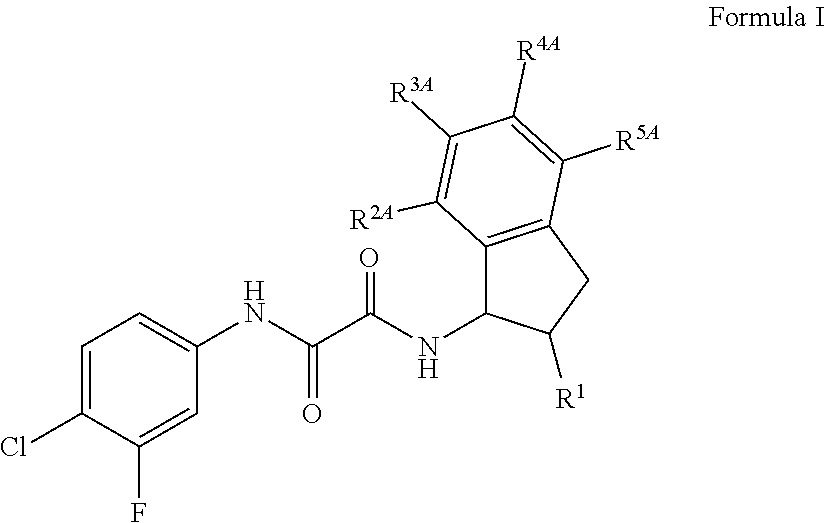
[0198]A compound of Formula I
or a pharmaceutically acceptable salt or solvate thereof,
wherein, independently for each occurrence,
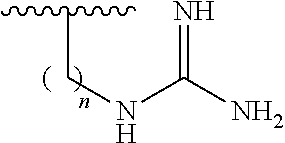
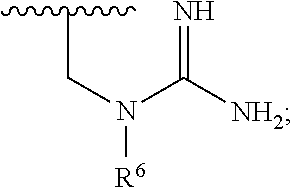
[0199]R1 is
[0200]R2A is —H, alkylaminoalkyl, or cycloalkylaminoalkyl;
[0201]R3A is —H, alkylaminoalkyl, or cycloalkylaminoalkyl;
[0202]R4A is —H, alkylaminoalkyl, or cycloalkylaminoalkyl;
[0203]R5A is —H, alkylaminoalkyl, or cycloalkylaminoalkyl;
[0204]provided at least one of R2A, R3A, R4A, or R5A is not —H; and
[0205]n is 1.
embodiment 2
[0206]The compound of Embodiment 1, wherein R3A is alkylaminoalkyl or cycloalkylaminoalkyl.
embodiment 3
[0207]The compound of Embodiment 1, wherein R3A is alkylaminoalkyl.
the structure of the environmentally friendly knitted fabric provided by the present invention; figure 2 Flow chart of the yarn wrapping machine for environmentally friendly knitted fabrics and storage devices; image 3 Is the parameter map of the yarn covering machine
Login to View More PUM
| Property | Measurement | Unit |
|---|---|---|
| Conformational barrier | aaaaa | aaaaa |
| Transmission | aaaaa | aaaaa |
| Stereoisomer | aaaaa | aaaaa |
Login to View More
Abstract
The disclosure provides compositions and methods for sensitizing primary HIV-1, including transmitted / founder viruses, to neutralization by monoclonal antibodies, e.g., those directed against CD4-induced (CD4i) epitopes and the V3 region. In certain embodiments, the disclosure relates to the use of small molecules as microbicides to inhibit HIV-1 infection directly and to sensitize primary HIV-1 to neutralization by readily elicited antibodies.
Description
CROSS REFERENCE TO RELATED APPLICATIONS[0001]This application claims the benefit of U.S. Provisional Application No. 62 / 036,853, filed Aug. 13, 2014, the entirety of which is incorporated herein by reference.GOVERNMENT SUPPORT[0002]This invention was made with government support under Grant GM 56550 awarded by the National Institutes of Health. The U.S. government has certain rights in the invention. This statement is included solely to comply with 37 C.F.R. §401.14(a)(f)(4) and should not be taken as an assertion or admission that the application discloses and / or claims only one invention.BACKGROUND OF THE INVENTION[0003]Preventing sexual transmission of human immunodeficiency virus (HIV-1) is critical for altering the course of the global pandemic of acquired immunodeficiency syndrome (AIDS). Currently, approximately 34 million people are living with HIV-1 infection; 2.5 million people are newly infected with the virus annually, and nearly 1.7 million individuals succumb each year...
Claims
the structure of the environmentally friendly knitted fabric provided by the present invention; figure 2 Flow chart of the yarn wrapping machine for environmentally friendly knitted fabrics and storage devices; image 3 Is the parameter map of the yarn covering machine
Login to View More Application Information
Patent Timeline
 Login to View More
 IPC IPC(8): C07C279/12C12N7/00A61K39/42C07K14/005C07K16/10A61K31/167
CPCC07C279/12C07K16/1063A61K31/167C07C2602/08C07K14/005C12N7/00C12N2740/16122A61K39/42
InventorSMITH,, III, AMOS B.SODROSKI, JOSEPHMADANI, NAVIDMELILLO, BRUNOLALONDE, JUDITH M.PRINCIOTTO, AMY M.
OwnerTHE TRUSTEES OF THE UNIV OF PENNSYLVANIA