Hybrid control method for an electrical converter

a converter and hybrid technology, applied in the direction of general control strategies, conversion with intermediate conversion to dc, efficient power electronics conversion, etc., can solve the problems of incorrect flux error and insufficient large disturbance, and achieve the effect of less switching loss, faster approach to estimated control variables, and more aggressive control
US20180062531A1Active Publication Date: 2018-03-01ABB (SCHWEIZ) AG

Patent Information

Authority / Receiving Office
US ยท United States
Patent Type
Applications(United States)
Current Assignee / Owner
ABB (SCHWEIZ) AG
Publication Date
2018-03-01

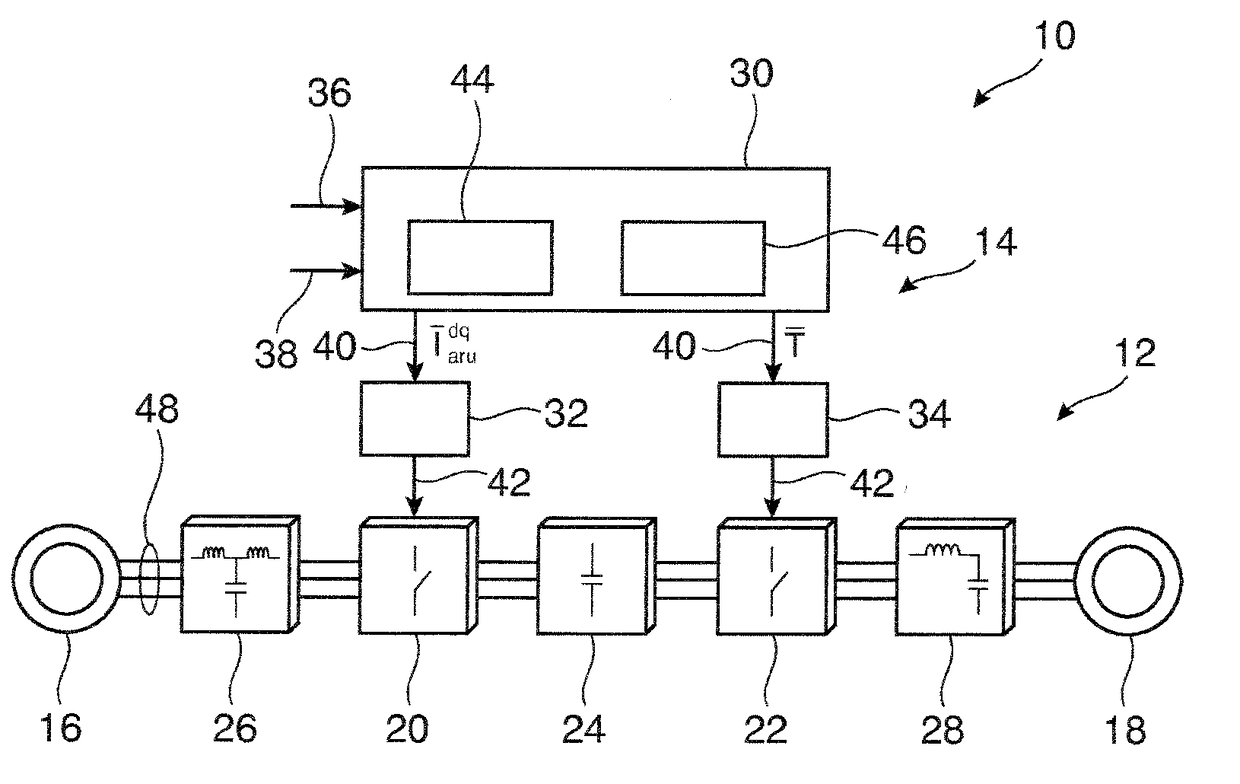
Smart Images

  • Figure 1
    Figure 1
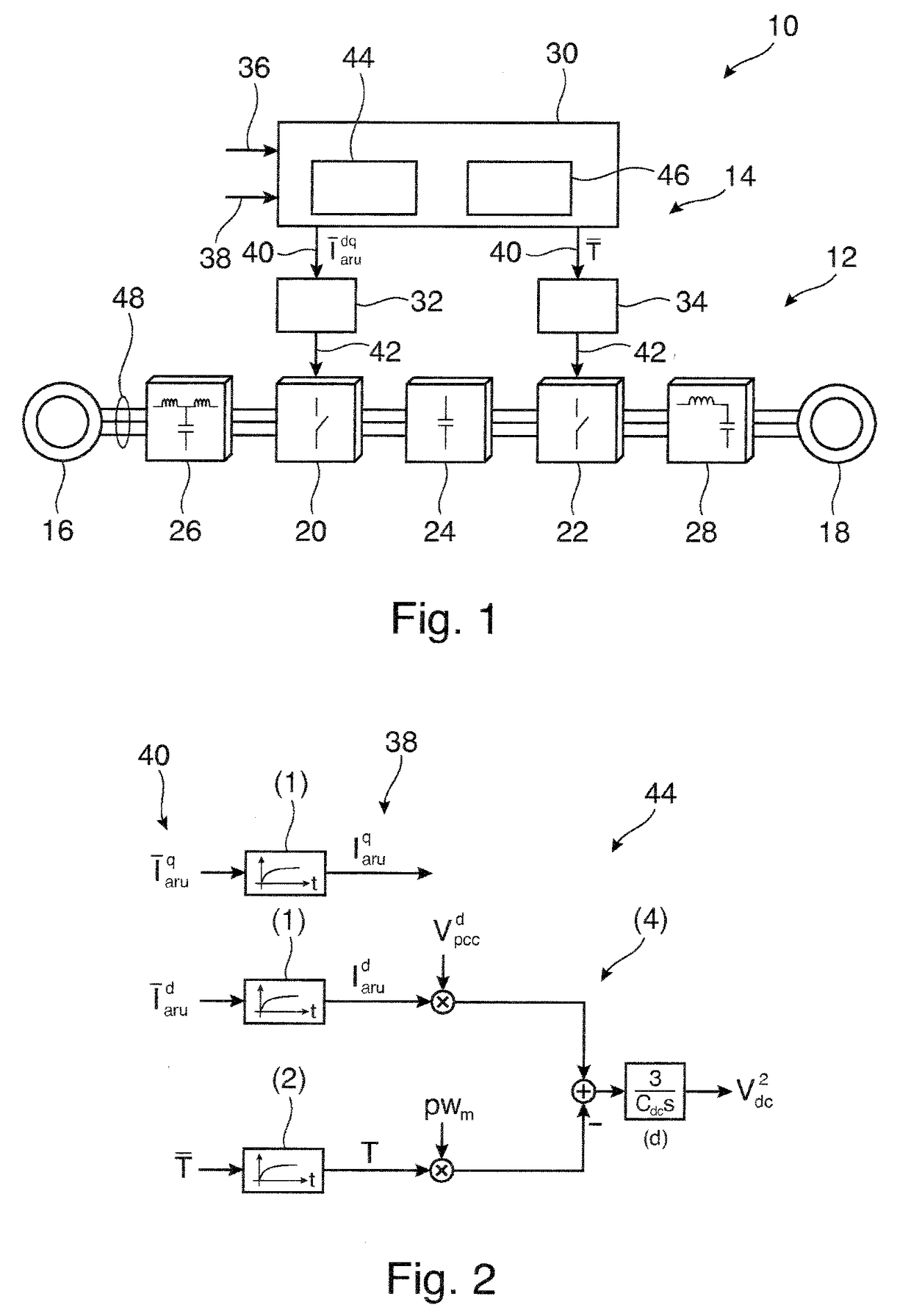
  • Figure 2
    Figure 2
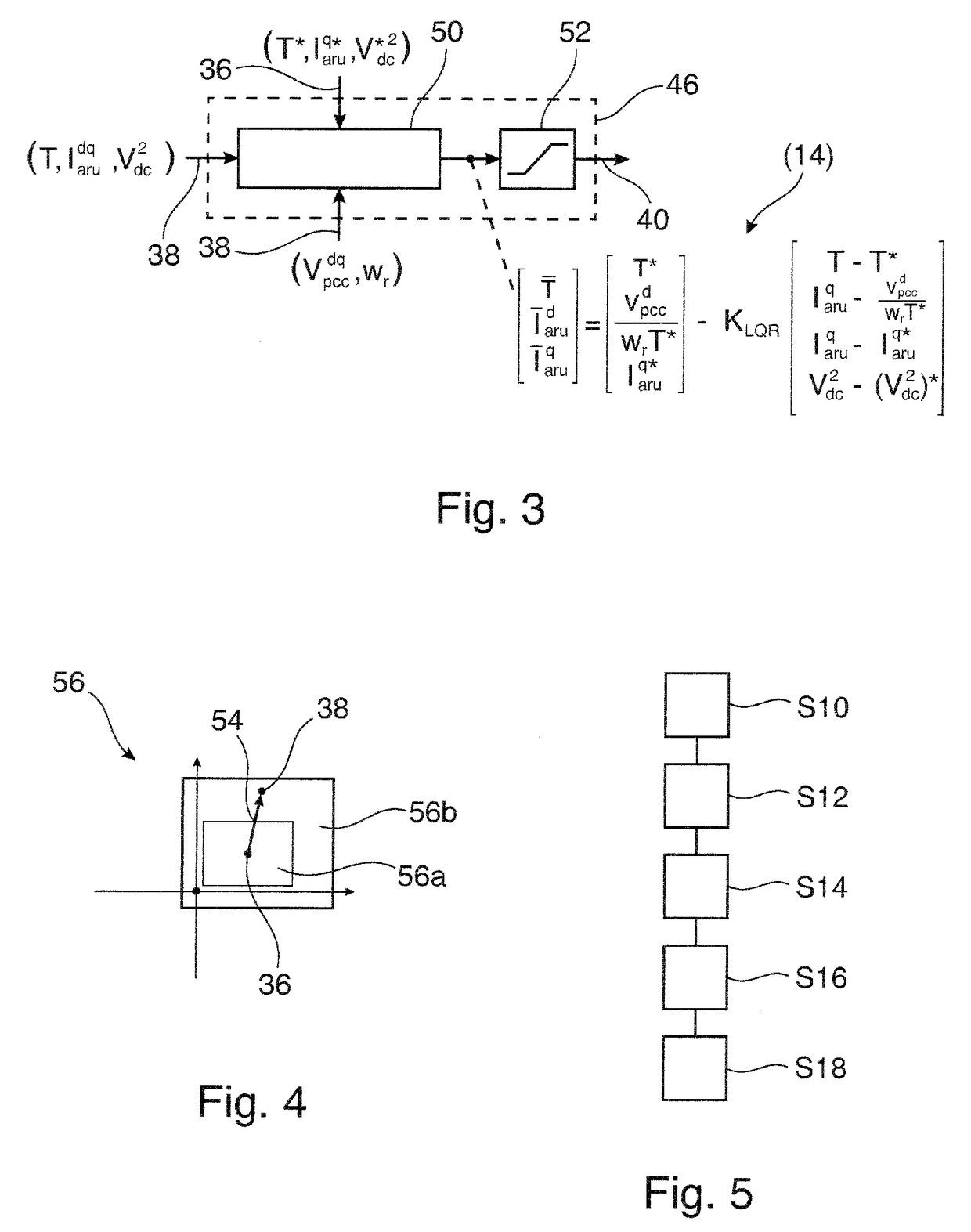
  • Figure 3
    Figure 3
Patent Text Reader

Abstract

An electrical converter comprises at least one of an active rectifier and an inverter interconnecting an electrical source with an electrical load. A method for controlling an electrical converter comprises: receiving at least one estimated control variable, which is estimated from measurement values measured in the electrical converter; receiving at least one outer loop control variable provided by an outer control loop, the at least one outer loop control variable providing a desired steady-state operation point of the electrical converter; determining a control region based on a control error, which is a difference between the at least one estimated control variable and the at least one outer loop control variable, wherein the control region is defined by one or more intervals of one or more control variables; selecting control parameters based on the control region, wherein, when the control error is in an inner control region, first control parameters are selected, and, when the control error is outside the inner control region but inside an outer control region, second control parameters are selected; switching, based on the control error, between two and more control methods, which differ in control parameters, by predicting at least one reference control value based on a solution of a physical model of the electrical converter, which comprises the selected control parameters, the physical model being based on differential equations modelling the at least one estimated control variable and the solution being based on a constraint minimizing a difference between the at least one estimated control variable and the at least one outer loop control variable; and determining switching states of the electrical converter based on the reference control value.
Need to check novelty before this filing date? Find Prior Art

Description

FIELD OF THE INVENTION

[0001] The invention relates to the field of control of power converters. In particular, the invention relates to a method, a computer program, a computer-readable medium and a controller for controlling an electrical converter. Furthermore, the invention relates to a converter system comprising such an electrical converter.BACKGROUND OF THE INVENTION

[0002] High power electrical motors are usually supplied by so-called medium voltage drives, which are used in various sectors to drive a variety of machines and processes. Such a medium voltage drive or an electrical converter may be characterised by the power flow between the load and a supplying grid and the energy storage provided by the DC link.

[0003] In a usual setup, the electrical converter absorbs power from a three-phase AC power source (the electrical grid), stores this power as energy in DC form using capacitors or inductors (i.e. in the DC link), and finally converts this stored energy back to AC form and...

Claims

the structure of the environmentally friendly knitted fabric provided by the present invention; figure 2 Flow chart of the yarn wrapping machine for environmentally friendly knitted fabrics and storage devices; image 3 Is the parameter map of the yarn covering machine
Login to View More