
Supervised learning system for identity compromise risk computation
Patent Information
- Authority / Receiving Office
- US · United States
- Current Assignee / Owner
- Publication Date
- 2020-03-19
Smart Images
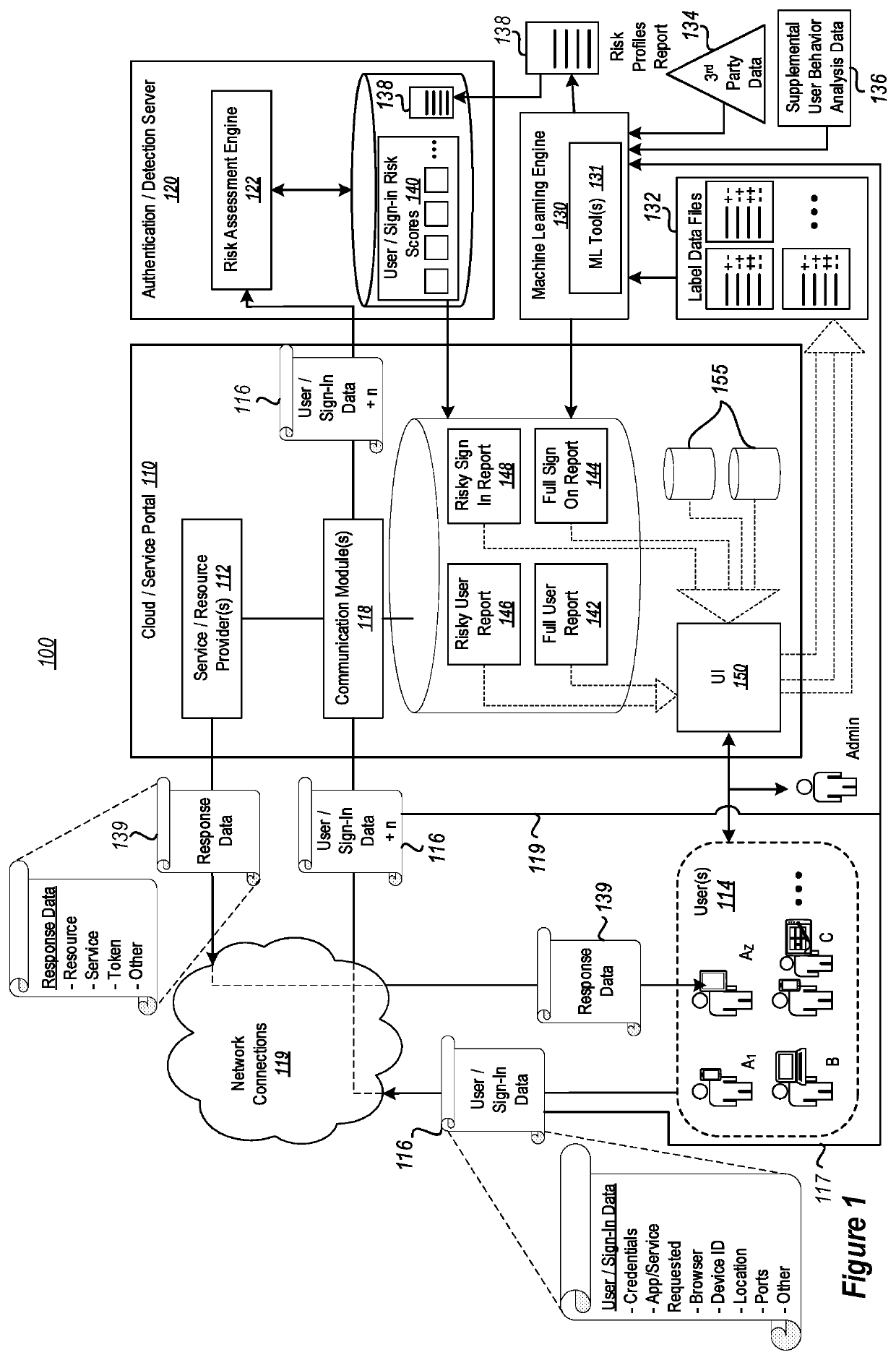
Figure 1 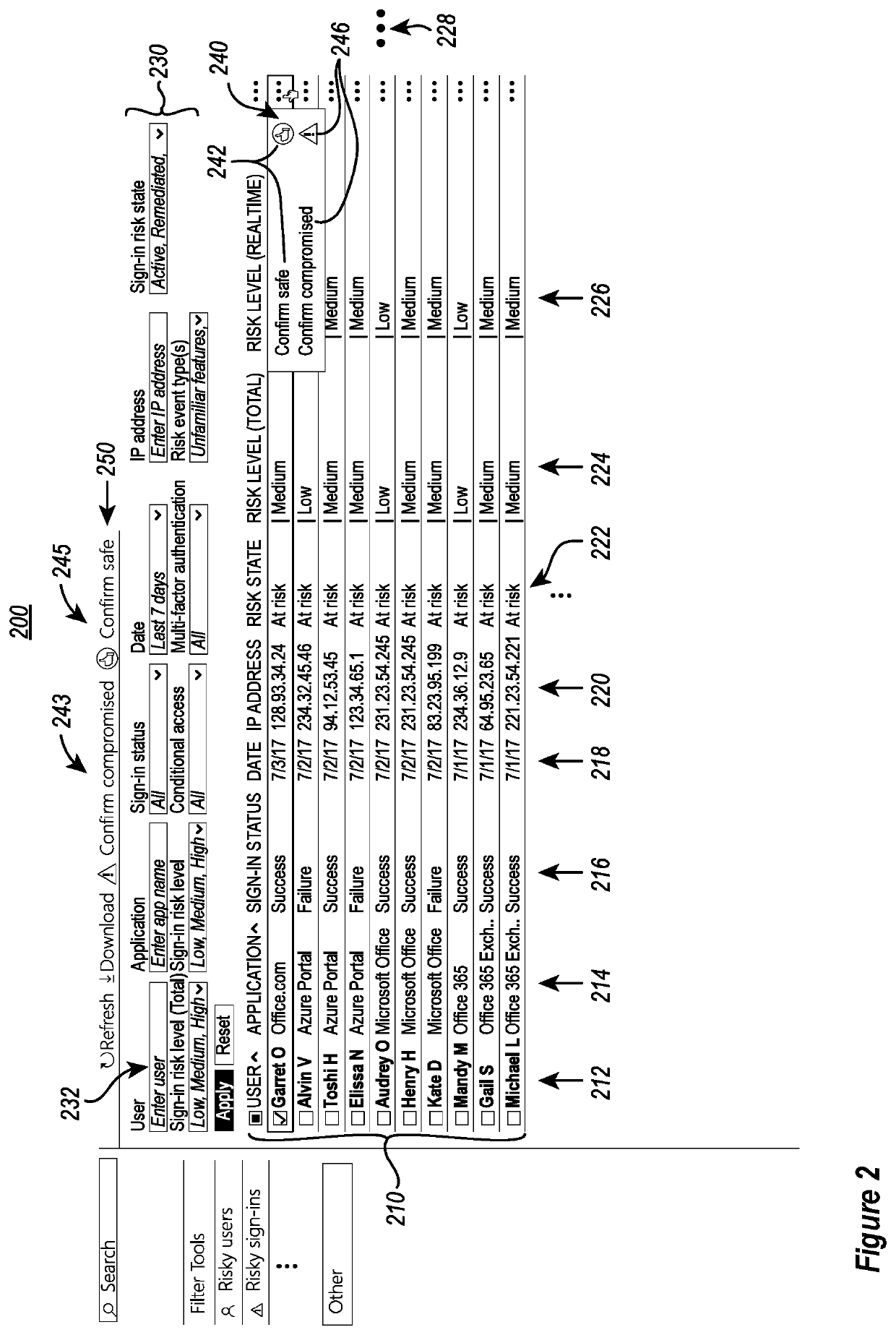
Figure 2 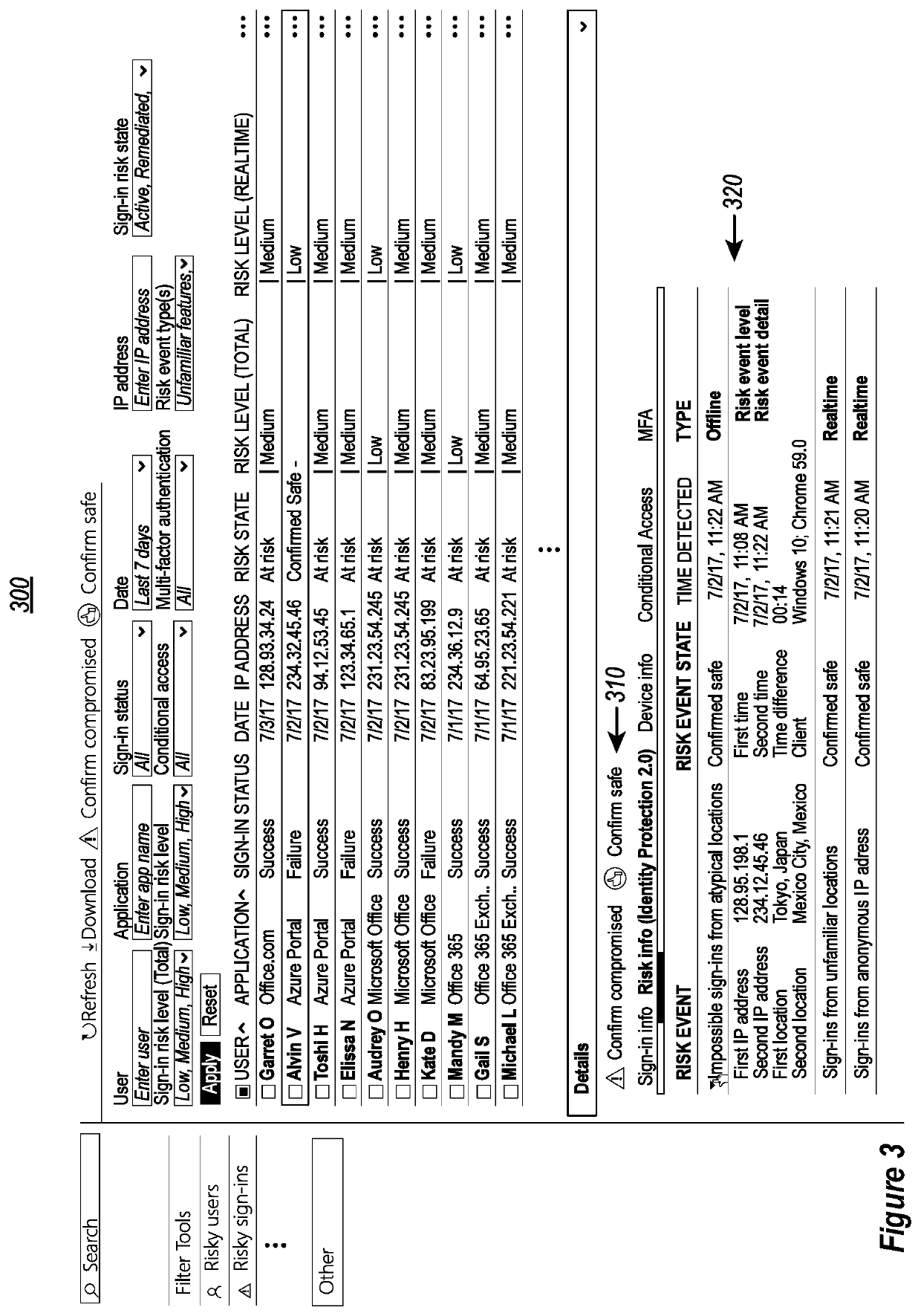
Figure 3
Abstract
Description
CROSS-REFERENCE TO RELATED APPLICATIONS
[0001] This application claims the benefit of and priority to U.S. Provisional Patent Application Ser. No. 62 / 732,470 filed on Sep. 17, 2018 and entitled “SUPERVISED LEARNING SYSTEM FOR IDENTITY COMPROMISE RISK COMPUTATION,” which application is expressly incorporated herein by reference in its entirety.BACKGROUND
[0002] Computing systems and corresponding software applications have become very sophisticated, enabling users to access, manipulate and store data in a variety of formats and to perform numerous functions with that data. For instance, some software applications are configured to perform word processing, design, audio / visual processing, data analysis, email processing, and so forth.
[0003] In many cases, software applications are configured to restrict user rights based on permissions and policies associated with their computer resources. This is particularly true for many distributed enterprise systems and applications that enable subscr...
Examples
Embodiment Construction
[0030]As indicated above, the disclosed embodiments relate to systems and methods for improving user identity protection and corresponding computer security systems that are based on user risk profiles and, even more particularly, to embodiments for improving the accuracy and usability of the user identities / user risk scores by applying multiple tiers of machine learning to the user risk profile components in order to dynamically generate and modify the corresponding user risk scores.
[0031]In some instances, the disclosed embodiments can be utilized to simultaneously improve both the overall precision and recall effectiveness of computer security systems that are based on the use of user risk scores. This is accomplished, in some instances, by iteratively applying multiple machine learning tiers to stored user / sign-in data to generate and / or modify the user identity risk scores.
[0032]In some instances, it is possible to utilize the disclosed embodiments to dynamically respond to det...