
Compressive sensing systems and methods using edge nodes of distributed computing networks
a distributed computing network and compression sensing technology, applied in the field of distributed computing systems, can solve the problems of low power bandwidth with which the nodes of the system are interconnected, limited availability of computation resources at the edge nodes, and corresponding degradation of data accuracy after decompression, so as to reduce the required transmission bandwidth and computing resources, increase the length of the window, and maintain accuracy
- Summary
- Abstract
- Description
- Claims
- Application Information
AI Technical Summary
Benefits of technology
Problems solved by technology
Method used
Image

Examples
Embodiment Construction
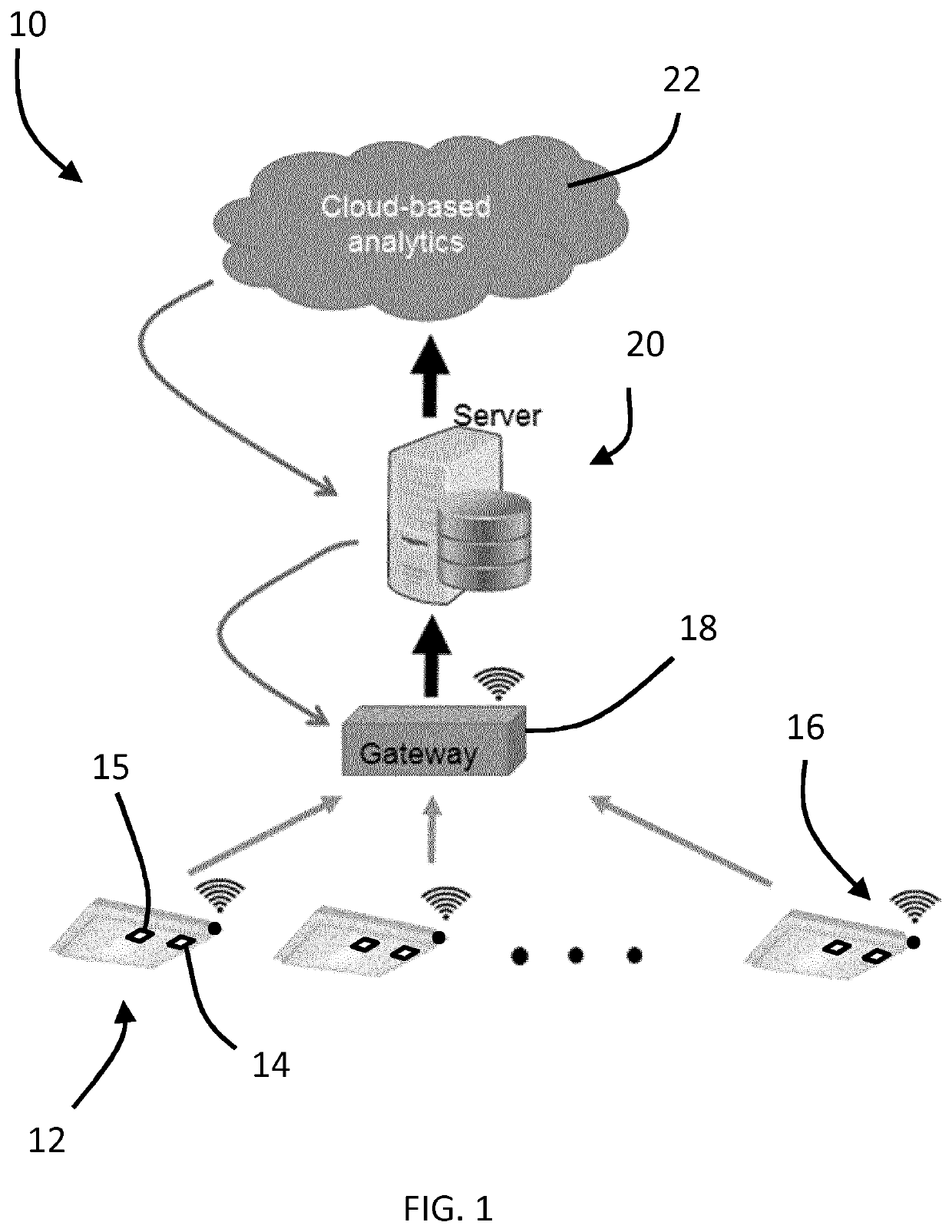
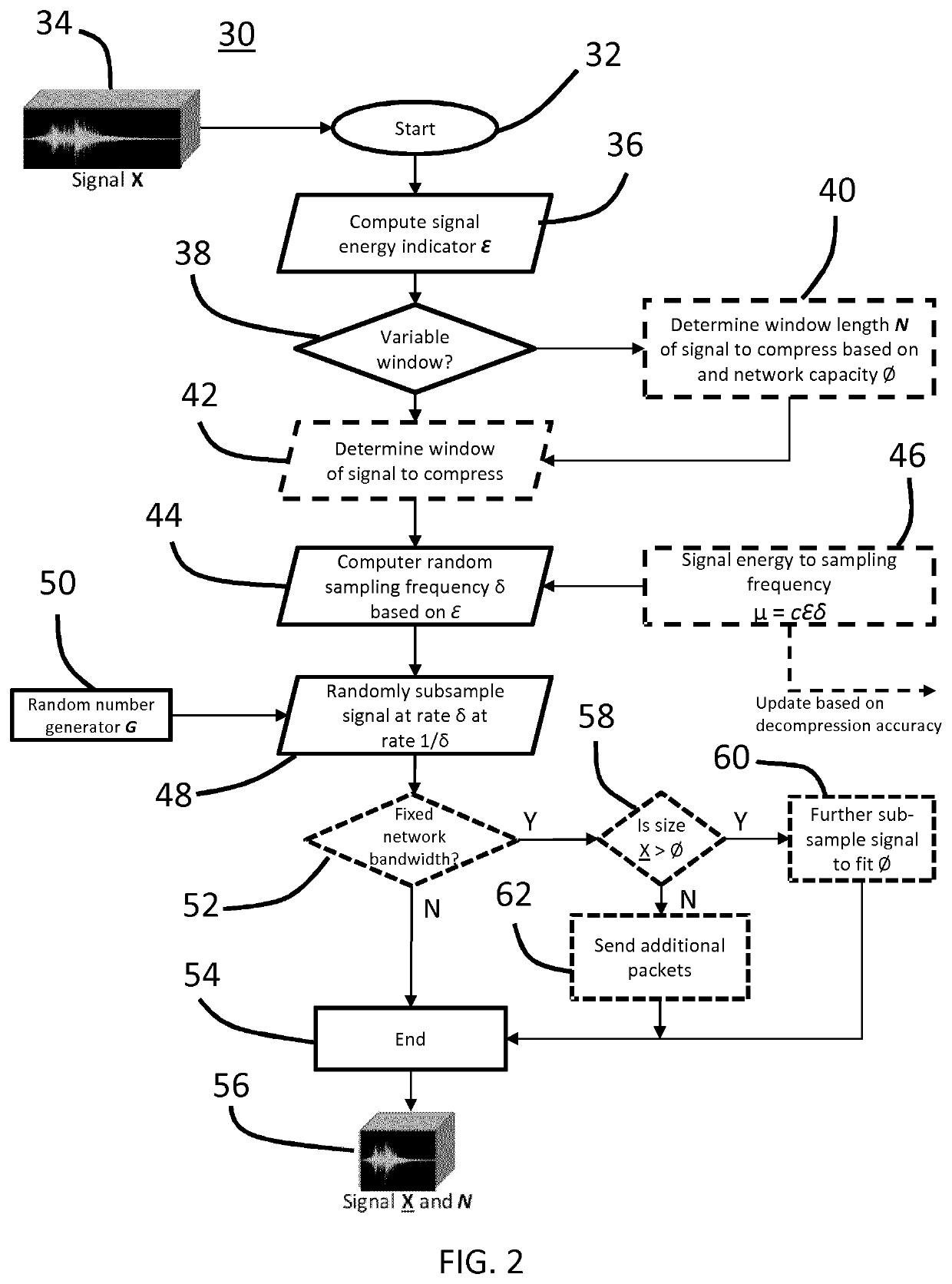
[0028]The present disclosure describes various embodiments of providing compressive sensing using edge nodes of a distributed computing network. More generally, Applicant has recognized and appreciated that it would be beneficial to provide a sensor-enabled edge node that is configured to adaptively adjust compression characteristics based on a signal energy indicator that is determined as an estimate or quantification of energy distortion in the raw data signal collected by the sensors of the edge node. A particular goal of utilization of certain embodiments of the present disclosure is to improve the reconstruction accuracy of compressed data, particularly with respect to data compressed by resource-limited edge nodes.
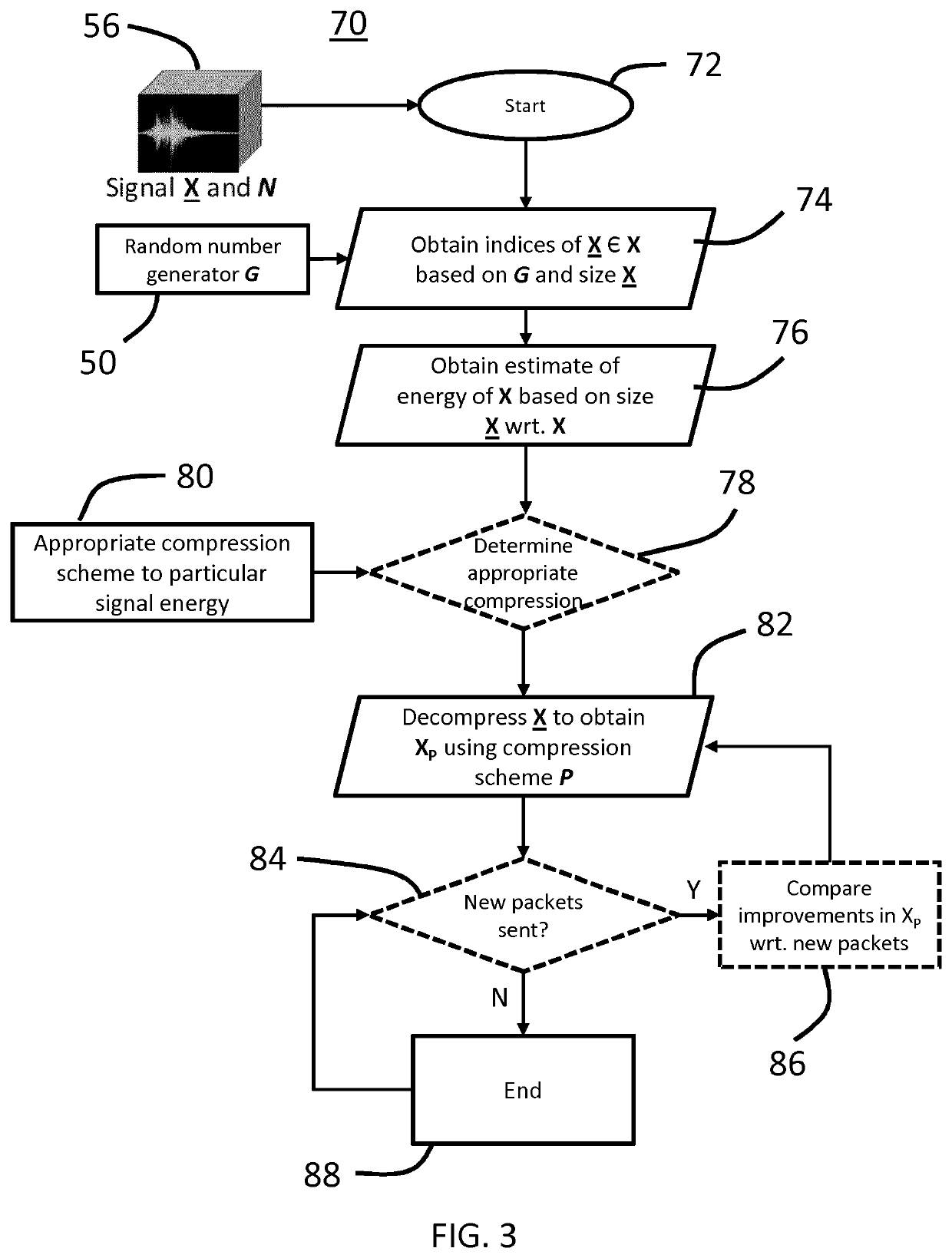
[0029]In view of the foregoing, various embodiments and implementations are directed to data compression and reconstruction methods in which data is first collected by the sensor(s) of one or more edge nodes of a distributed computing network. A signal energy indicat...
PUM
 Login to View More
 Abstract
Description
Claims
Application Information
 Login to View More