
Method for producing a bipolar plate strand, method for producing a bipolar plate and device for carrying out the method
a technology of bipolar plates and strands, applied in the direction of electrochemical generators, sustainable manufacturing/processing, final product manufacturing, etc., can solve the problems of local leakage in terms of media flow, leakage statistically, and pore formation
Patent Information
- Authority / Receiving Office
- US · United States
- Current Assignee / Owner
- Publication Date
- 2022-05-12
Smart Images
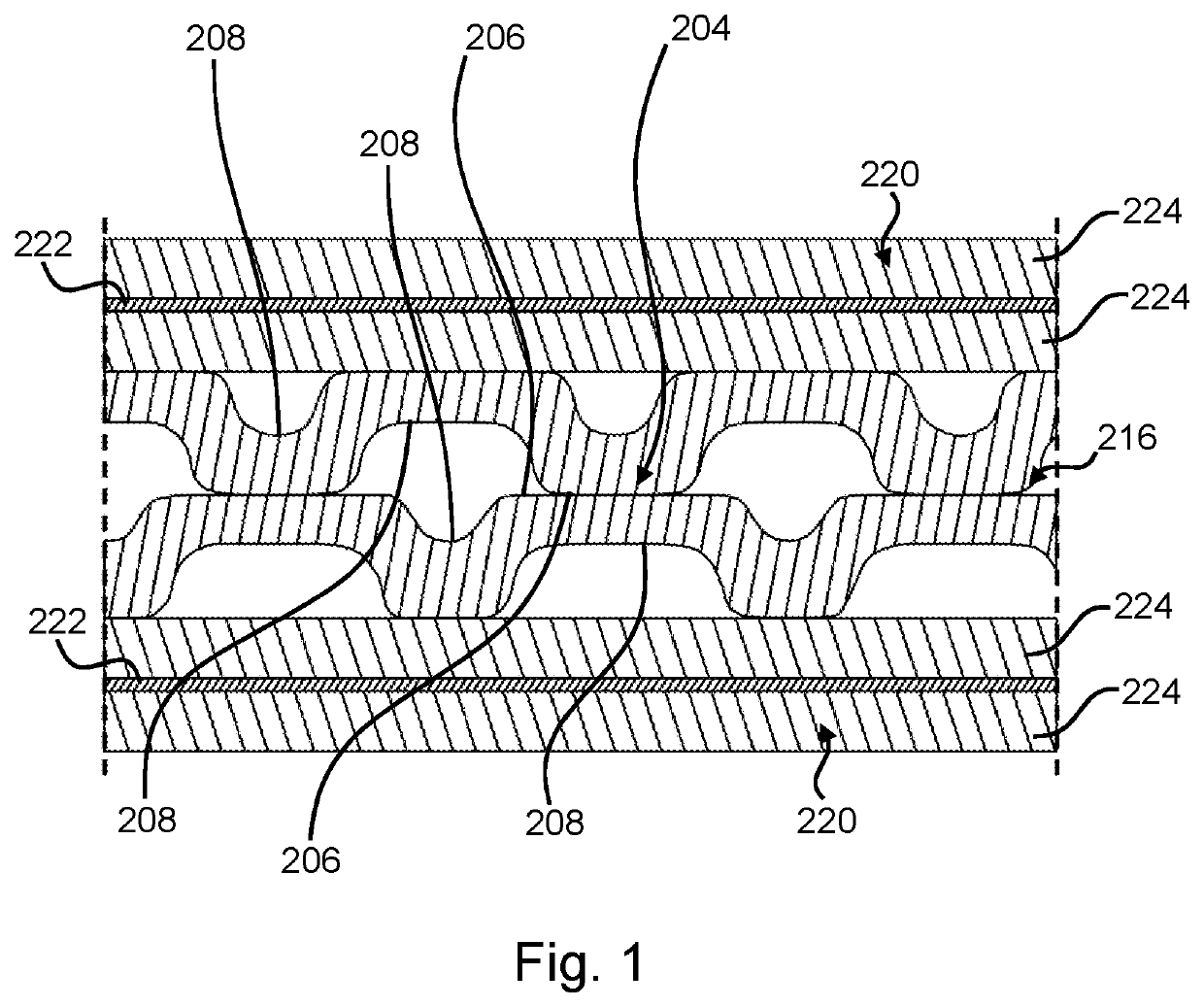
Figure 1 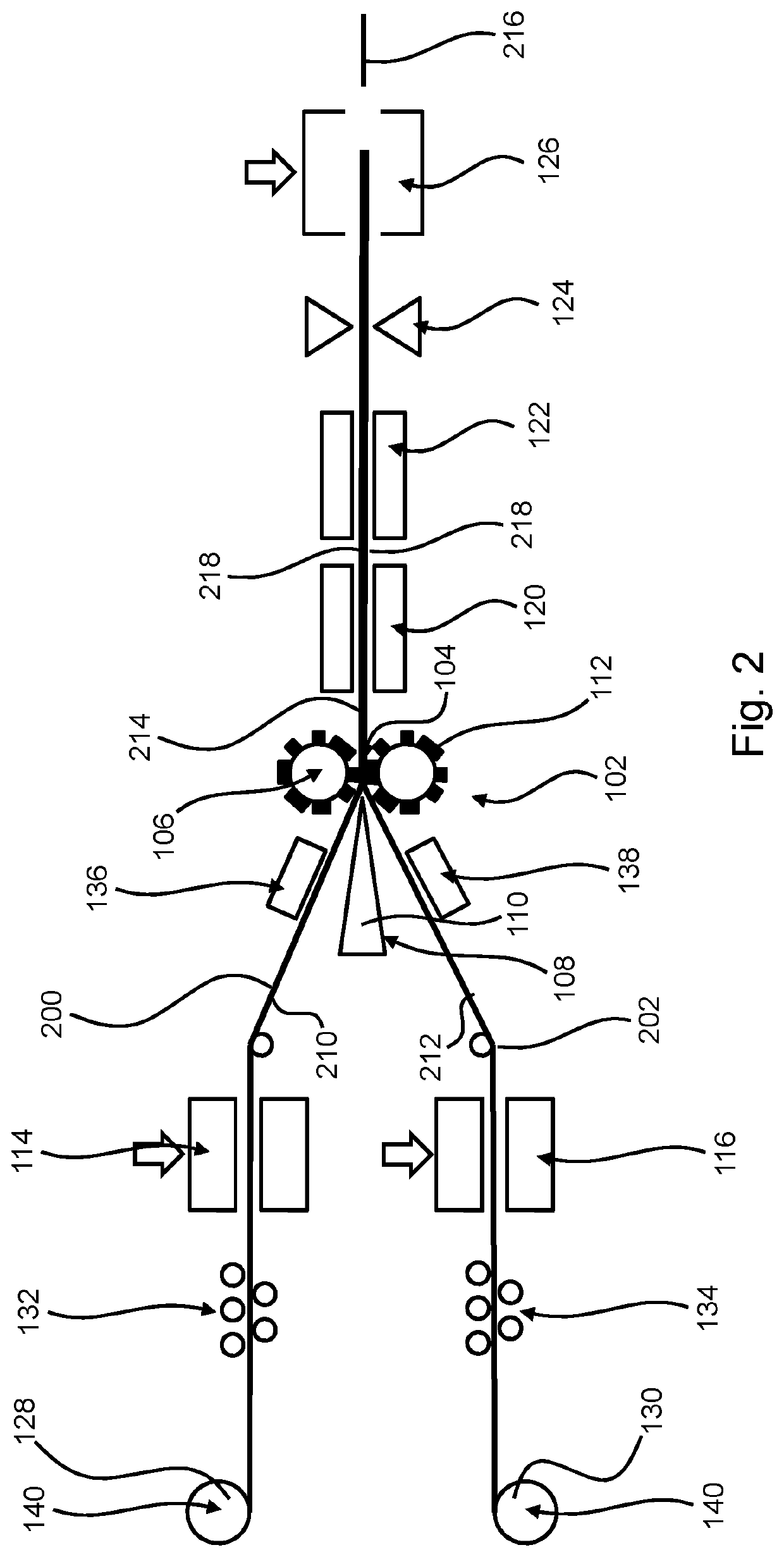
Figure 2 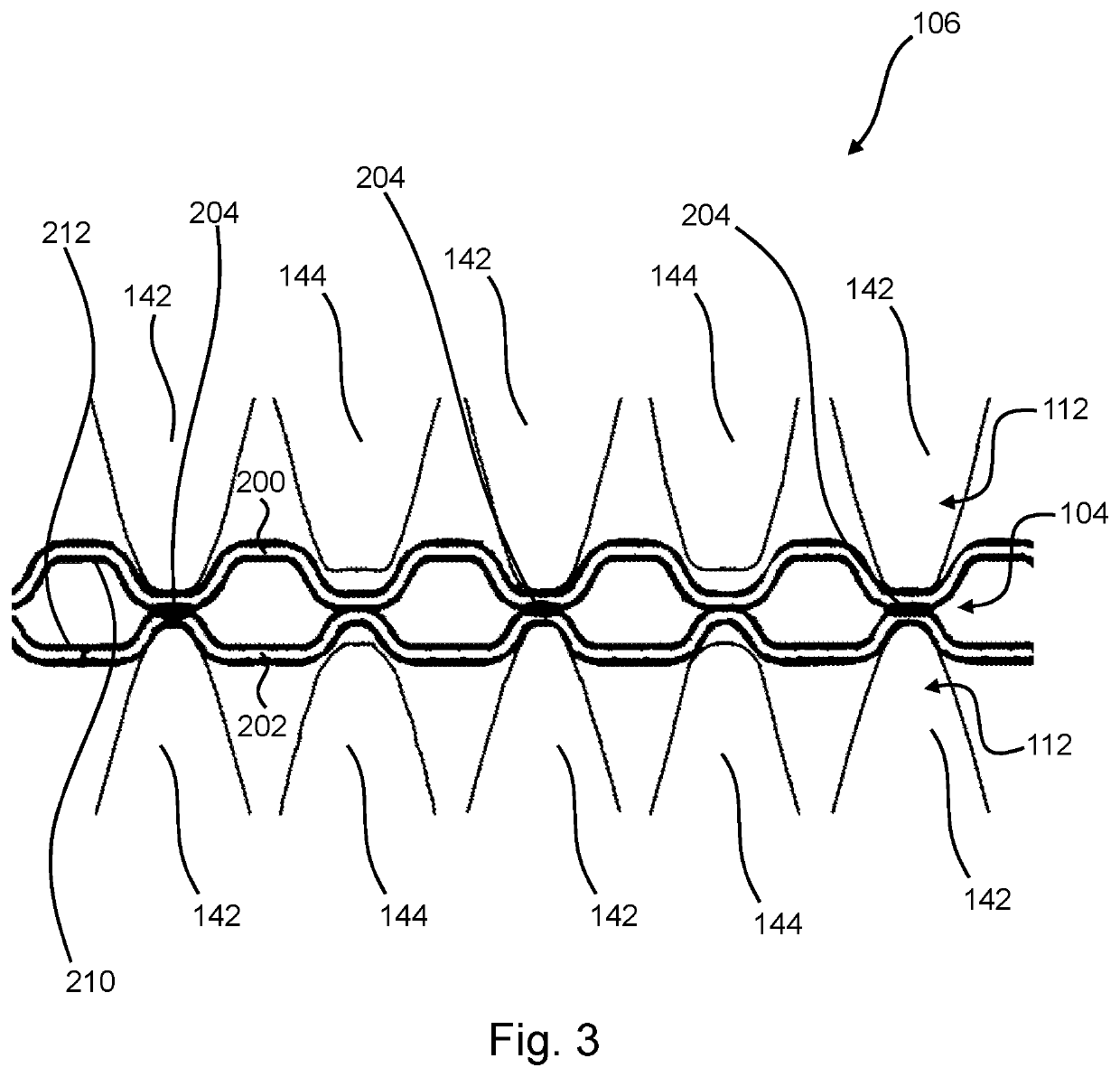
Figure 3
Abstract
Description
BACKGROUNDTechnical Field
[0001] Embodiments of the invention relate to a method for producing a bipolar plate strand which has a plurality of contiguous bipolar plates of a fuel cell. Embodiments of the invention also relate to a method for producing a bipolar plate of a fuel cell, and a device for carrying out the two methods.Description of the Related Art
[0002] Bipolar plates are used in fuel cells and fuel cell stacks. Using the bipolar plates, on the one hand, the fuel is conveyed and distributed to an adjacent anode of a first fuel cell and the cathode gas is conveyed and distributed to a cathode of an adjacent second fuel cell, the bipolar plate also providing lines for conveying a cooling medium. A bipolar plate is usually made from two unipolar plates formed as half-shells, which are glued together in the case of bipolar plates made of graphite. Metallic bipolar plates typically comprise two unipolar plates welded to one another at least in sections.
[0003] US 2005 / 0252 892 A1 d...
Examples
Embodiment Construction
[0052]In FIG. 1, the section of a fuel cell stack can be seen, which is formed from several fuel cells 220. Each fuel cell 220 is formed with a membrane electrode assembly 222, which comprises a proton conductive membrane, to which an electrode is assigned on each side. Membrane electrode assembly 222 is configured to carry out the electrochemical reaction of the fuel cell. For this purpose, fuel (e.g., hydrogen) is fed to the electrode forming the anode, where it is catalytically oxidized to form protons by releasing electrons. These protons are transported to the cathode through the proton-conductive membrane (or ion exchange membrane). The electrons dissipated from the fuel cell flow via an electrical load, such as via an electric motor, to the drive system of a vehicle, or to a battery. Then, the electrons are conducted to the cathode or electrons are provided at the cathode. At the cathode, the oxidation medium (e.g., oxygen or air containing oxygen) is reduced to anions by tak...