
Micropore Membranes and Methods of Fabrication Thereof Using Pillar Templates
- Summary
- Abstract
- Description
- Claims
- Application Information
AI Technical Summary
Benefits of technology
Problems solved by technology
Method used
Image

Examples
Embodiment Construction
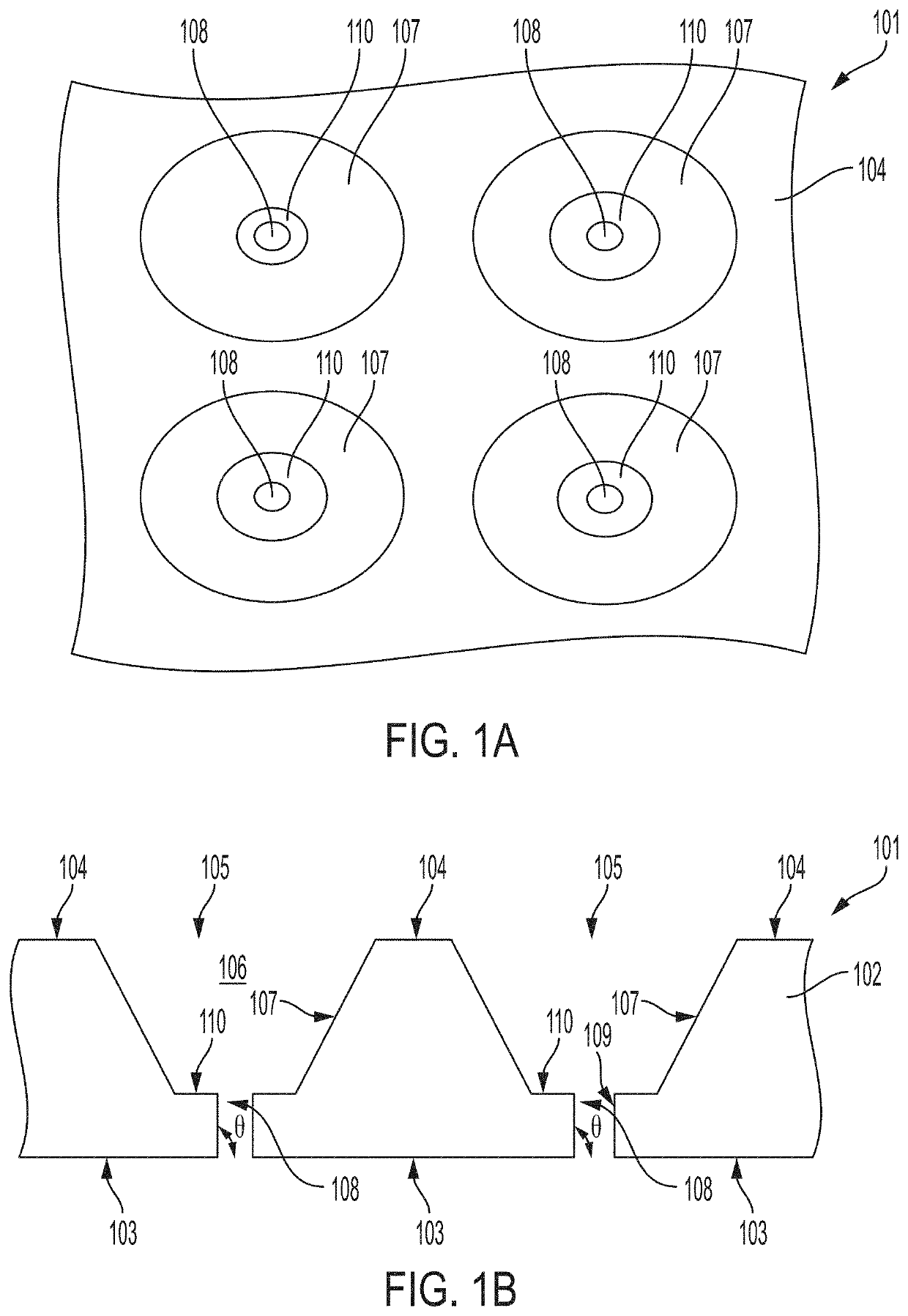
[0019]The present invention involves production of a porous polymeric membranes using a pillar template in combination with photolithographic and etching techniques. The forming of porous regions in a polymeric membrane are described in U.S. patent application Ser. No. 16 / 842,402, entitled “POROUS FLAT DEFORMATION-RESISTANT MEMBRANE” which was filed Apr. 7, 2020, and Ser. No. 16 / 842,448, entitled “BIOCOMPATIBLE HIGH ASPECT-RATIO POROUS MEMBRANE” which was filed Apr. 7, 2020, each of which is incorporated by reference herein. The techniques for making a porous polymeric membrane using techniques adapted from semiconductor manufacturing technology are described in these applications.
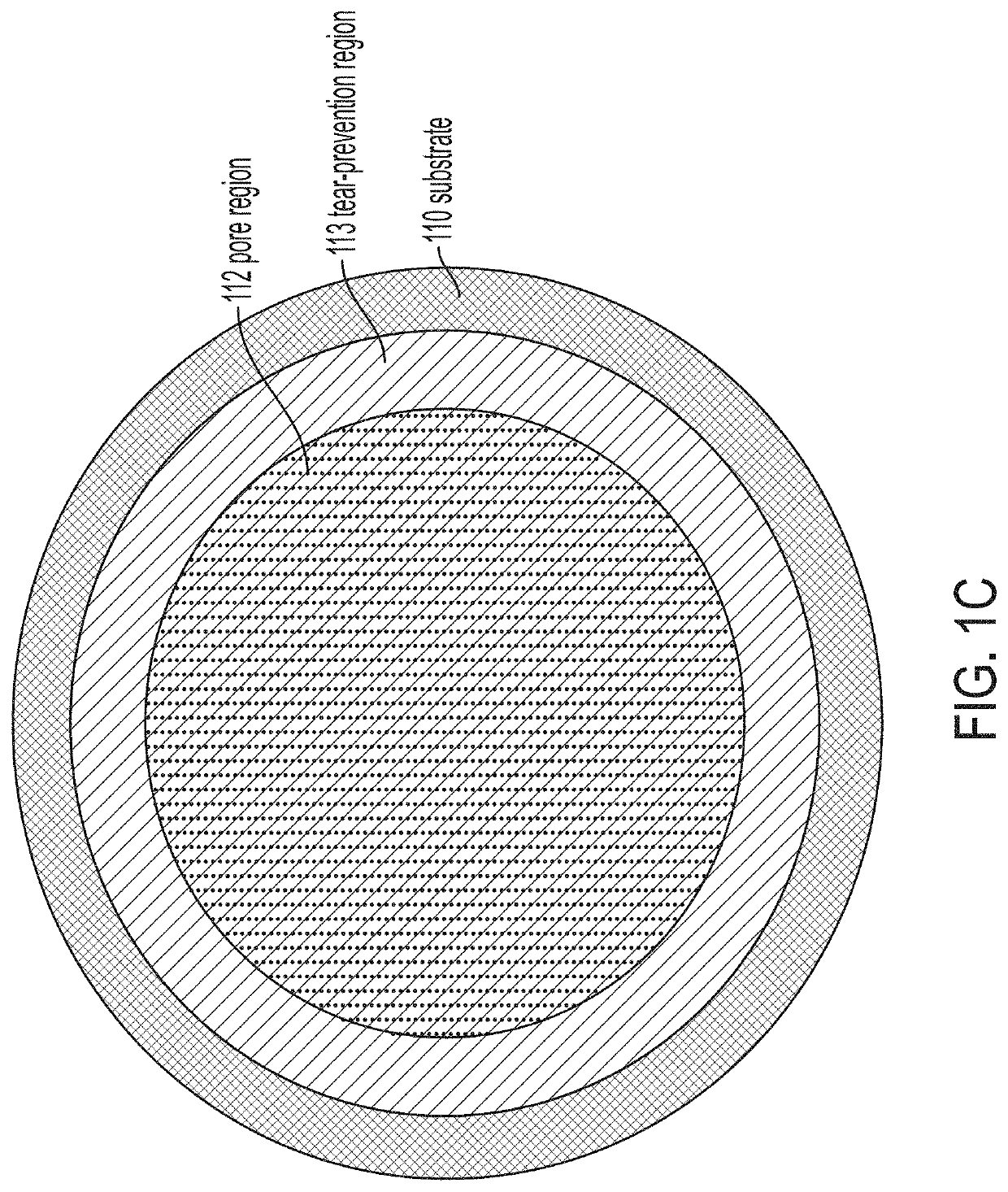
[0020]One difficulty faced in the production of smaller pore size (<3.0 micron vias) polymeric membranes using these techniques is achieving uniform-size pores due to lack of uniformity in etching through relatively thicker polymeric membrane layers. In one aspect of the present invention, the total polyme...
PUM
| Property | Measurement | Unit |
|---|---|---|
| Thickness | aaaaa | aaaaa |
| Thickness | aaaaa | aaaaa |
| Angle | aaaaa | aaaaa |
Abstract
Description
Claims
Application Information
 Login to View More