Human respiratory syncytial virus strain and its use
a technology of respiratory syncytial virus and human body, which is applied in the field of new isolated respiratory syncytial virus (rsv) strain, can solve the problems of difficult to grow high cell-free virus titers, difficult to induce strong immune responses via vaccination, and mainly unavailable rsv isolates
- Summary
- Abstract
- Description
- Claims
- Application Information
AI Technical Summary
Benefits of technology
Problems solved by technology
Method used
Image

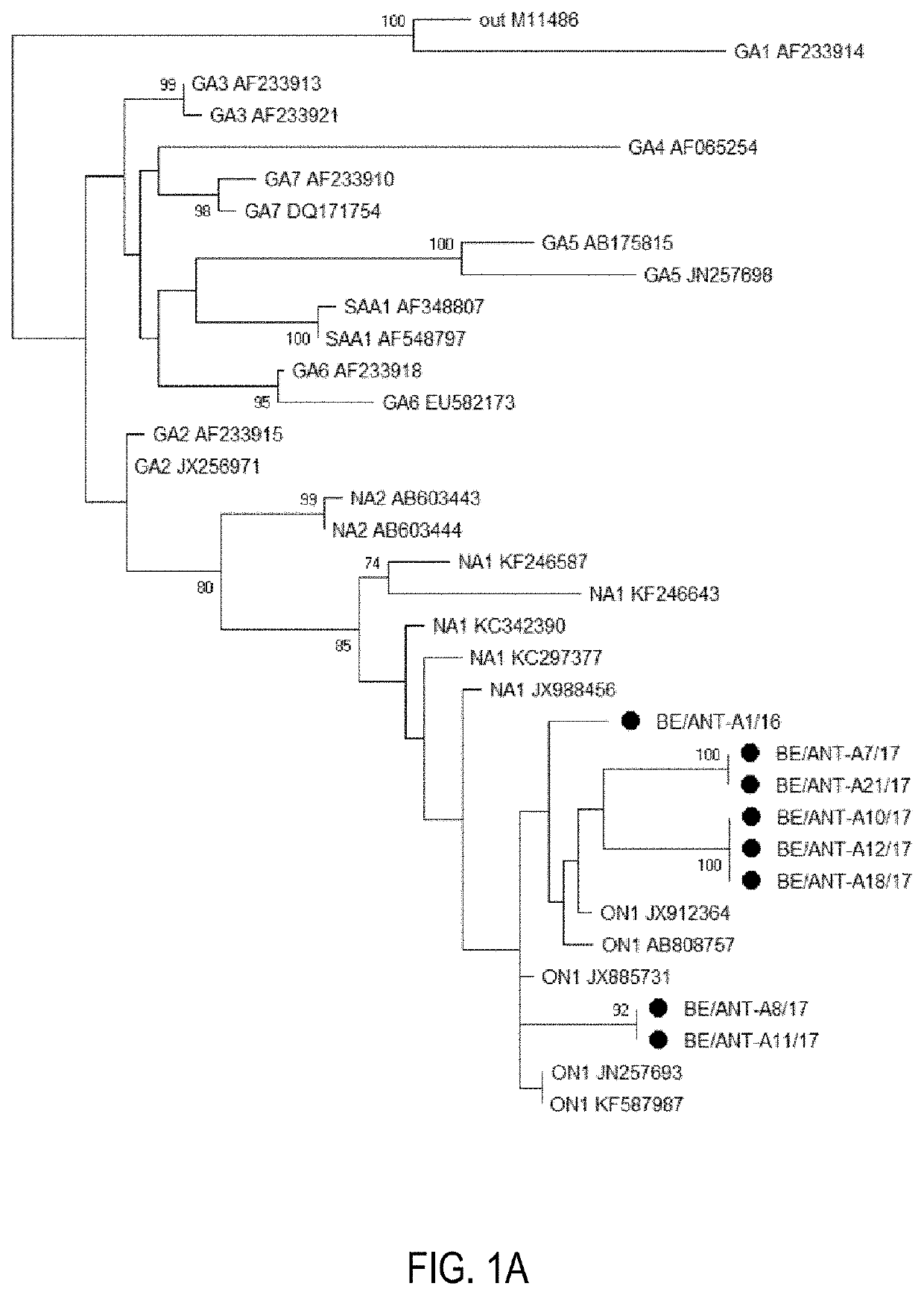
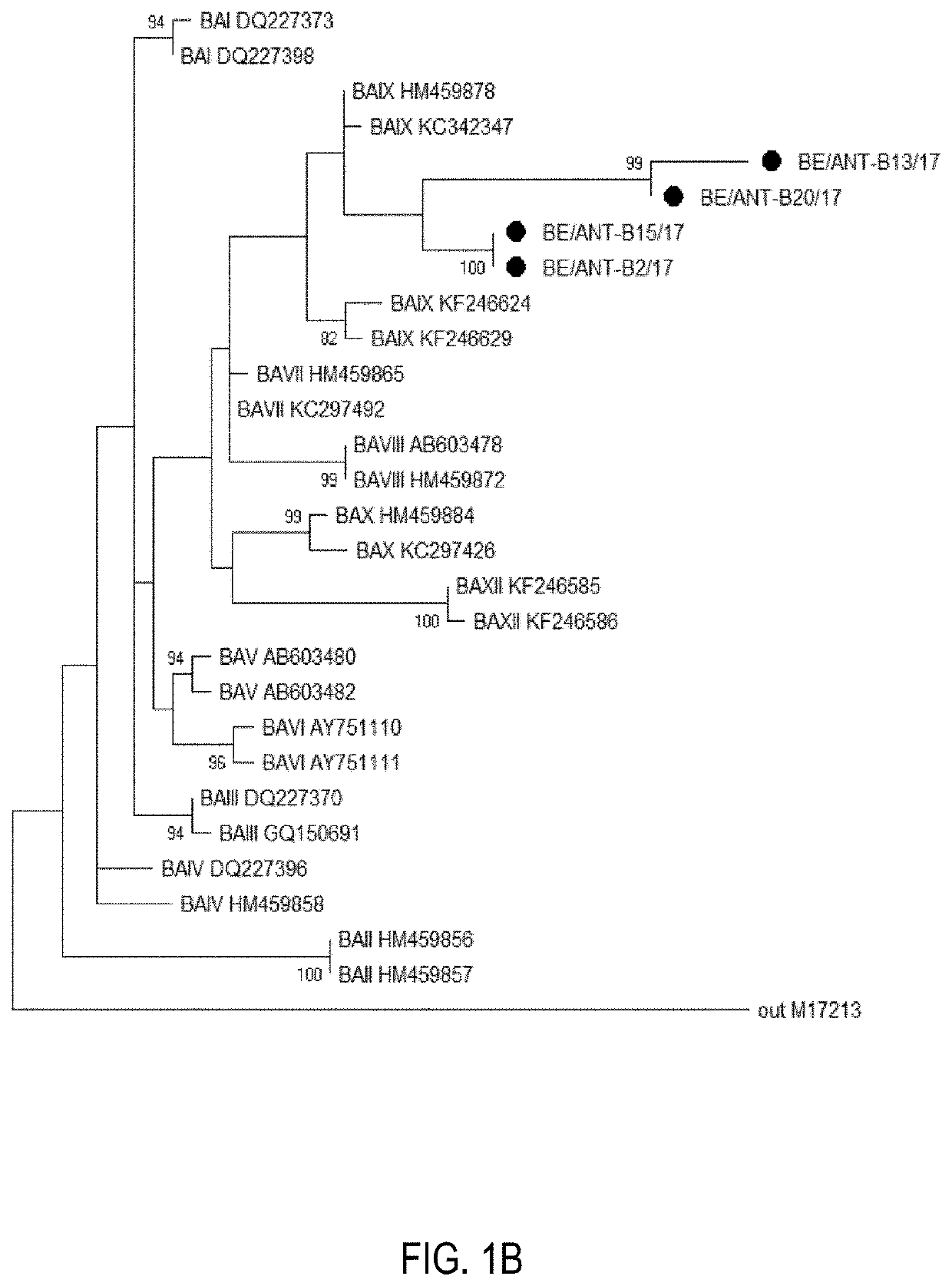
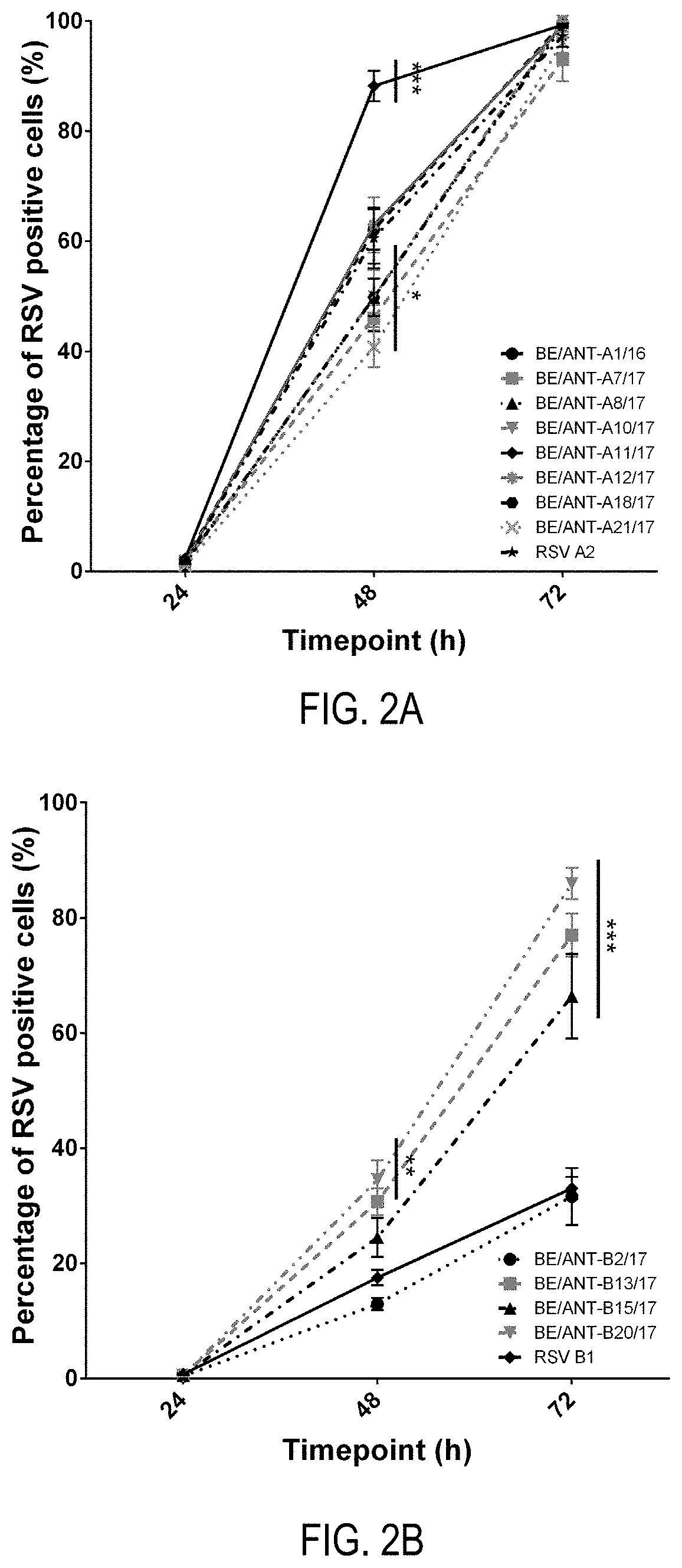
Examples
examples
A. Identification and Characterization of RSV Strains, Including BE-ANT-A11 / 17
Materials and Methods
Cells and Viruses
[0044]The HEp-2, A549 and Vero cell lines were obtained from and cultured to the instructions of ATCC. BEAS-2B cell line was a generous gift from dr. Ultan F. Power (Queens University Belfast, Ireland). All cells were cultured in Dulbecco's modified Eagle medium containing 10% inactivated fetal bovine serum (DMEM10) (Thermo Fisher Scientific). RSV reference strains A2 and B1 were obtained from BEI resources, RSV A2 was cultivated in HEp-2 cells as described by Van der Gucht W. et al [8] and RSV B1 was cultivated on Vero cells in medium containing 2% inactivated fetal bovine serum (iFBS) until cytopathic effect (CPE) was visible throughout the flask. Virus was collected as described for A2 and quantified in a conventional plaque assay on HEp-2 as described by Schepens B. et al [9]. Briefly, HEp-2 cells were seeded at a concentration of 175 000 cells / ml in clear 96 well ...
PUM
 Login to View More
 Abstract
Description
Claims
Application Information
 Login to View More