
Implantable tissue stimulating device
a tissue stimulation and implantable technology, applied in the field of implantable tissue stimulation devices, can solve the problems of unwanted stimulation of other muscles subjected to the field, and achieve the effect of increasing the electrical field and favorable electric field distribution
- Summary
- Abstract
- Description
- Claims
- Application Information
AI Technical Summary
Benefits of technology
Problems solved by technology
Method used
Image

Examples
Embodiment Construction
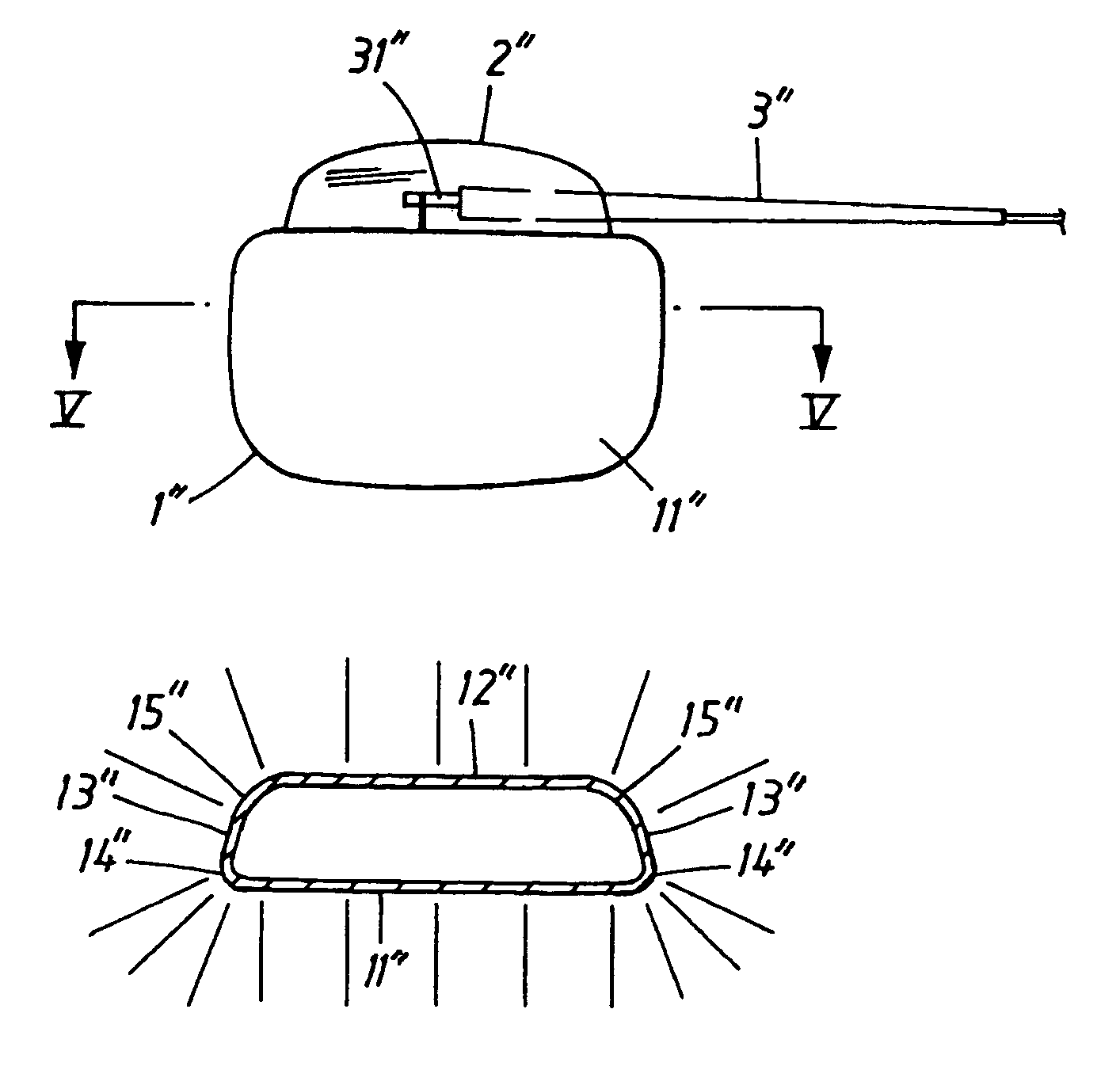
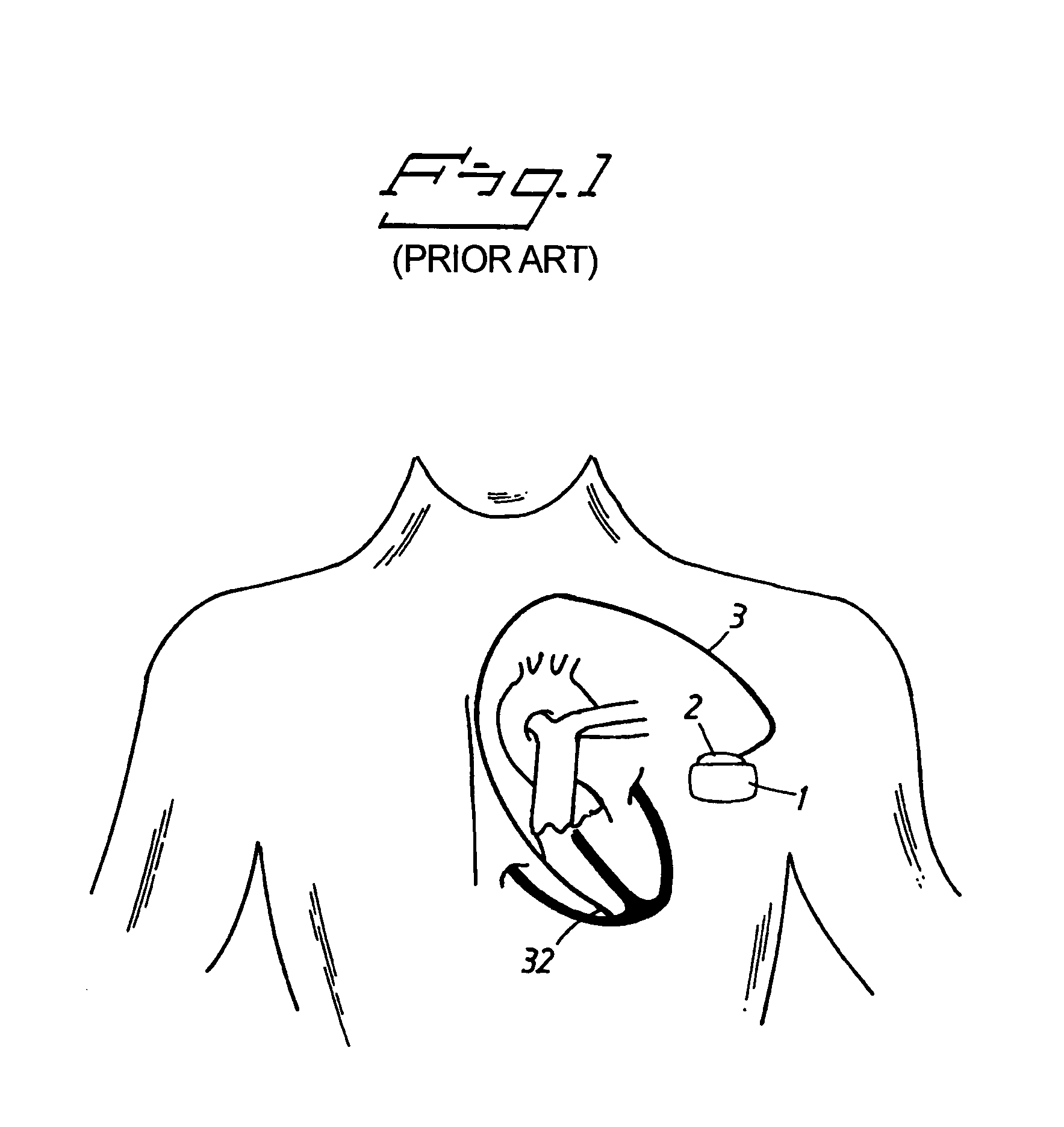
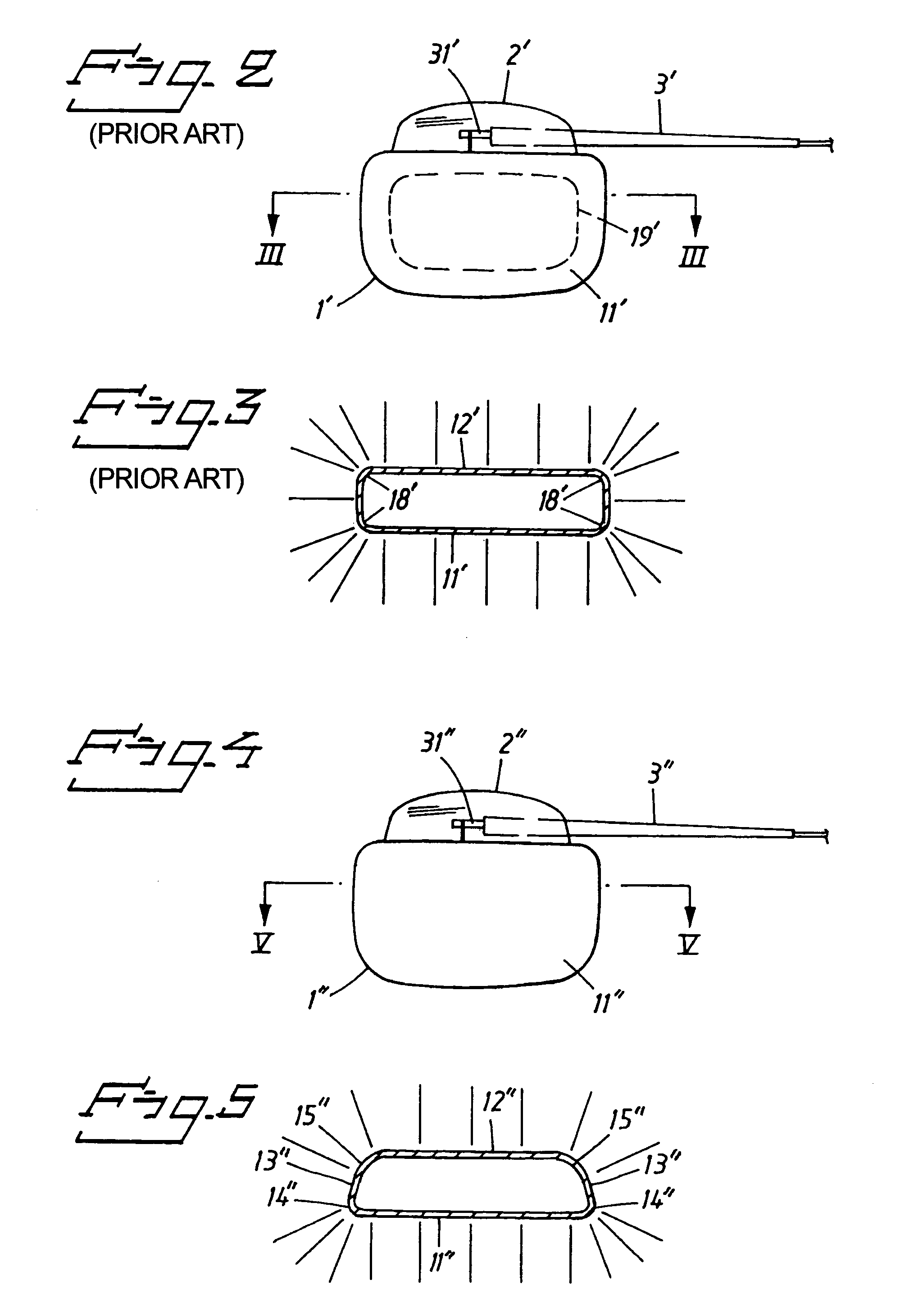
[0023]A conventional placement of a pacemaker implanted in a patient is shown. A housing 1 for a pulse generator is implanted on the left side of the chest. The housing is conductive, made of a bio-compatible material such as titanium, and hermetically sealed against intrusion of body fluids and tissue when implanted. On top of the housing a header 2 is arranged. The header is made of transparent epoxy resin, and is molded onto the housing. The header includes a female portion of an electrical connector coupled to the circuits of the pulse generator. An electrode lead 3 includes at its proximal end a male connector 31 (connector pin, not shown) for electrical connection with said female connector. At the distal end the electrode lead 3 is provided with a stimulation electrode 32, which is located in the heart in electrical contact with the tissue. A stimulation pulse generated by the pulse generator will be applied between the electrode 32 and the housing 1, which also acts as an el...
PUM
 Login to View More
 Abstract
Description
Claims
Application Information
 Login to View More