
Authentication method and schemes for data integrity protection
a technology of data integrity protection and authentication method, applied in the field of data communication, can solve the problems of increasing system complexity and cost, severely limiting the speed with which the tag can be computed, and presenting a significant performance disadvantage of cbc-mac and all other authentication schemes based on authentication methods
- Summary
- Abstract
- Description
- Claims
- Application Information
AI Technical Summary
Problems solved by technology
Method used
Image

Examples
Embodiment Construction
[0098]The inventors have recognized, and it is an aspect of this invention, that it is highly advantageous to provide authentication schemes that (1) rely exclusively on the use of block ciphers, (2) can be implemented in a concurrent (i.e., parallel or pipelined) manner in addition to standard sequential processing, (3) can be used for incremental and out-of-order processing authentication tags, and (4) can be used for the authentication of real-time data sources where message length remains unknown until the entire message is received, and commencing message authentication cannot be deferred until the end of the message
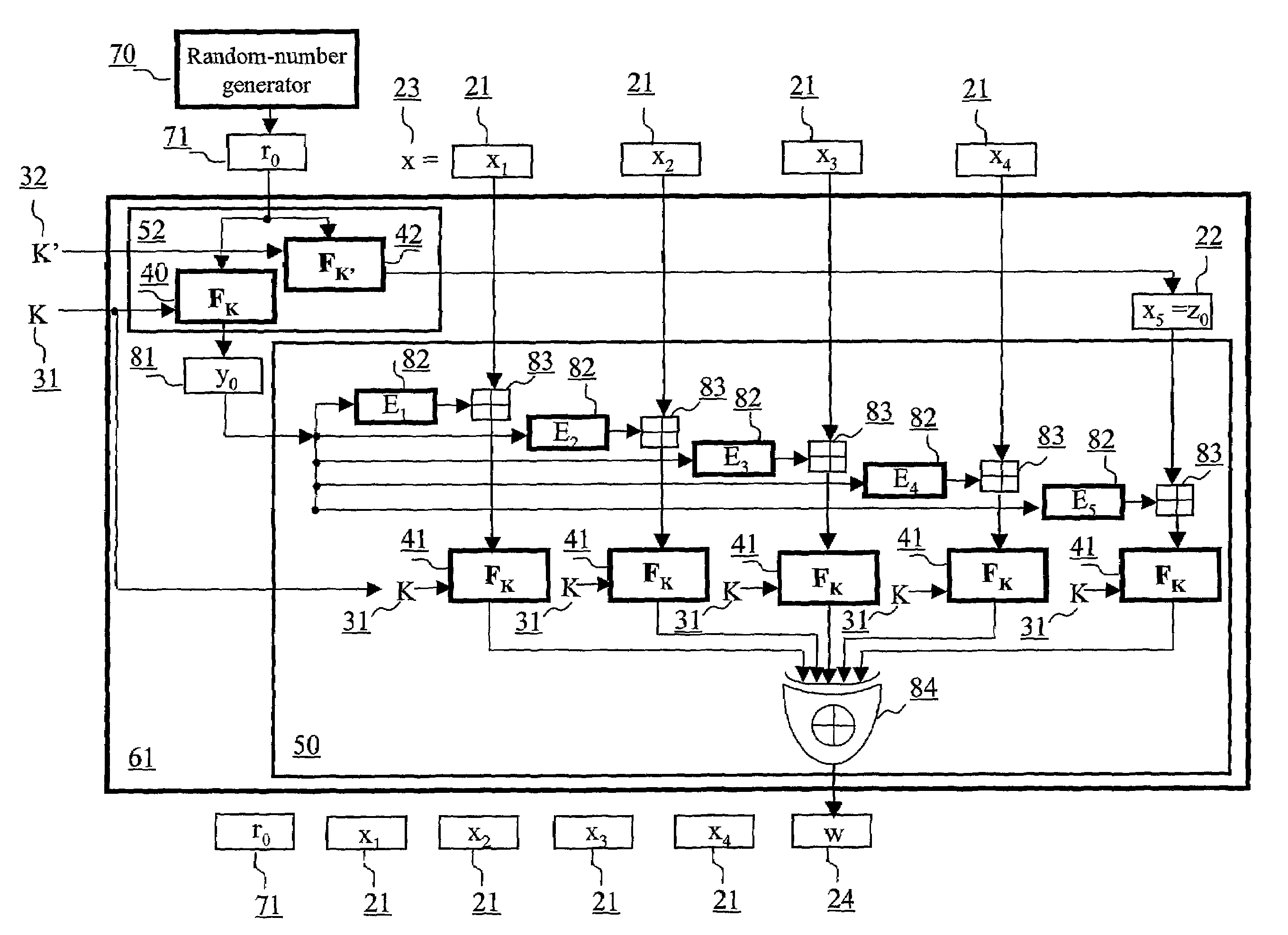
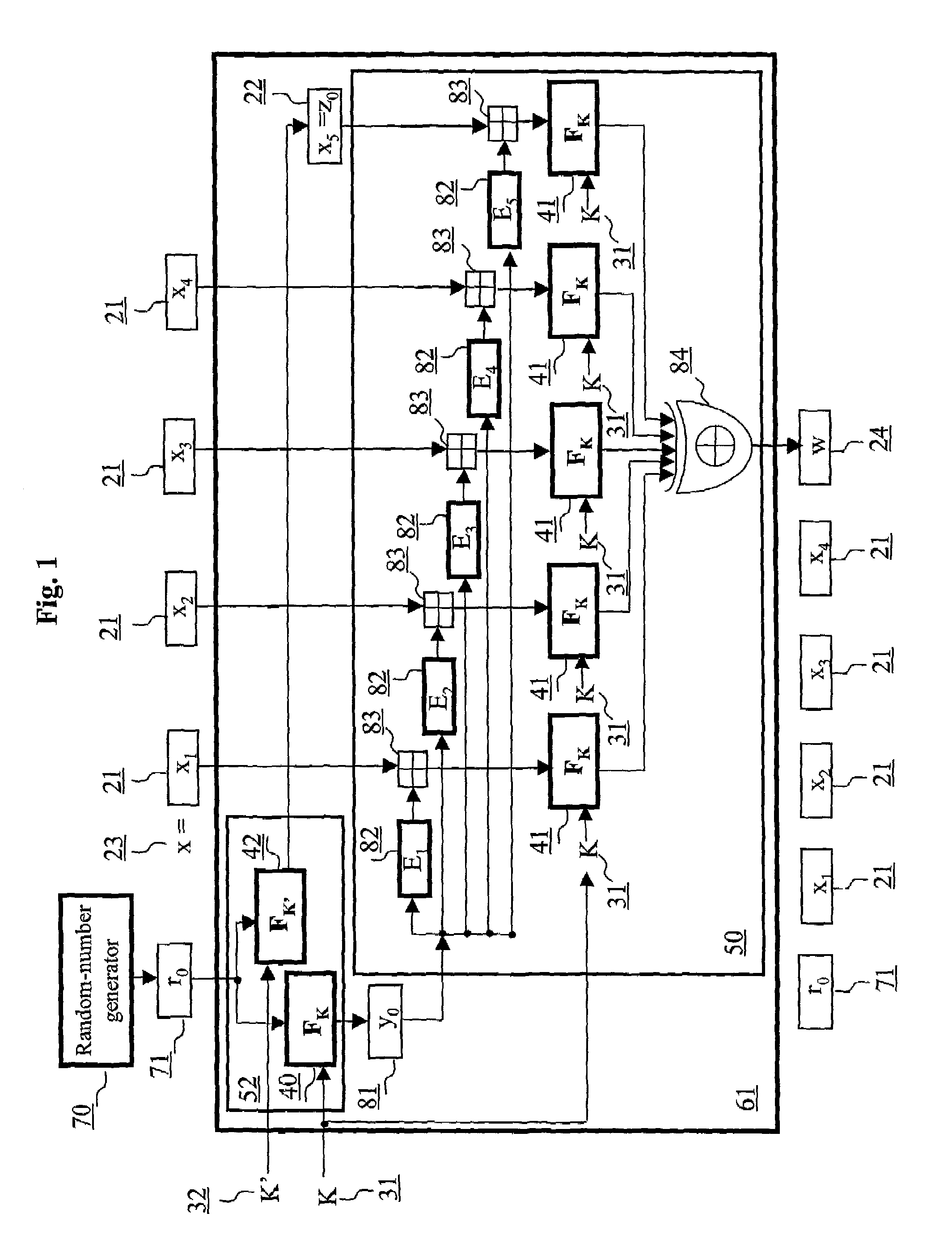
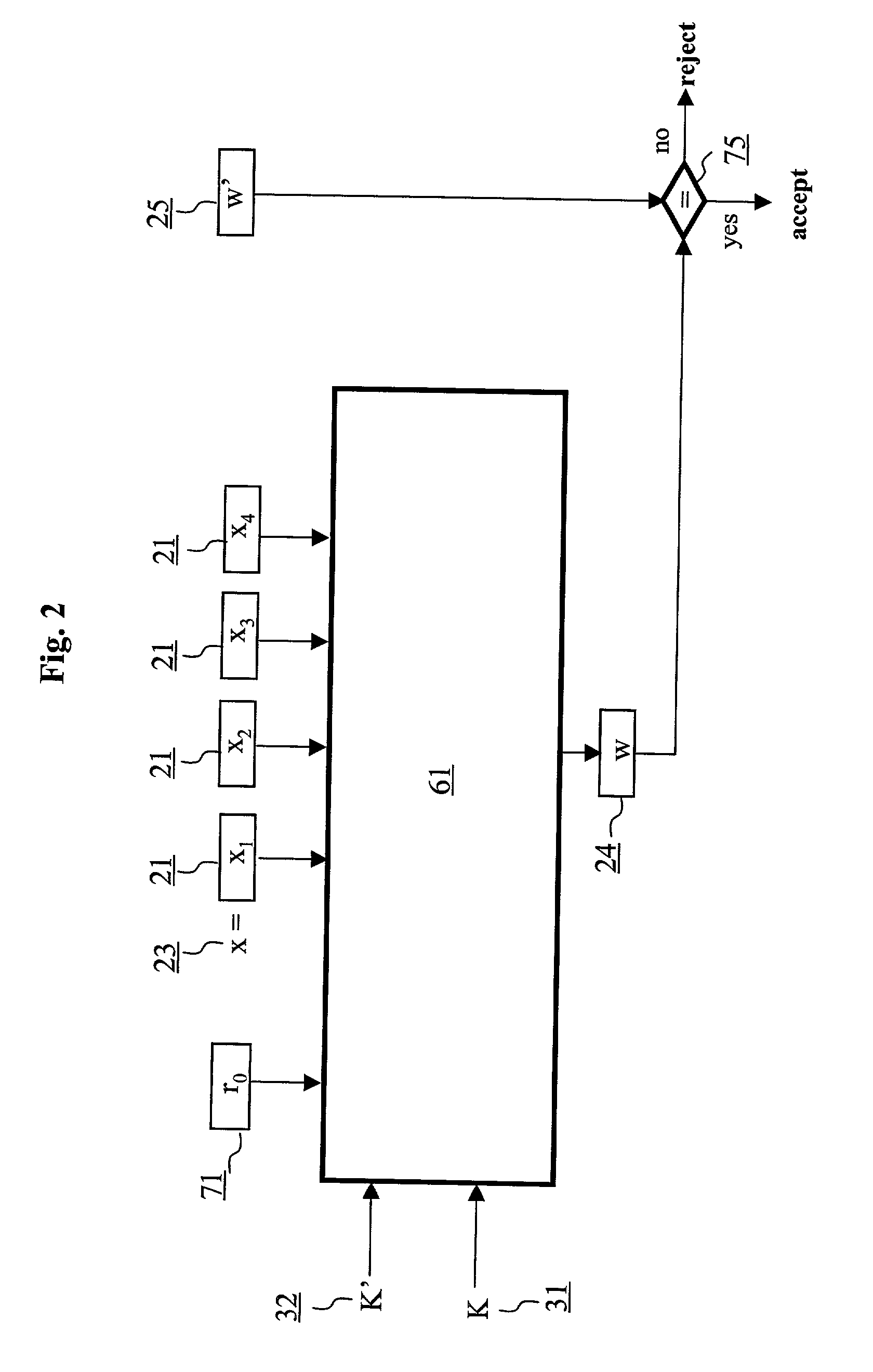
[0099]Referring to FIG. 1, a plaintext string x 23 representing input data is presented to a signing function 61 of an authentication scheme providing data integrity resulting in an output tag w 24 for plaintext string x 23. It is assumed that the sender and the receiver share a pair of secret keys K and K′ (i.e., a first key K 31, and a second key K′32) and that a ...
PUM
 Login to View More
 Abstract
Description
Claims
Application Information
 Login to View More