

Automatic apparatus for controlling the childbirth labor
a technology of automatic equipment and childbirth, applied in the field of automatic equipment for controlling childbirth labor, can solve the problems of uterus with contractions, not being able to produce thrust, adding to the force generated by the uterus,
- Summary
- Abstract
- Description
- Claims
- Application Information
AI Technical Summary
Benefits of technology
Problems solved by technology
Method used
Image

Examples
Embodiment Construction
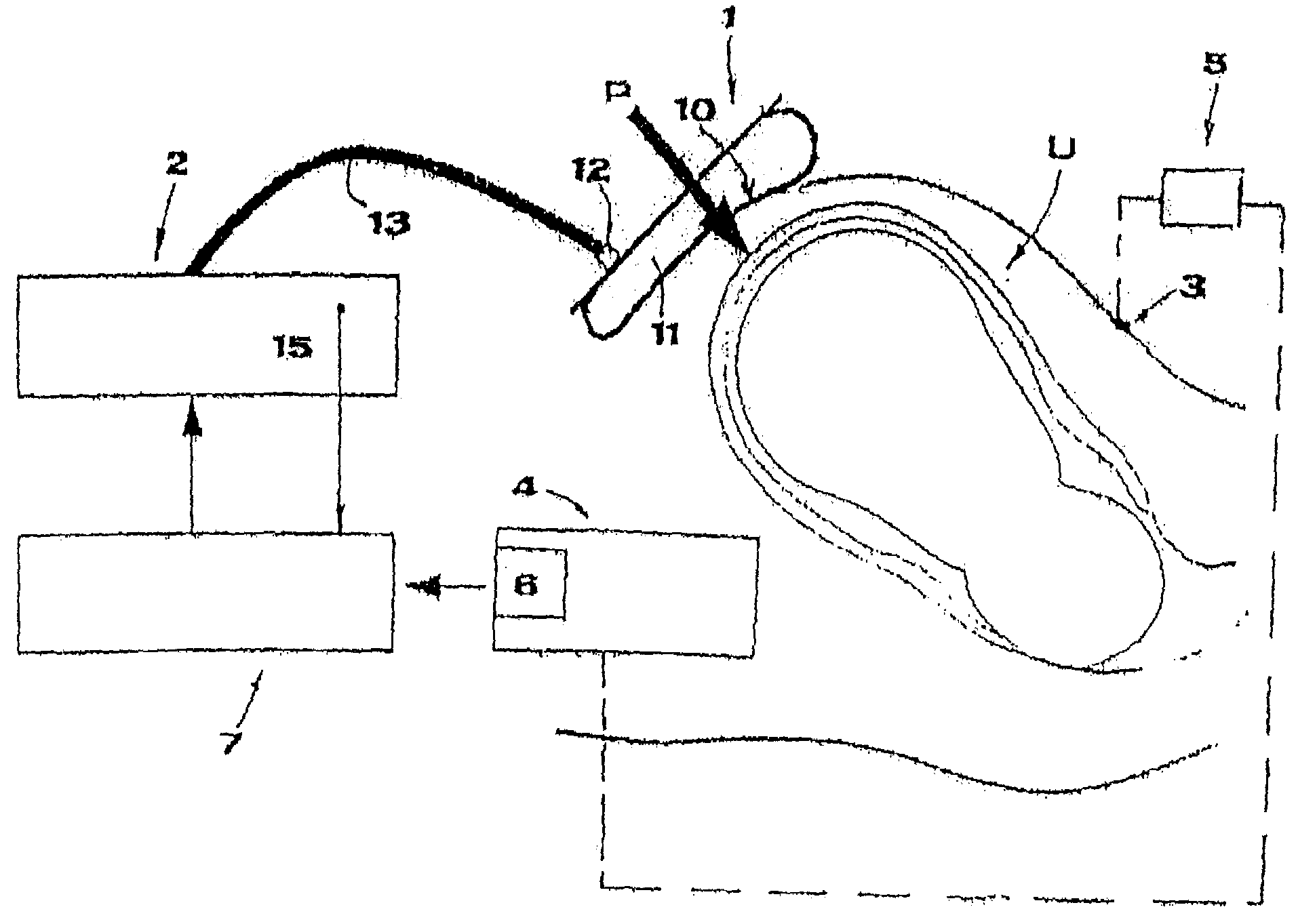
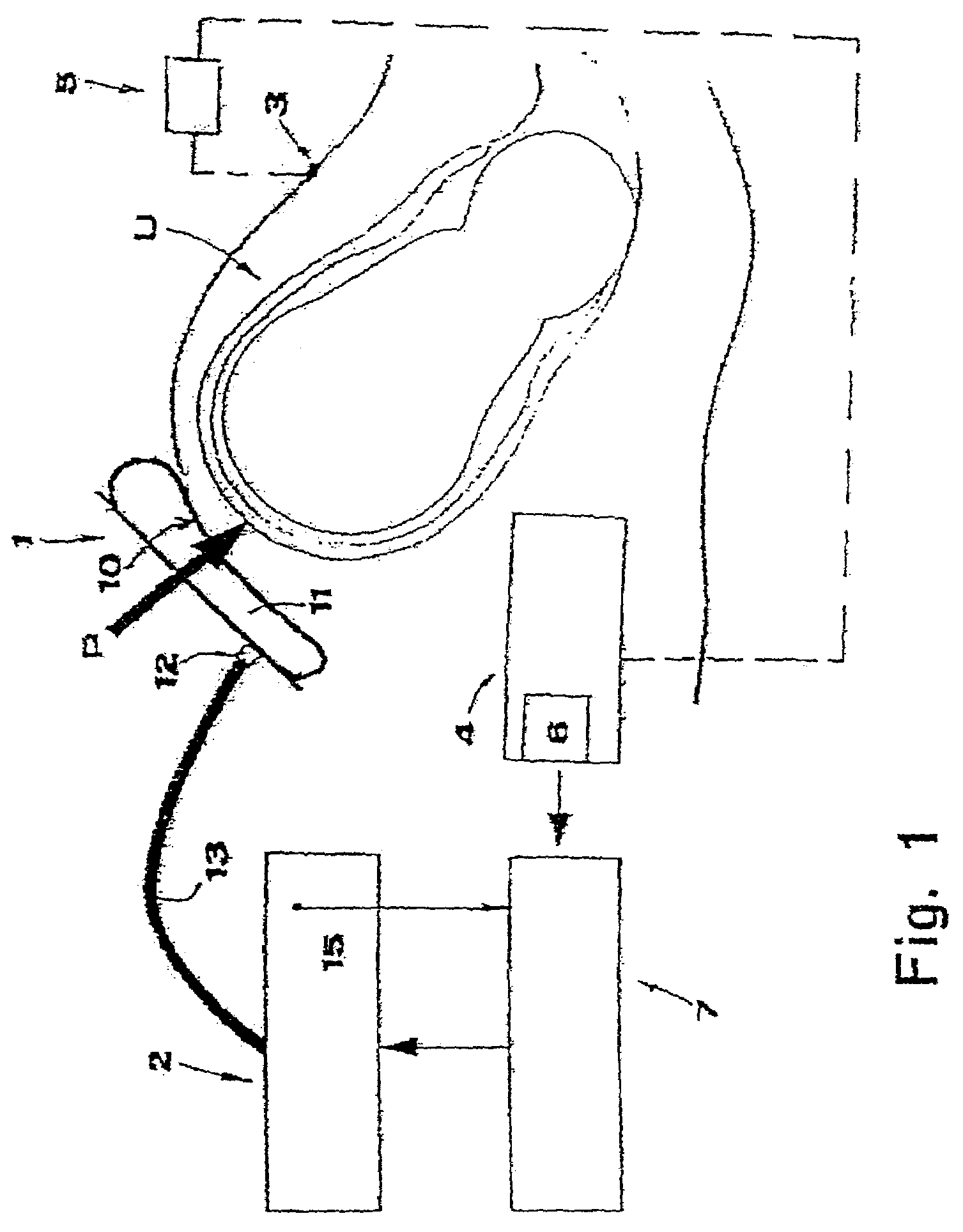
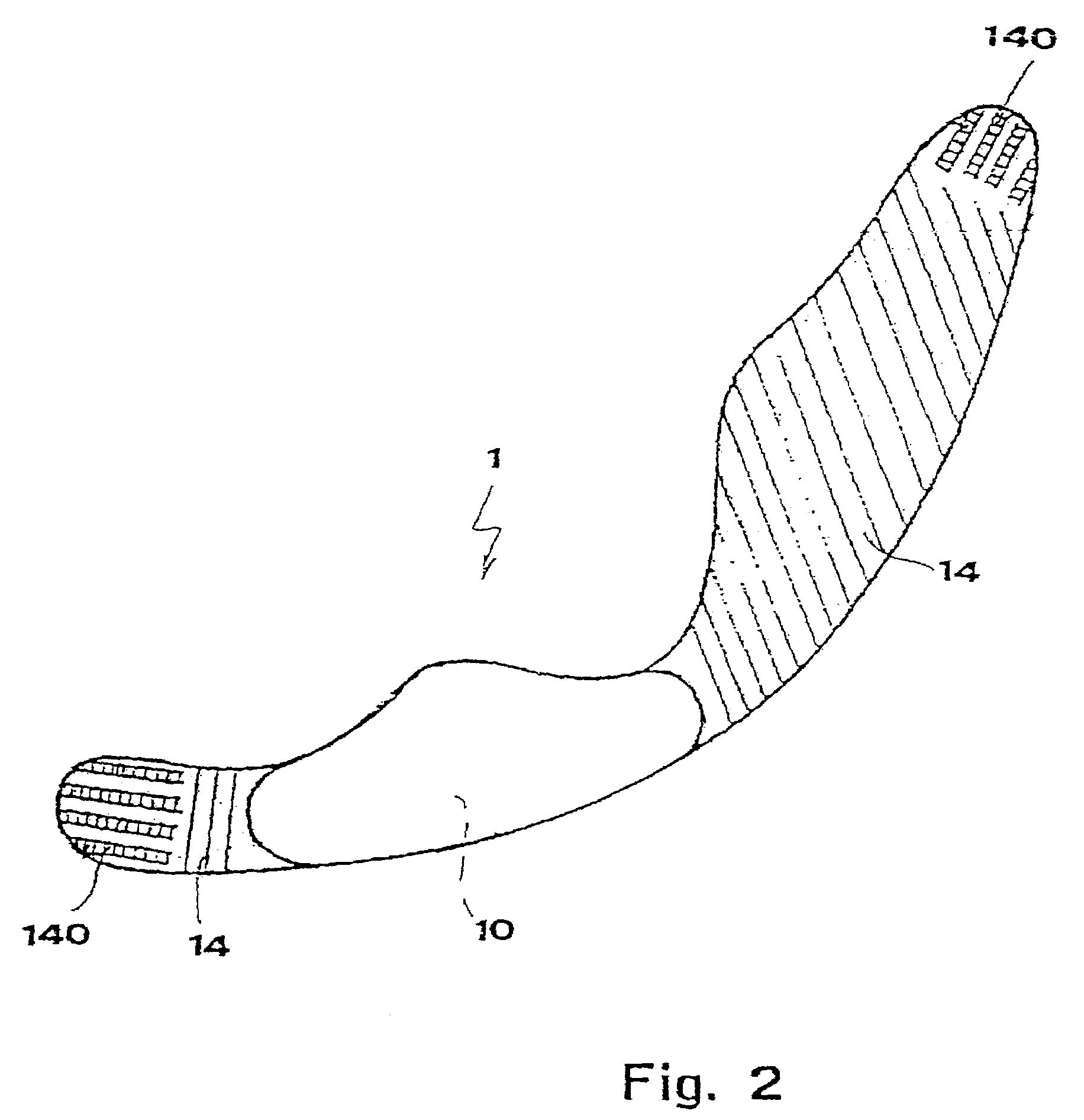
[0015]Referring to the drawings in particular, FIG. 1 shows a means for detecting the electrical activity of the uterus, comprising two or more outer electromyographic sensors (3) (that is, sensors of non-invasive type) able to be positioned on the skin of the parturient's abdomen at two regions corresponding to preset points of the uterus U. Also provided are a means for registering and plotting the electrical signals of the uterine contractions thus detected and a means, which includes an electromyographic apparatus (4) and an interface (5), for analyzing electrical signals in relation to a predetermined scheme of analysis. An inflatable belt (1) is provided that is associated with pneumatic means (2) able to inflate it under control and at preset pressure, and respectively deflate it. The belt (1) is put on by the expectant mother in such a way that a surface (10) of the same belt will act, when inflated, upon the bottom of the uterus. A means (7) is provided to control the activ...
PUM
 Login to View More
 Abstract
Description
Claims
Application Information
 Login to View More