Intrusion and misuse deterrence system employing a virtual network

a virtual network and intrusion and misuse prevention technology, applied in the field of computer networks, can solve the problems of reducing the speed at which ids can process information contained, and reducing so as to increase the security of computer networks, reduce the overhead of computer networks, and achieve the effect of easy implementation

US7240368B1Inactive Publication Date: 2007-07-03VERIZON SERVICES GROUP +2
12 Cites 311 Cited by

Patent Information

Authority / Receiving Office
US · United States
Patent Type
Patents(United States)
Current Assignee / Owner
Publication Date
2007-07-03
Estimated Expiration
Not applicable · inactive patent

Smart Images

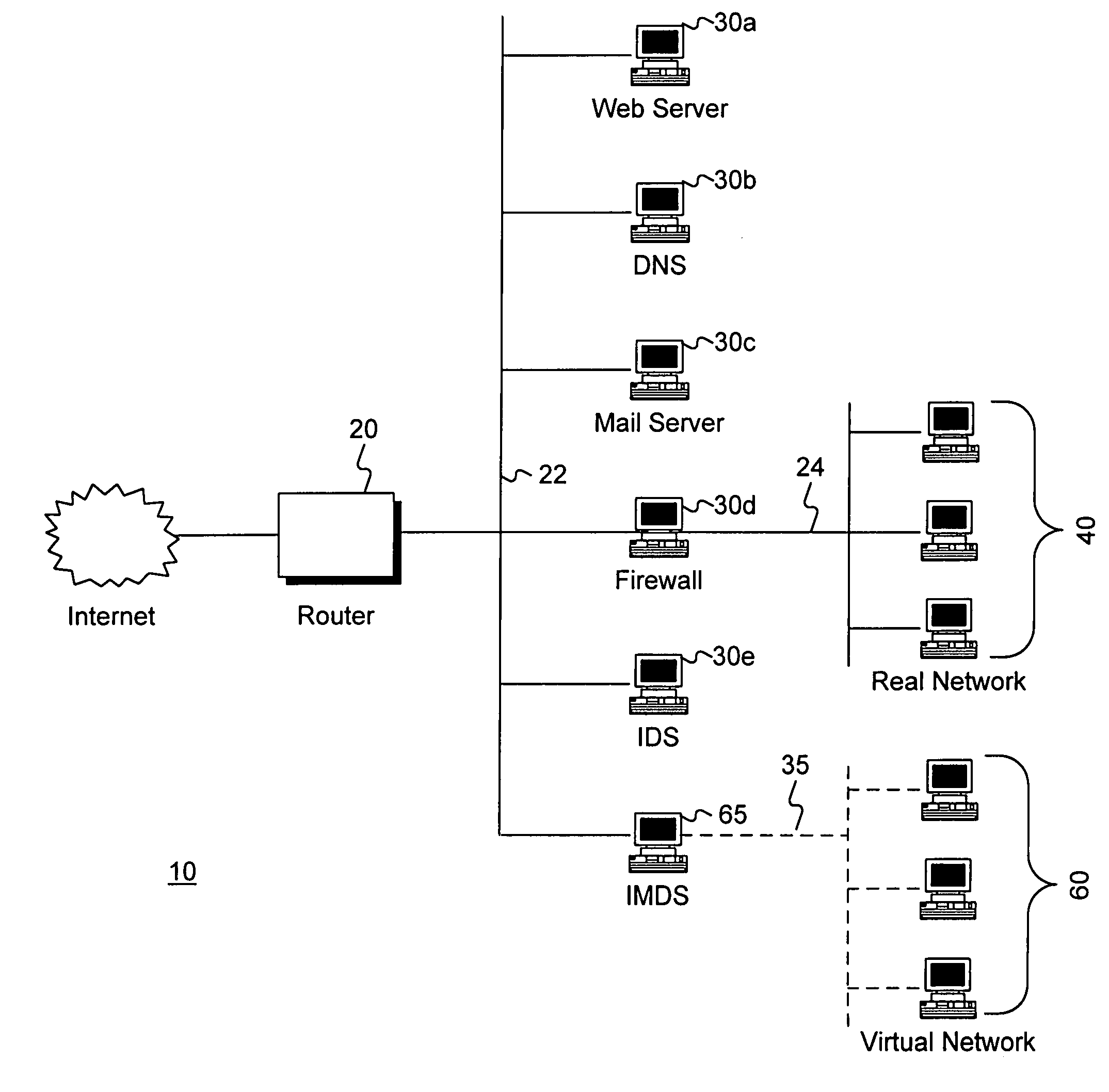
  • Figure 1
    Figure 1
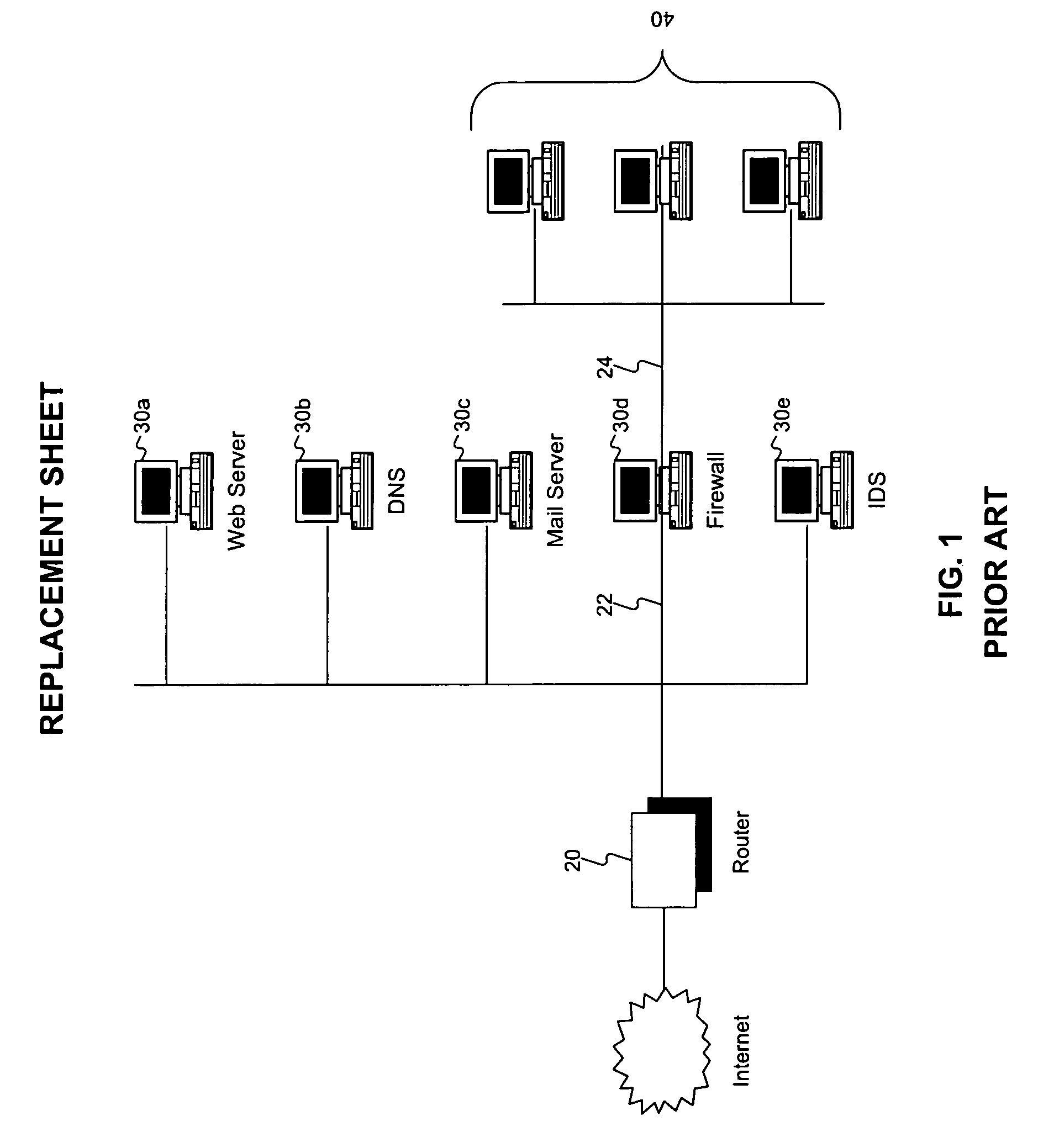
  • Figure 2
    Figure 2
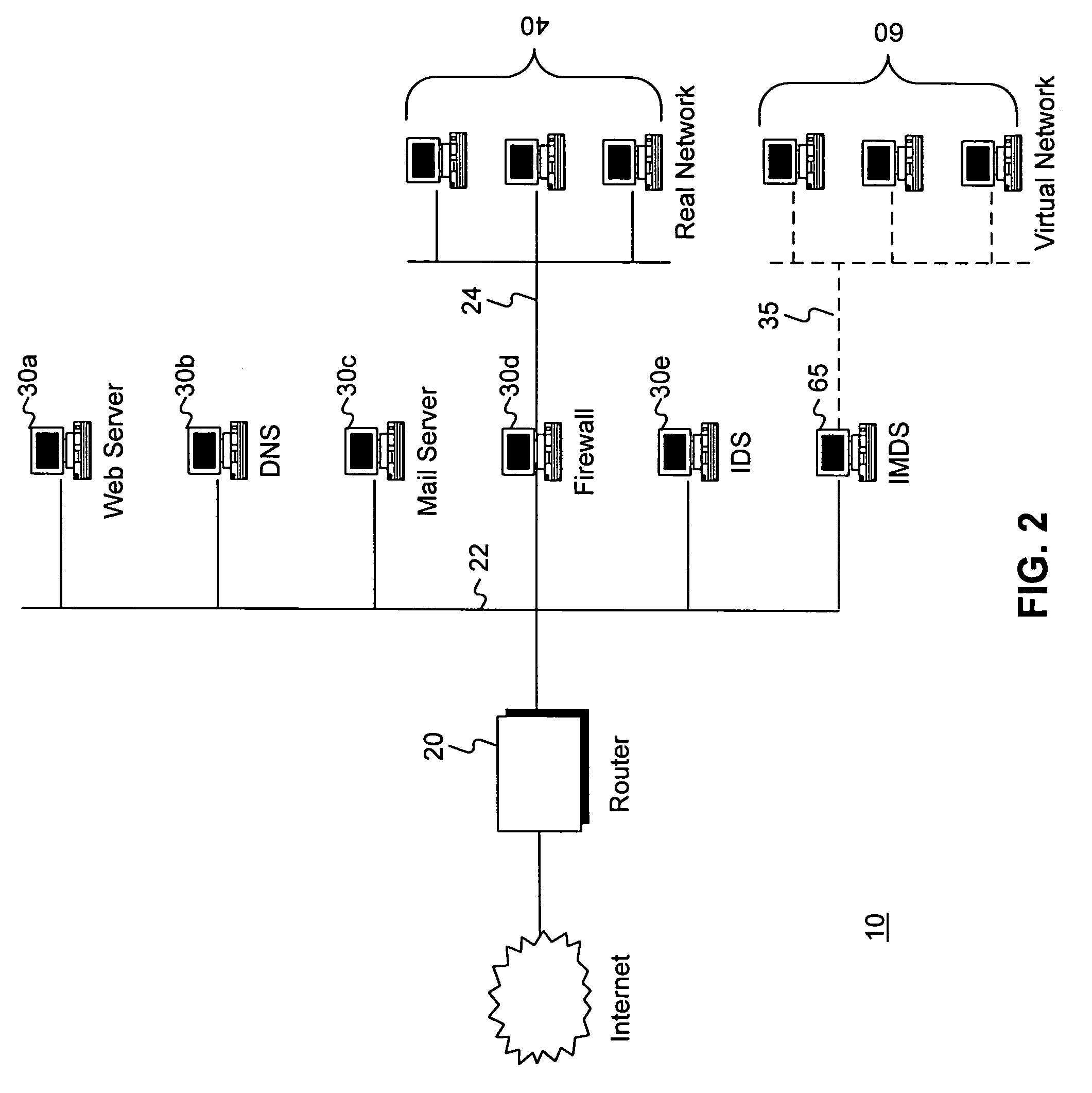
  • Figure 3
    Figure 3
Patent Text Reader

Abstract

A method and apparatus is disclosed for increasing the security of computer networks through the use of an Intrusion and Misuse Deterrence System (IMDS) operating on the network. The IMDS is a system that creates a synthetic network complete with synthetic hosts and routers. It is comprised of a network server with associated application software that appears to be a legitimate portion of a real network to a network intruder. The IMDS consequently invites inquiry and entices the intruder away from the real network. Simulated services are configured to appear to be running on virtual clients with globally unique, class “C” IP addresses. Since there are no legitimate users of the virtual network simulated by the IMDS, all such activity must be inappropriate and can be treated as such. Consequently, the entire set of transactions by an intruder can be collected and identified rather than just those transactions that meet a predefined attack profile. Also, new exploits and attacks are handled just as effectively as known attacks, resulting in better identification of attack methodologies as well as the identification and analysis of new attack types. Since the IMDS only has to be concerned with the traffic going to its simulated hosts it additionally eliminates the bandwidth limitation that plagues a traditional intrusion detection system (IDS).
Need to check novelty before this filing date? Find Prior Art

Description

RELATED APPLICATIONS

[0001] This application claims the benefit of U.S. Provisional Application No. 60 / 129,266, entitled “Intrusion and Misuse Deterrence System,” filed Apr. 14, 1999.STATEMENT REGARDING FEDERALLY SPONSORED RESEARCH OR DEVELOPMENT

[0002] This invention was made with Government support under Contract No. DCA100-96-D-0048 awarded by DISA. The Government has certain rights in this invention.FIELD OF THE INVENTION

[0003] This invention relates generally to computer networks, and more particularly, to a system for identifying intruders on a computer network.DESCRIPTION OF RELATED ART

[0004] The popularity of the Internet has led to the emergence of the largest and most diverse collection of information the world has ever known. People are conducting transactions over the Internet today that historically required intensive face-to-face interaction. Together with this popularity has come a concomitant rapid growth in the transmission of confidential information over these networks....

Examples

Embodiment Construction

[0024]In the following detailed description of the preferred embodiment, reference is made to the accompanying drawings that form a part thereof, and in which is shown by way of illustration a specific embodiment in which the invention may be practiced. This embodiment is described in sufficient detail to enable those skilled in the art to practice the invention and it is to be understood that other embodiments may be utilized and that structural changes may be made without departing from the scope of the present invention. The following detailed description is, therefore, not to be taken in a limited sense.

[0025]A system in accordance with the present invention comprises a network server with associated application software that appears to be a legitimate portion of a real network to a network intruder. The IMDS consequently invites inquiry and entices the intruder away from the real network. Simulated services are configured to appear to be running on virtual clients with globally...