Fuel deoxygenation system with textured oxygen permeable membrane

a technology of oxygen permeable membrane and fuel, which is applied in the direction of membranes, separation processes, instruments, etc., can solve the problems of inhibiting combustion, affecting the fuel line, and affecting the presence of dissolved oxygen in hydrocarbon jet fuel, so as to increase the surface area reduce the barrier to diffusion, and increase the strength and rigidity of the oxygen permeable membrane

US7465335B2Active Publication Date: 2008-12-16RTX CORP
31 Cites 20 Cited by

Patent Information

Authority / Receiving Office
US · United States
Patent Type
Patents(United States)
Current Assignee / Owner
Publication Date
2008-12-16

Smart Images

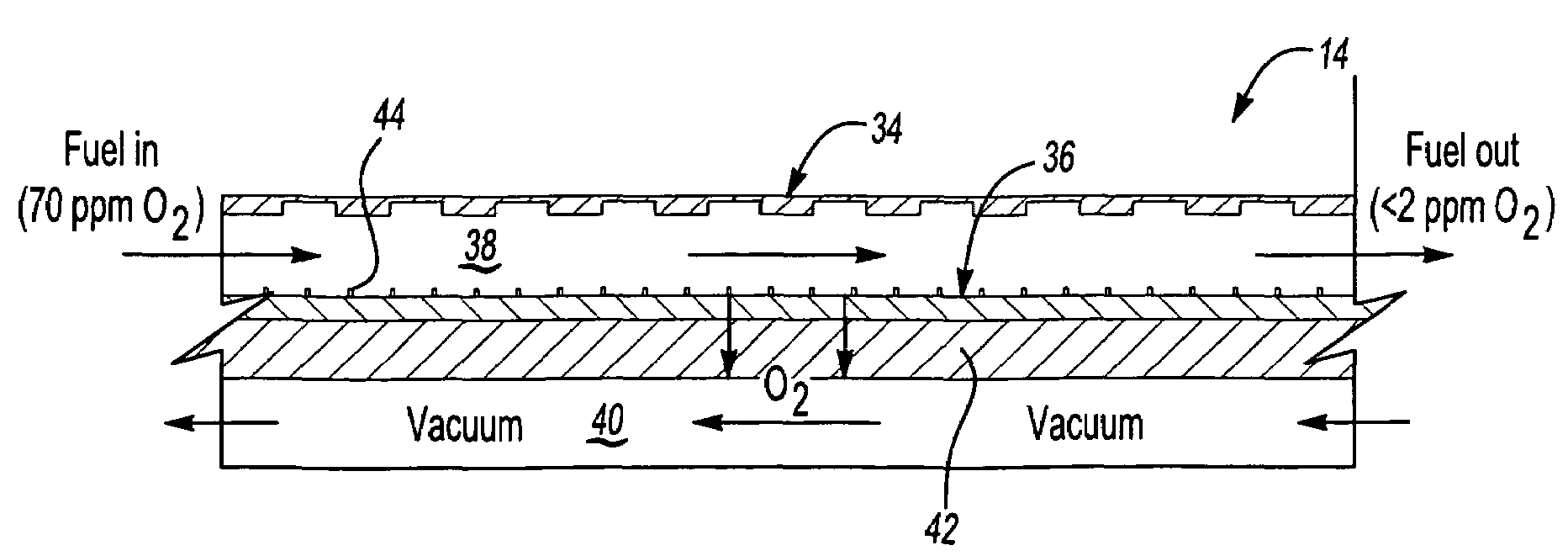
  • Figure 1
    Figure 1
  • Figure 2
    Figure 2
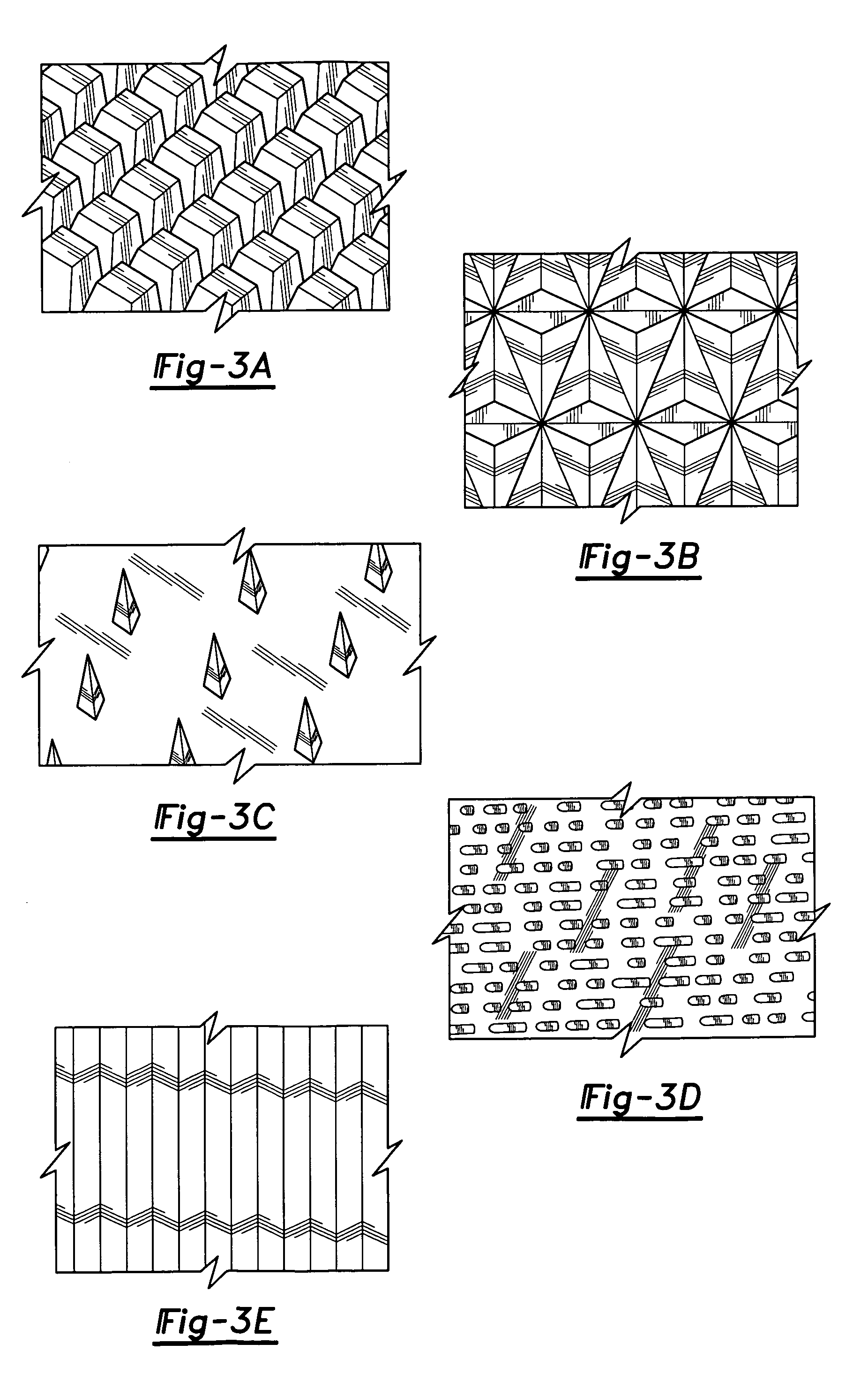
  • Figure 3
    Figure 3
Patent Text Reader

Abstract

A fuel system for an energy conversion device includes a deoxygenator system with an oxygen permeable membrane having a textured surface. A sweep gas and / or vacuum maintains an oxygen concentration differential across the membrane to deoxygenate the fuel. The textured surface increases the surface area of the oxygen permeable membrane. The textured surface of the oxygen permeable membrane is fabricated by pressing the textured surface into the oxygen permeable membrane with a microreplication-based tooling system. Another fabrication method presses the textured surface into a sacrificial film and the oxygen permeable membrane is then formed upon the sacrificial film to transfer the textured surface to the oxygen permeable membrane and the sacrificial film is then subsequently removed. Another fabrication method applies additional material to the oxygen permeable membrane through a porous sacrificial film.
Need to check novelty before this filing date? Find Prior Art

Description

BACKGROUND OF THE INVENTION

[0001] The present invention relates to stabilizing fuel by deoxygenation, and more particularly to deoxygenation through a textured oxygen permeable membrane adjacent an oxygen receiving channel.

[0002] Jet fuel is often utilized in aircraft as a coolant for various aircraft systems. The presence of dissolved oxygen in hydrocarbon jet fuels may be objectionable because the oxygen supports oxidation reactions that yield undesirable by-products. Dissolution of air in jet fuel results in an approximately 70 ppm oxygen concentration. When aerated fuel is heated between 350° F. and 850° F. the oxygen initiates free radical reactions of the fuel resulting in deposits commonly referred to as “coke” or “coking.” Coke may be detrimental to the fuel lines and may inhibit combustion. The formation of such deposits may impair the normal functioning of a fuel system, either with respect to an intended heat exchange function or the efficient injection of fuel.

[0003] Variou...

Examples

Embodiment Construction

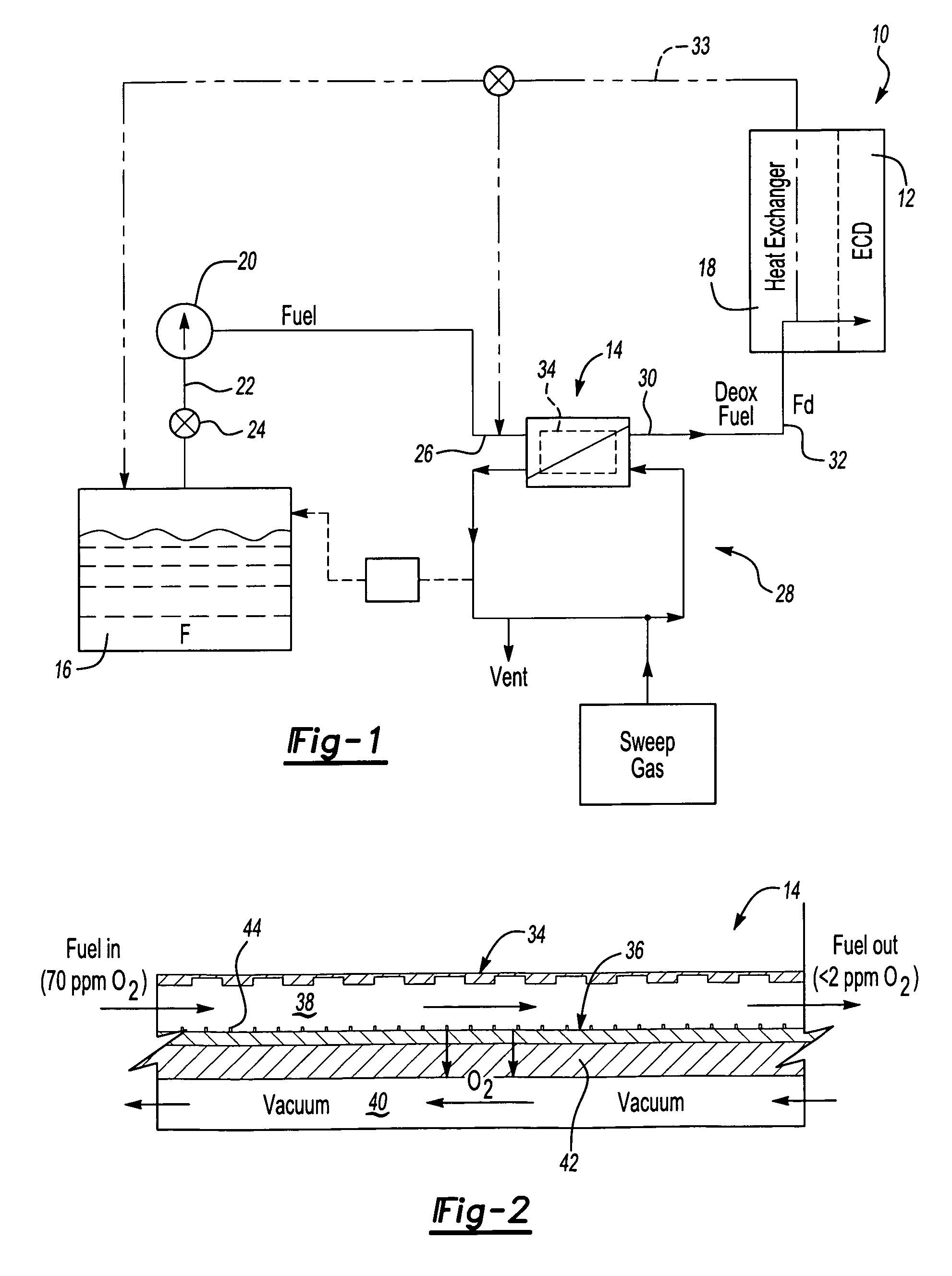
[0022]FIG. 1 illustrates a general schematic view of a fuel system 10 for an energy conversion device (ECD) 12. A deoxygenator system 14 receives liquid fuel F from a reservoir 16 such as a fuel tank. The fuel F is typically a hydrocarbon such as jet fuel. The ECD 12 may exist in a variety of forms in which the fuel, at some point prior to eventual use for processing, for combustion or for some form of energy release, acquires sufficient heat to support autoxidation reactions and coking if dissolved oxygen is present to any significant extent in the fuel.

[0023]One form of the ECD 12 is a gas turbine engine, and particularly such engines in high performance aircraft. Typically, the fuel also serves as a coolant for one or more sub-systems in the aircraft and becomes heated as it is delivered to fuel injectors immediately prior to combustion.

[0024]A heat exchange section 18 represents a system through which the fuel passes in a heat exchange relationship. It should be understood that ...