
Golf ball
a golf ball and mid layer technology, applied in golf balls, solid balls, sports equipment, etc., can solve the problems of insufficient resilience performance of the mid layer, poor flight performance of golf balls, and excessive spin upon a driver shot, so as to improve the flight distance, improve the impact feel, and improve the impact resistance.
- Summary
- Abstract
- Description
- Claims
- Application Information
AI Technical Summary
Benefits of technology
Problems solved by technology
Method used
Image

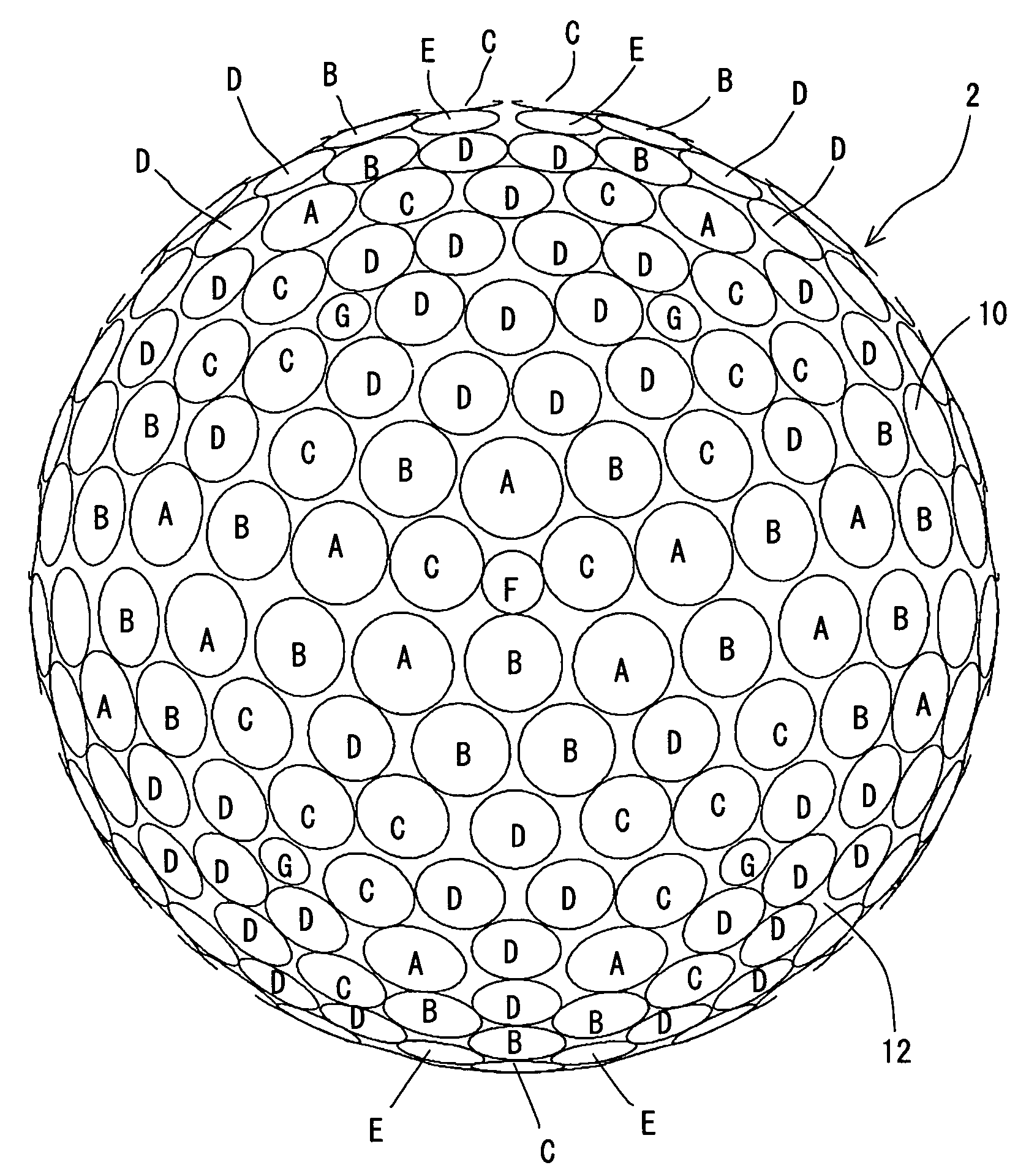
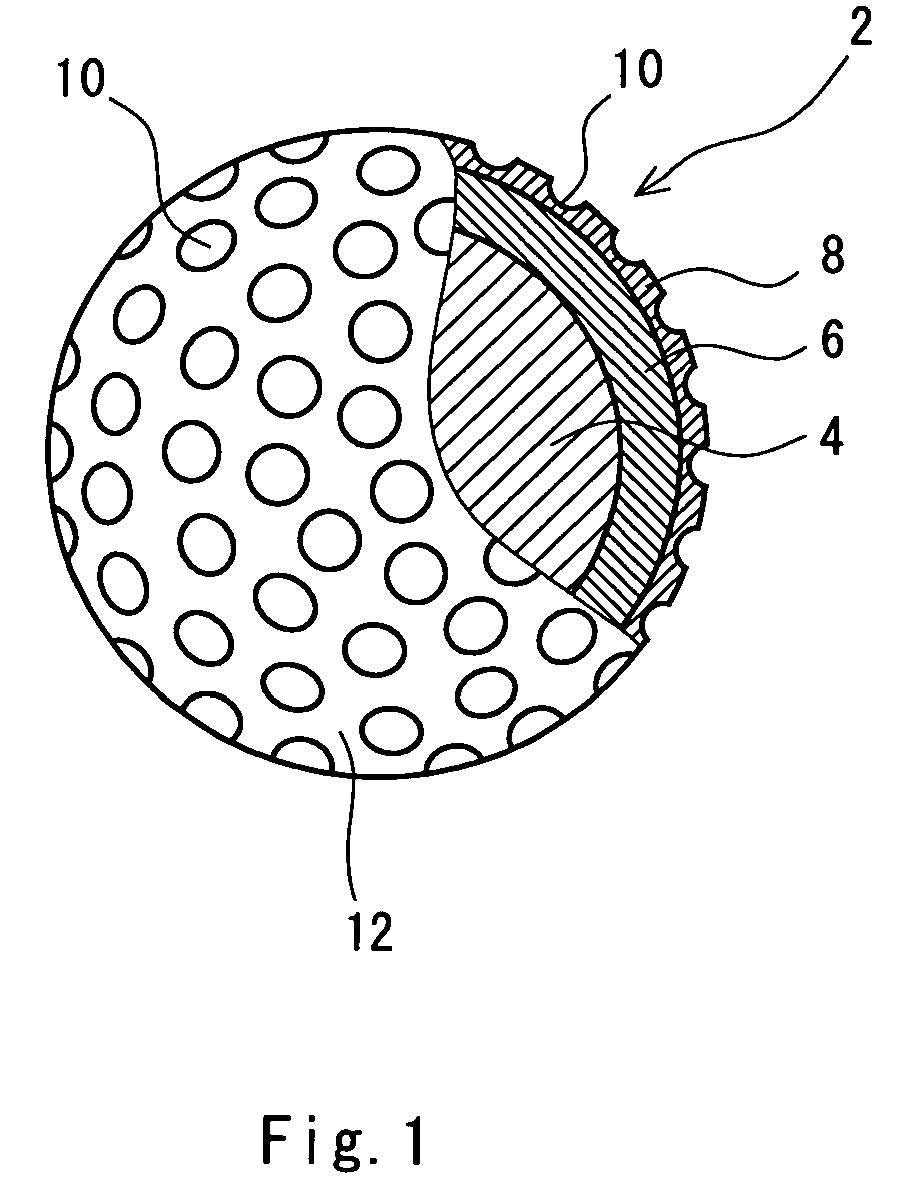
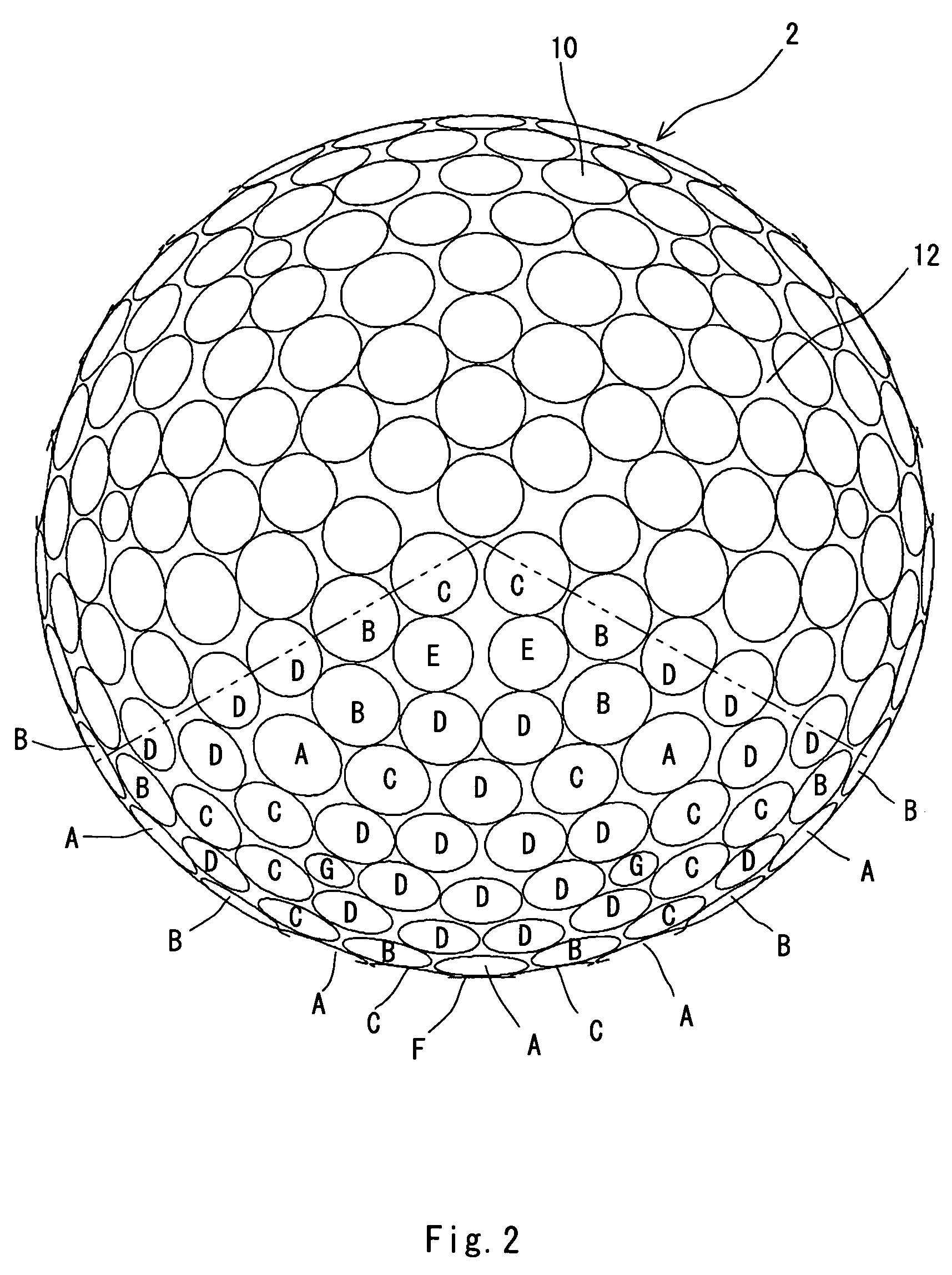
Examples
example 1
[0105]A rubber composition was obtained by kneading 100 parts by weight of polybutadiene (trade name “BR-11”, available from JSR Corporation), 24 parts by weight of zinc diacrylate, 5 parts of zinc oxide, an adequate amount of barium sulfate, 0.5 part by weight of bis(pentabromophenyl)disulfide and 0.6 part by weight of dicumyl peroxide. This rubber composition was placed into a mold having upper and lower mold half each having a spherical cavity, and heated at a temperature of 170° C. for 30 minutes to obtain a core having a diameter of 37.5 mm. A type c resin composition listed in Table 2 below was covered around this core by a compression molding method to form a mid layer having the thickness Tm of 1.0 mm. This spherical body comprising the core and the mid layer was placed into a mold having numerous protrusions on the inside face, followed by injection of a type X resin composition listed in Table 3 below around the spherical body according to an injection molding method to fo...
PUM
| Property | Measurement | Unit |
|---|---|---|
| thickness | aaaaa | aaaaa |
| diameters | aaaaa | aaaaa |
| diameter | aaaaa | aaaaa |
Abstract
Description
Claims
Application Information
 Login to View More