

Methods of preparing hydroxy functional vegetable oils
a technology of vegetable oils and hydroxy functional compounds, which is applied in the preparation of carboxylic compounds, fatty acid oxidation, organic chemistry, etc., can solve the problems of hindering affecting the commercial success of soy-based polyols, and unpleasant odor of commercially available hydroxy functional compounds, so as to reduce the load of the agitator
- Summary
- Abstract
- Description
- Claims
- Application Information
AI Technical Summary
Benefits of technology
Problems solved by technology
Method used
Image

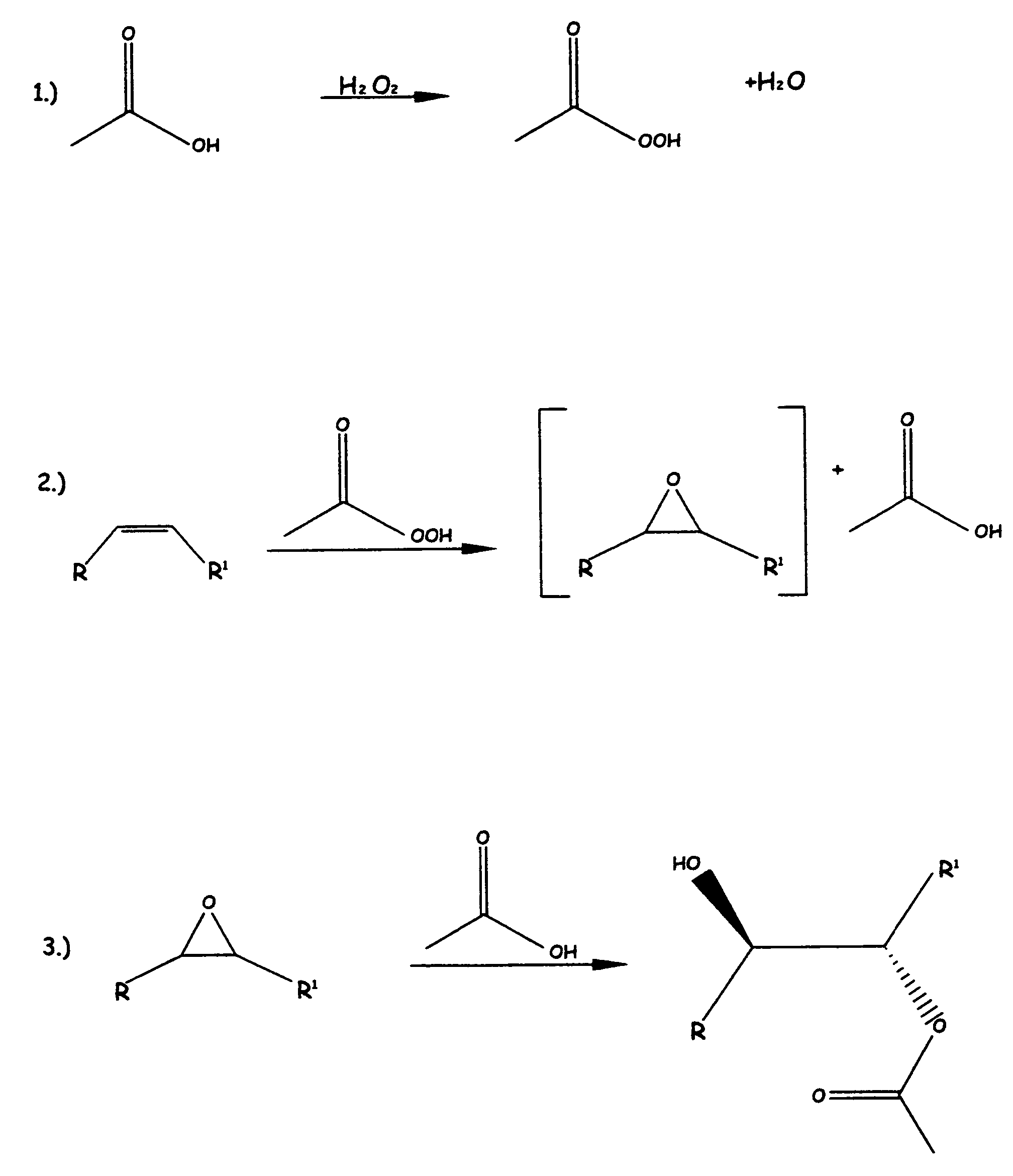
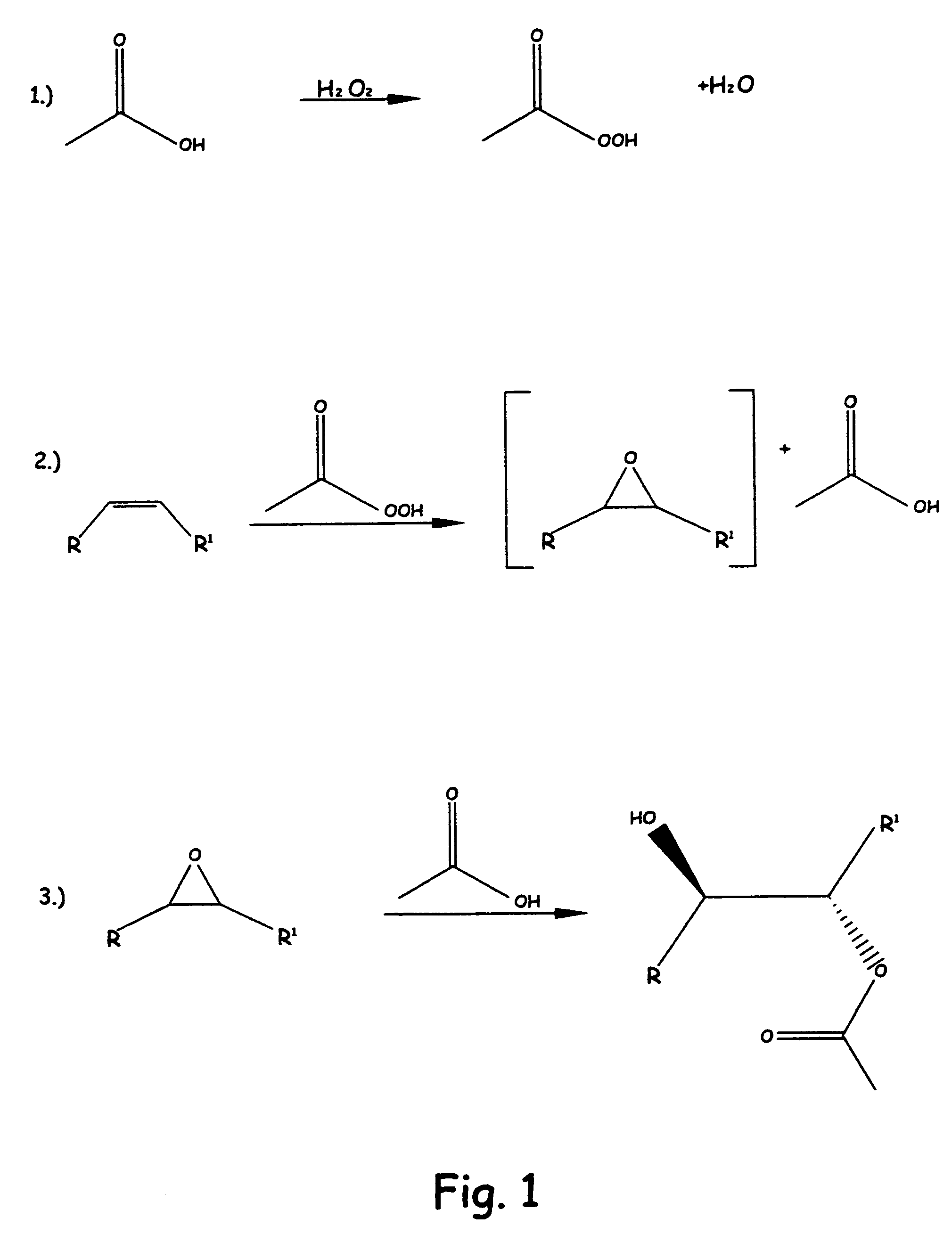
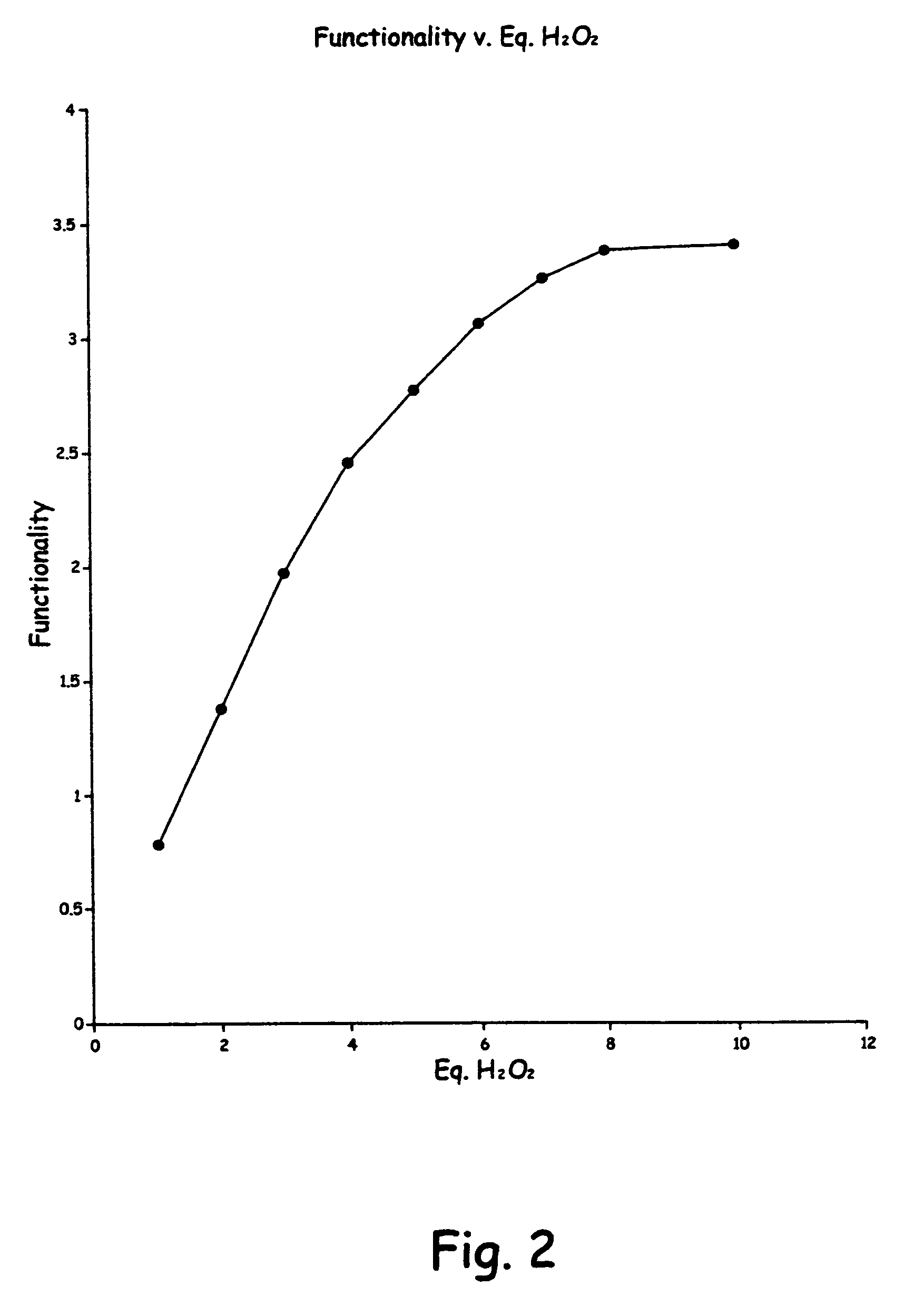
Examples
example 1
[0068]Into a 500 ml. glass flask, there was added 20 gms. (19.52 mmoles) of solvent-free crude soybean oil. To the soybean oil at room temperature was added 40 ml. of glacial acetic acid and 10.71 ml of 35% hydrogen peroxide, for a ratio of peroxide to glacial acetic acid of 5:1.
[0069]This mixture was heated to reflux for about 1 hour, at which time the reaction mixture was clear. The reaction mixture was cooled down enough to handle the materials and the materials were placed in a glass separatory funnel and the bottom layer, (mostly acetic acid) was removed. The top layer was washed with saturated sodium bisulfite, sodium bicarbonate (saturated solution) followed by saturated sodium chloride solution. The material was then transferred to an Erlenmeyer flask and dried over magnesium sulfate and then stripped of any solvent and volatiles by using a rotary evaporator.
[0070]An FTIR analysis showed a large OH stretch at approximately 3300 cm−1 and a reduction in sp2 CH stretch at appro...
example 2
[0080]A second run was made as in the first example, except there was used 4 equivalents of peroxide. There was used 20 gms. of crude soybean oil, 40 ml of glacial acetic acid, 6.7 ml of peroxide and the reaction was run at reflux for 1 hour. The FTIR analysis showed the formation of hydroxy compound, with a lesser reduction of sp2 CH stretch at 3050 cm−1 than showed in Example 1.
example 3
[0081]A third run was made as in the first example, except there was used 3 equivalents of peroxide. There was used 20 gms. of crude soybean oil 40 ml. of glacial acetic, and 5.0 ml of peroxide. The reaction was run for 1 hour at reflux. The FTIR results were the same as Example 2,
PUM
| Property | Measurement | Unit |
|---|---|---|
| temperature | aaaaa | aaaaa |
| period of time | aaaaa | aaaaa |
| temperature | aaaaa | aaaaa |
Abstract
Description
Claims
Application Information
 Login to View More