
Bonded metal fuselage and method for making the same
a fuselage and metal technology, applied in the field of fuselage structures of aerospace vehicles, can solve the problems of skin landing, increasing aircraft assembly time, etc., and achieve the effects of reducing weight, increasing strength, and reducing the number of fasteners
- Summary
- Abstract
- Description
- Claims
- Application Information
AI Technical Summary
Benefits of technology
Problems solved by technology
Method used
Image

Examples
Embodiment Construction
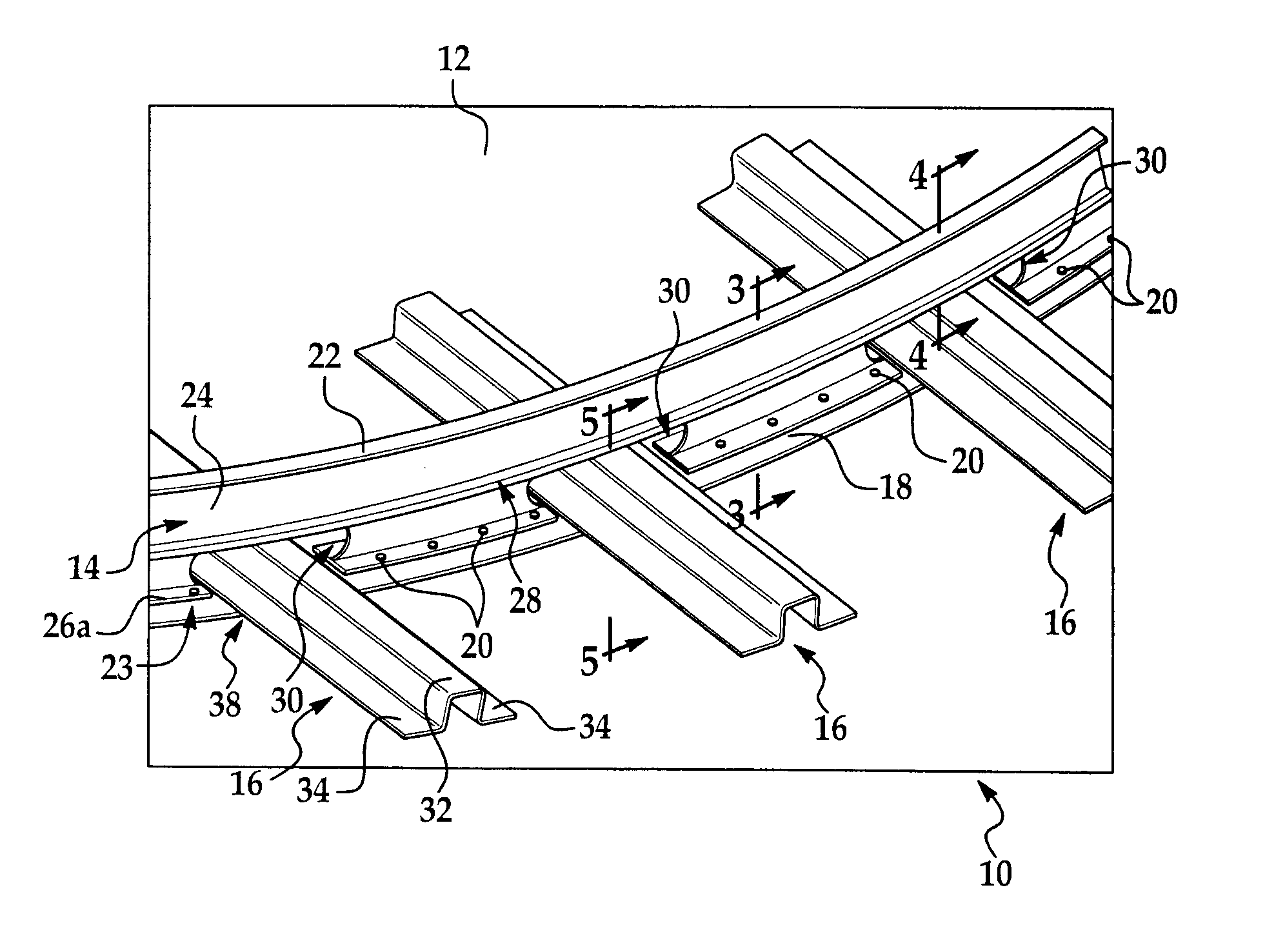
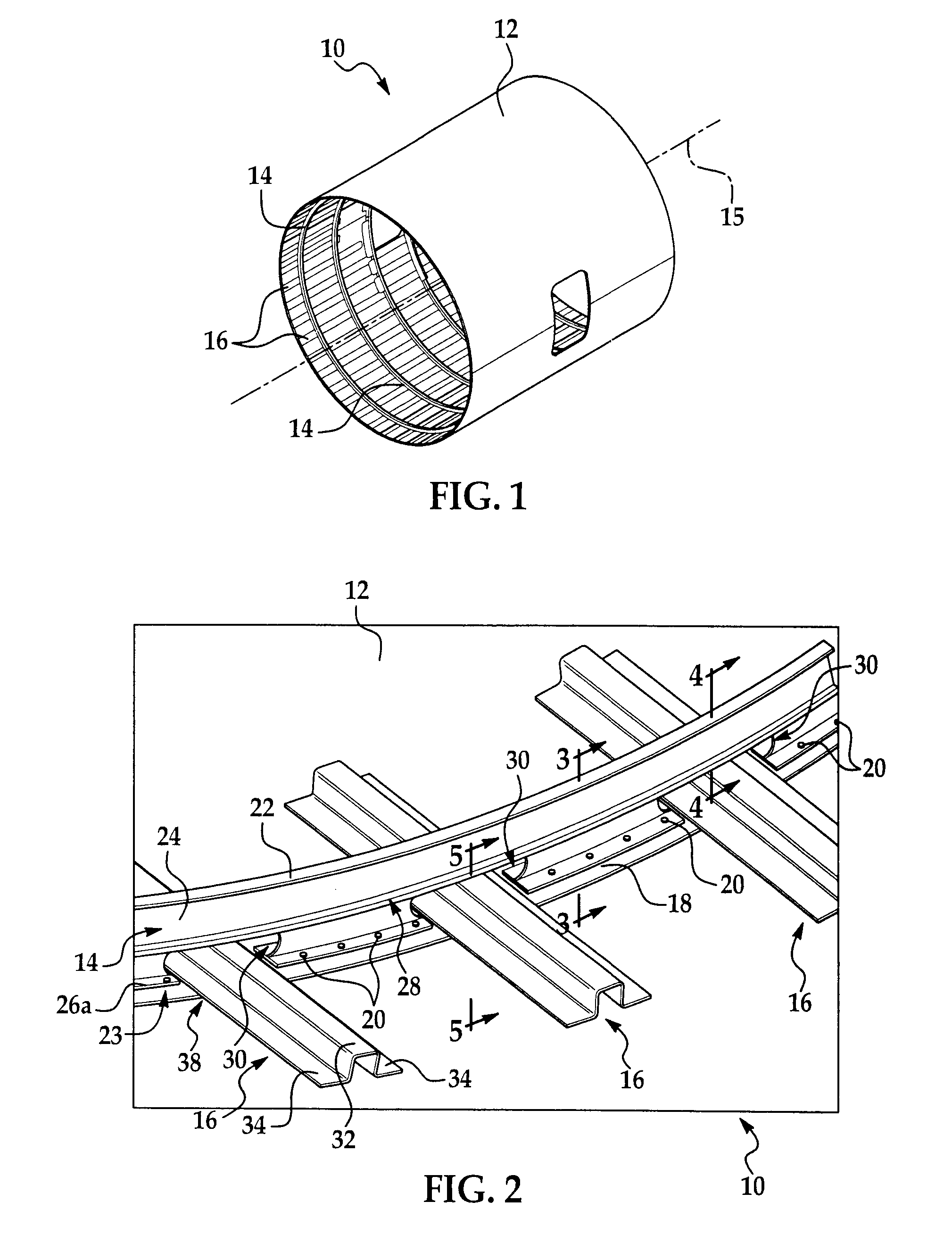
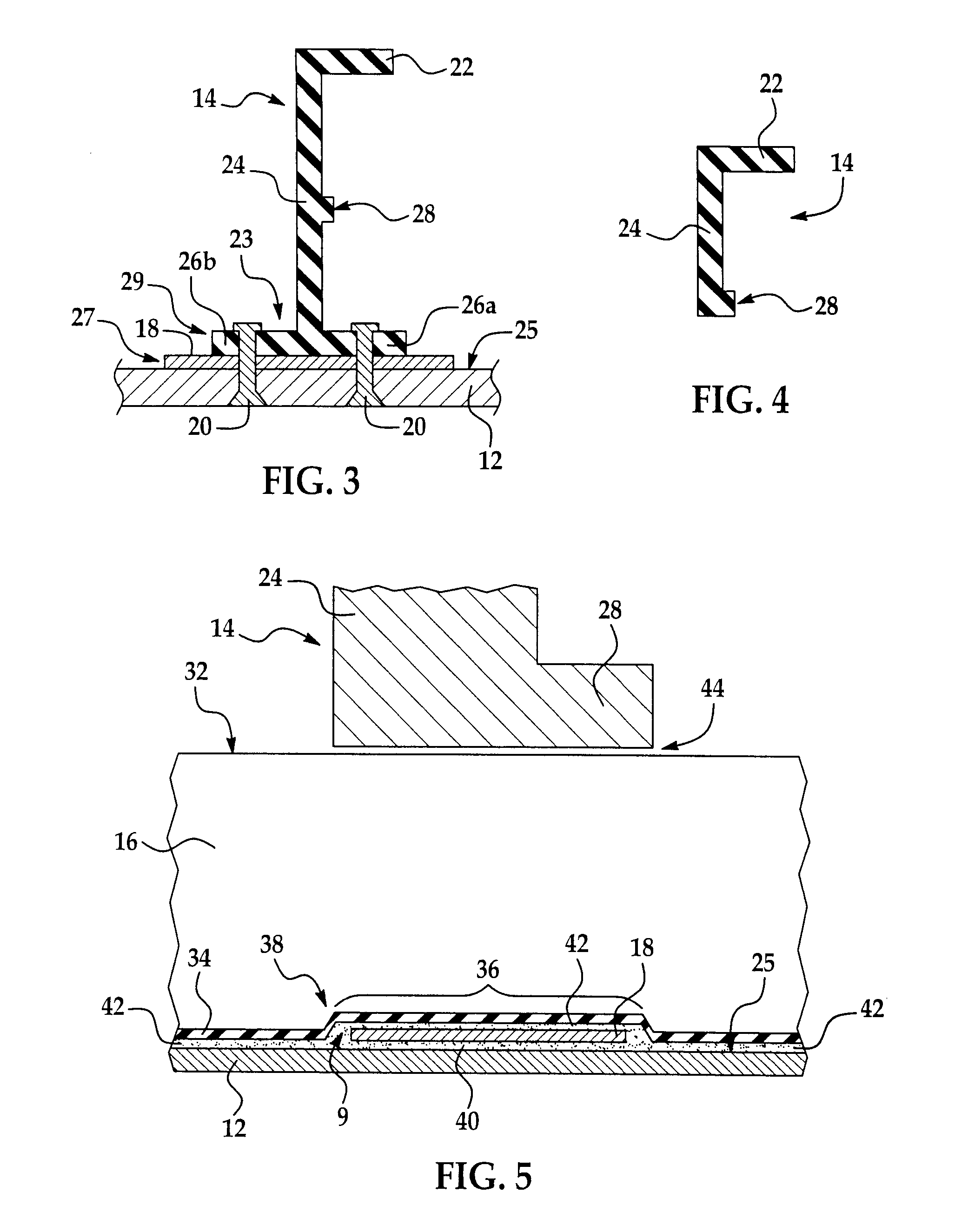
Referring first to FIGS. 1-5, a monocoque fuselage 10 for an aerospace vehicle such as an airplane, includes a longitudinal axis 15, and may possess any of various cross sectional shapes. In the illustrated embodiment, the fuselage 10 has a circular cross section, however other shapes are possible, including, without limitation, an oval or partial oval shape. The fuselage 10 broadly comprises an outer metal skin 12 formed of one or more sections, a plurality of barrel shaped, longitudinally spaced metal frames 14, and a plurality of circumferentially spaced, longitudinally extending stringers 16. The skin 12, frame 14 and stringers 16 may be formed from a suitable metal, such as, without limitation, aluminum or titanium.
Each of the frames 14 includes a single, inner flange 22 connected by a web 24 to an outer chord 23 defined by a pair of substantially coplanar outer flanges 26a, 26b which extend outwardly in opposite directions from the web 24. The web 24 may include a reinforcing ...
PUM
 Login to View More
 Abstract
Description
Claims
Application Information
 Login to View More