
Method for producing metallically encapsulated ceramic armor
a technology of ceramic armor and metal encapsulation, which is applied in the direction of manufacturing tools, doors/window protection devices, shields, etc., can solve the problems of limited by, and achieve the effect of less complicated and less costly
- Summary
- Abstract
- Description
- Claims
- Application Information
AI Technical Summary
Benefits of technology
Problems solved by technology
Method used
Image

Examples
Embodiment Construction
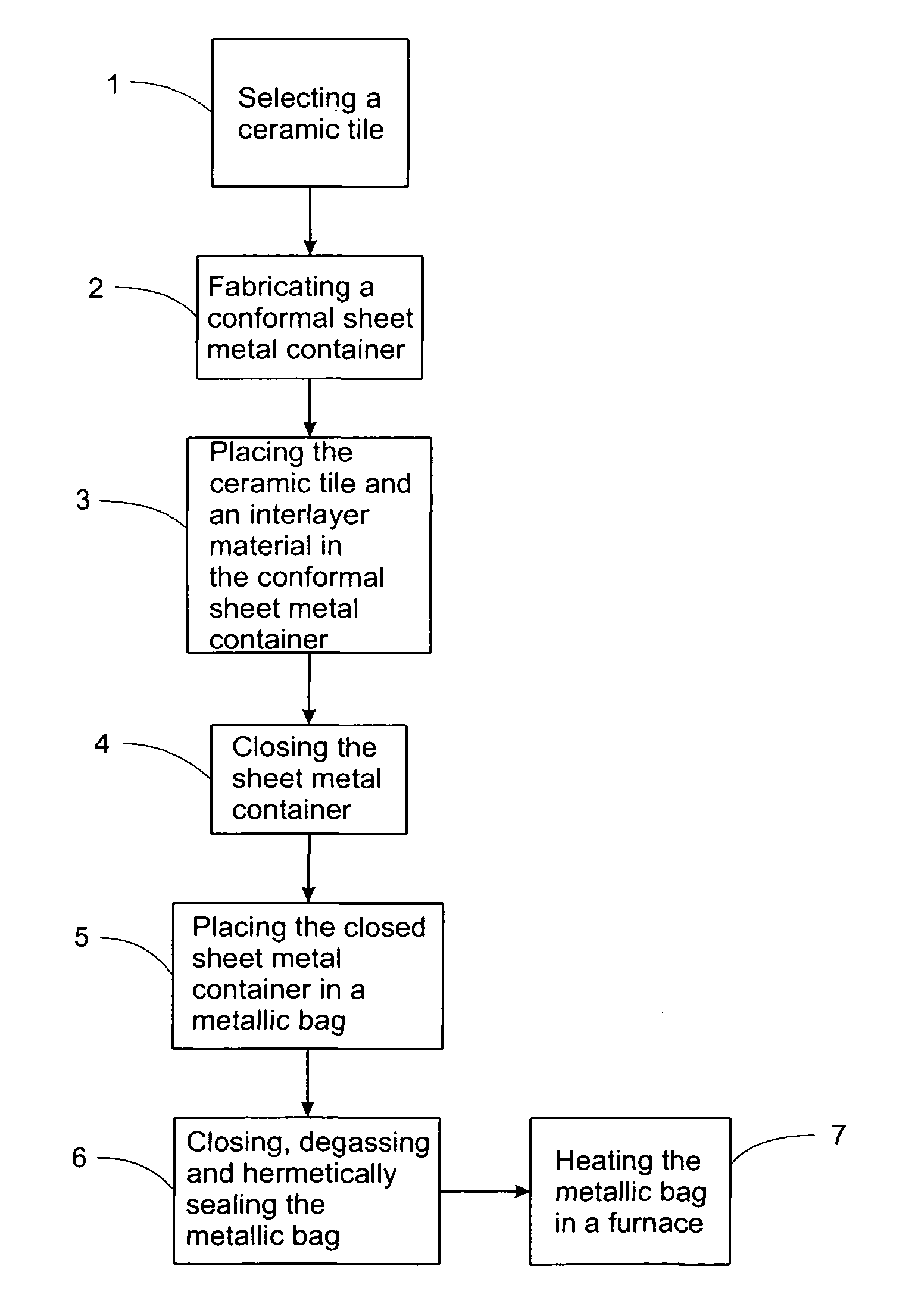
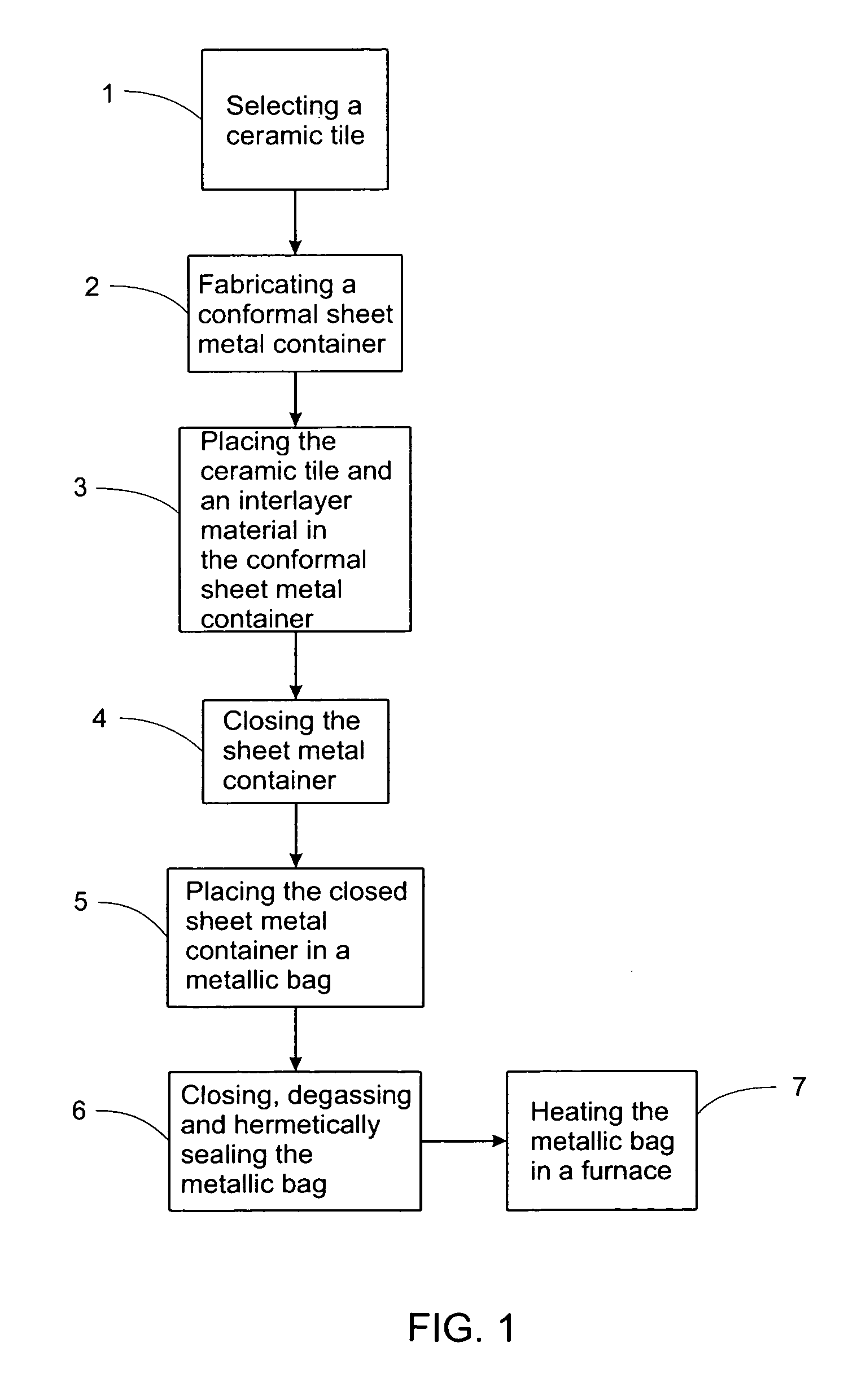
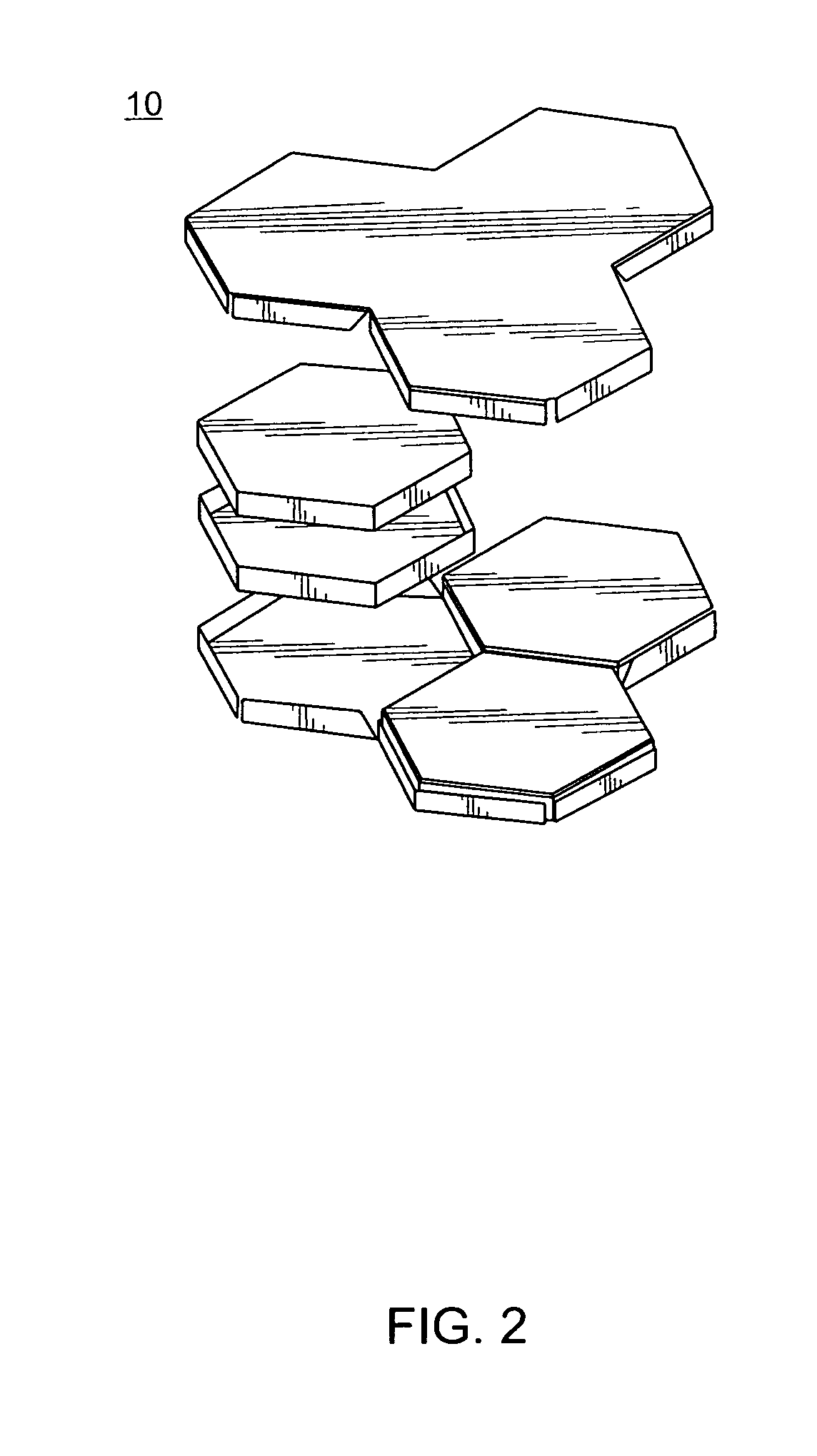
[0017]The present invention is a method for metallic encapsulation of ceramic tiles to produce armor. A preferred embodiment of the method begins with selecting a ceramic tile of the desired geometry, which may include, for example, a flat plate or a torso plate. Examples of ceramic materials include, but are not limited to, silicon carbide, boron carbide, and alumina. The preferred embodiment here employs a silicon carbide tile.
[0018]The preferred embodiment then comprises the fabrication of a conformal sheet metal container, wherein suitable sheet or plate stock ranging from 0.005″ (0.0127 cm) to 0.250″ (0.635 cm) in thickness is made in the shape of the ceramic tile to be encapsulated. The sheet metal envelope can be formed by methods such as brake-forming, shearing, hydroforming, deep drawing, stamping or superplastic forming. The conformal sheet metal container is made with dimensions that are modestly oversized relative to the ceramic tile [+0.005″-0.010″ (0.0127-0.0254 cm)] s...
PUM
| Property | Measurement | Unit |
|---|---|---|
| temperature | aaaaa | aaaaa |
| pressure | aaaaa | aaaaa |
| sessile drop angle | aaaaa | aaaaa |
Abstract
Description
Claims
Application Information
 Login to View More