
Method and apparatus using non-contact measuring device to determine rail distance traveled
a non-contact, measuring device technology, applied in the direction of distance measurement, railway signalling and safety, devices using time traversed, etc., can solve the problems of reduced visibility, insufficient accuracy, environmental problems, etc., and achieve accurate calculation of velocity, high noise, and high speed
- Summary
- Abstract
- Description
- Claims
- Application Information
AI Technical Summary
Benefits of technology
Problems solved by technology
Method used
Image



Examples
Embodiment Construction
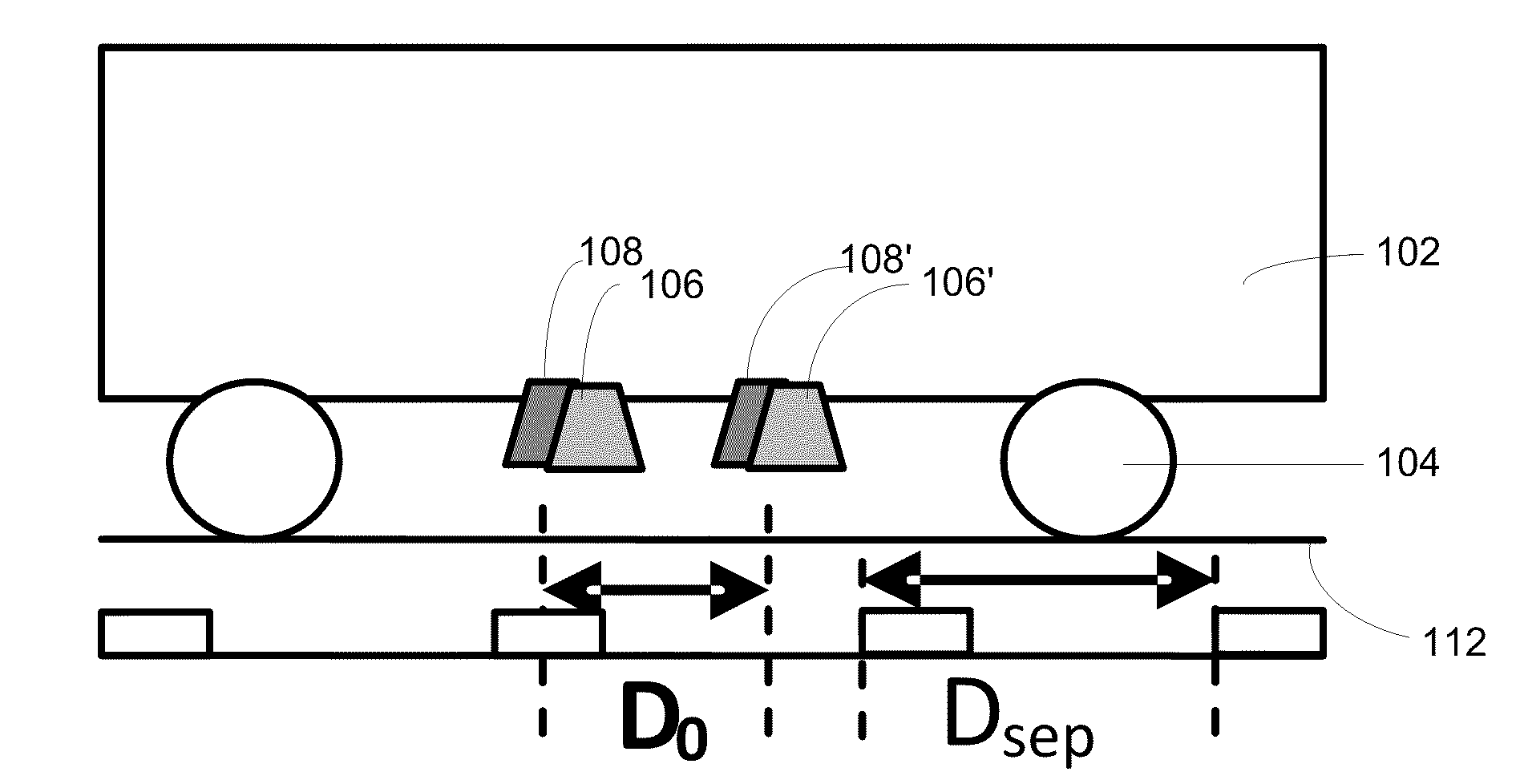
[0023]Preferred embodiments of the invention use a non-contact, distance traveled measurement system (DTMS) to calculate speed and distance traveled by a vehicle over rails—more specifically, by trains traveling on standard railroad tracks. Preferably, a pair of short range (near field) microwave-based transmitters / sensors (transceivers) are mounted on the underside of the train and used to key on rail-bed features such as cross ties or tie plates. Reflected microwave energy from two transceivers at a fixed distance apart is correlated to determine the time delay between the first and second transceiver passage. From this time delay, nearly instantaneous velocity can be computed at each given target such as a tie plate (metal target) or a tie (dielectric contrast target). These velocities can be estimated, for example, every 8636 microseconds at 125 mph for a 19″ tie to tie distance. Velocity versus time curves can be integrated over time to derive distance traveled.
[0024]According ...
PUM
 Login to View More
 Abstract
Description
Claims
Application Information
 Login to View More