

Floodlight radar system for detecting and locating moving targets in three dimensions
a radar system and moving target technology, applied in the field of floodlight radar system for detecting and locating moving targets in three dimensions, can solve the problems of limiting the search volume, grating lobe formation, complex and costly system, etc., and achieve the effect of accurately interpolating the target's radial velocity and the range of the targ
Patent Information
- Authority / Receiving Office
- US · United States
- Patent Type
- Patents(United States)
- Current Assignee / Owner
- Publication Date
- 2016-02-02
Smart Images
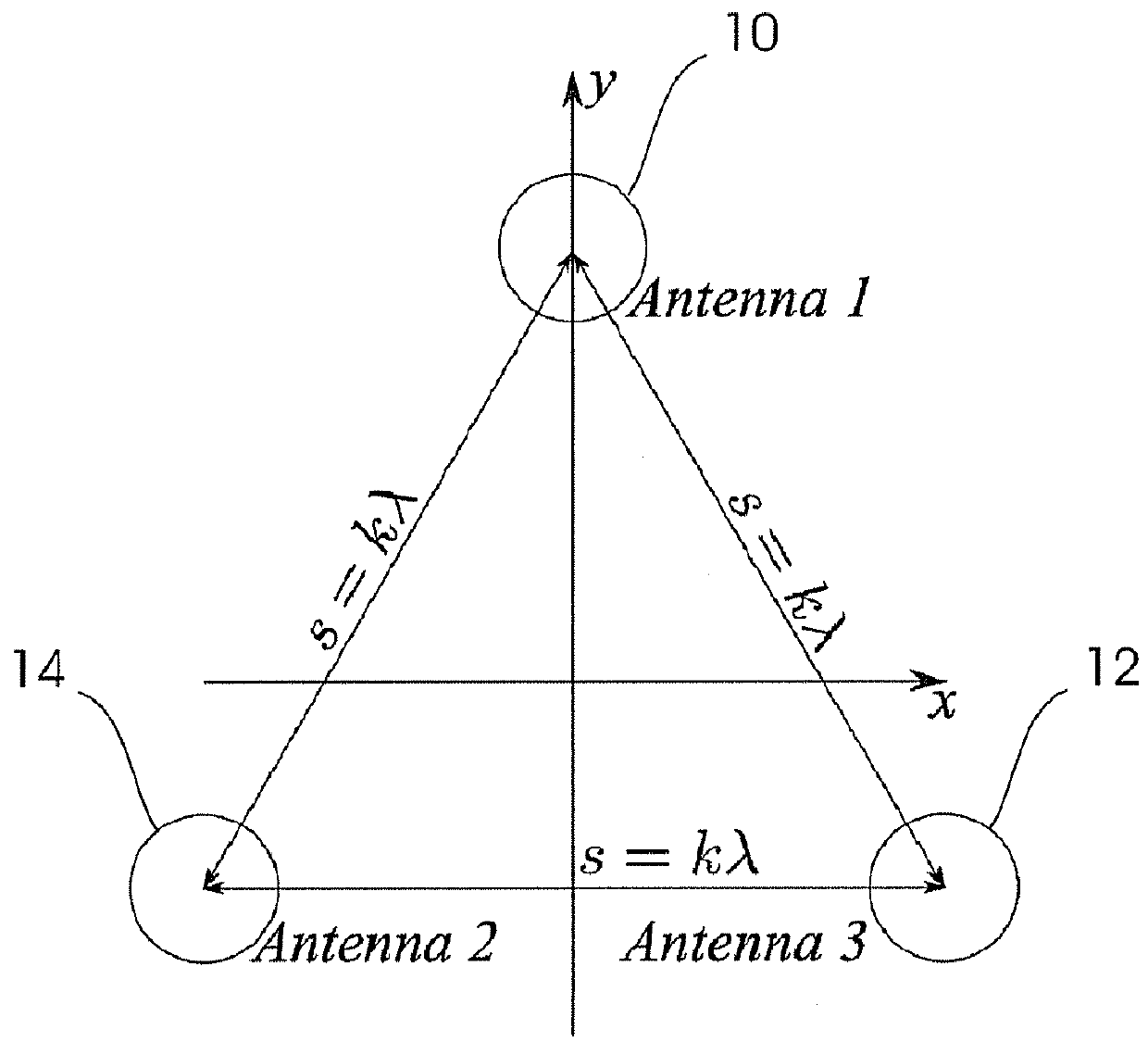
Figure 1 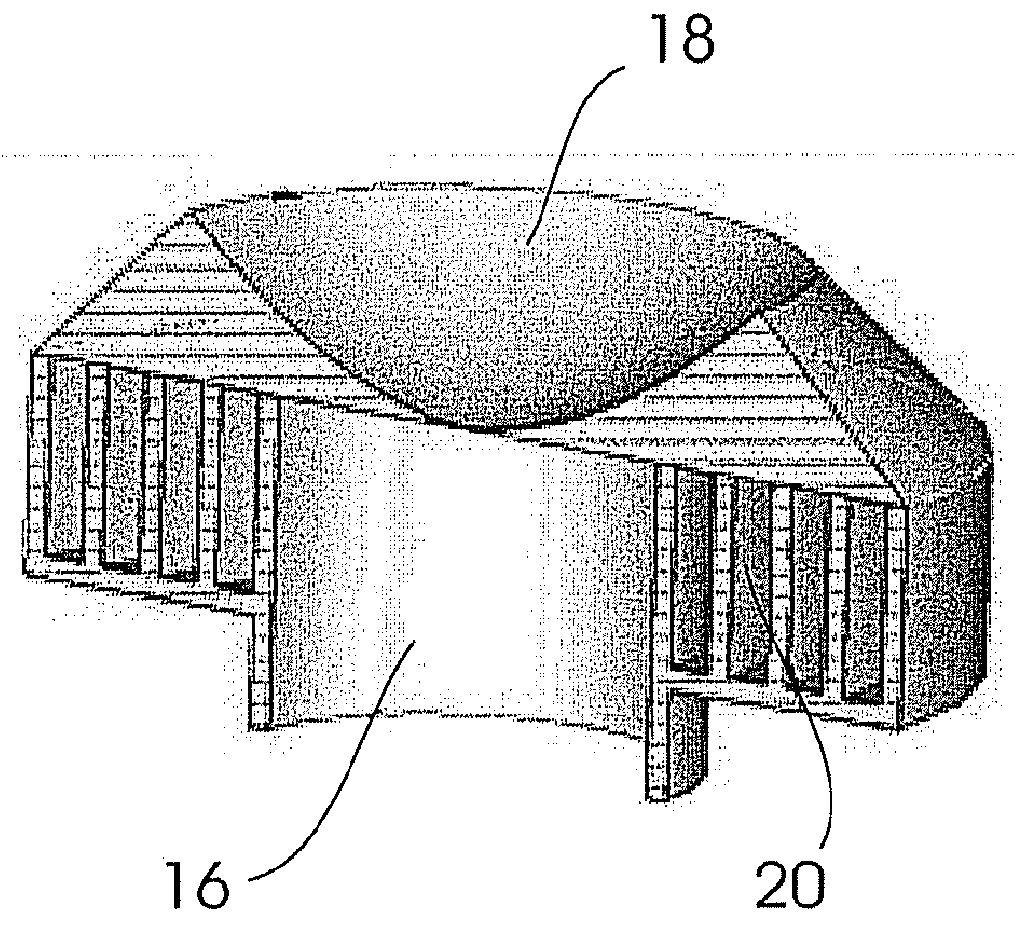
Figure 2 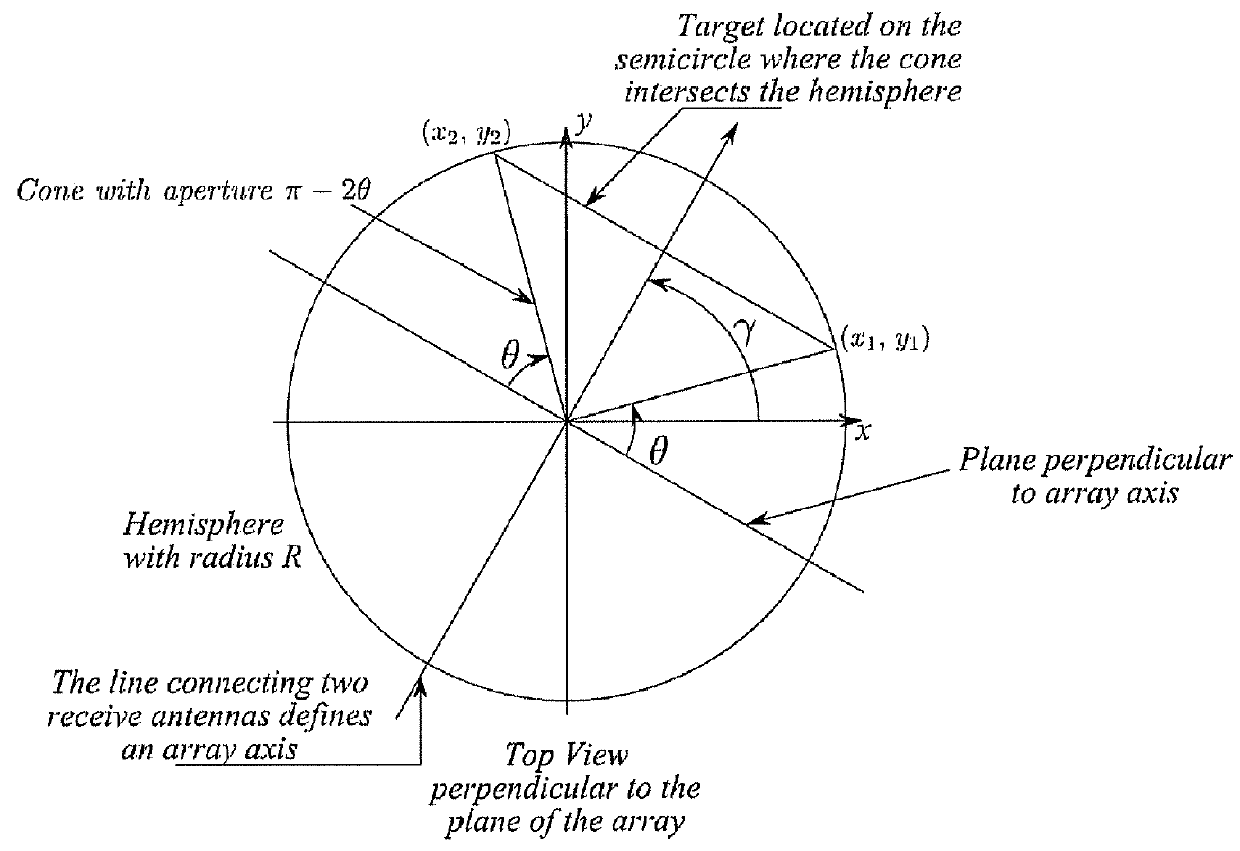
Figure 3
Abstract
Description
BACKGROUND OF THE INVENTION
[0001] THIS invention relates to a floodlight radar system for detecting and locating moving targets in three dimensions.
[0002] When a radar system with the capability to rapidly detect and locate fast-moving targets in three dimensions anywhere in the search volume is required, a floodlight radar is an appropriate choice.
[0003] Without scanning its beam (either mechanically or electronically), a floodlight radar transmitter continuously illuminates the full search volume by means of a single wide beam antenna. Detection and location of targets in three dimensions is accomplished by appropriately processing the signals received with multiple receive antennas.
[0004] Floodlight radars, as described by W Wirth, Radar techniques using array antennas, IEE, 2001, pp. 419-447, have a long legacy. The first operational air-warning system, the Chain Home network built in Britain before the second world war, was a pulsed floodlight system described in British patent GB ...
Examples
embodiment
Example of a System Embodiment
The Transceiver
[0100]Three block diagrams showing the implementation of an FMCW radar transceiver of a rapid location 3D radar system according to an example embodiment of the present invention are shown in FIGS. 6, 7 and 8. The principle of ambiguity resolution is equally applicable to a coherent pulsed radar system implementation.
[0101]FIG. 6 shows a multiplexed system with low hardware count, where the waveform generator generates alternating bursts at the frequencies f1 and f2. FIG. 7 shows an implementation with a six channel receiver and a shared receive antenna array, where the bursts at frequencies f1 and f2 are transmitted simultaneously. FIG. 8 shows an implementation with a six channel receiver fed by six receive antennas where the bursts at frequencies f1 and f2 are transmitted simultaneously. The implementations in FIGS. 7 and 8 are the preferred implementations if rapid detection of the target is a high priority. The less expensive impleme...