
Low cost gold wire brushes
a gold wire brush and low-cost technology, applied in current collectors, coupling contact members, electrical equipment, etc., can solve the problem of the longest possible life, achieve the effect of reducing manufacturing costs, high degree of reliability, and simplify manufacturing
- Summary
- Abstract
- Description
- Claims
- Application Information
AI Technical Summary
Benefits of technology
Problems solved by technology
Method used
Image

Examples
Embodiment Construction
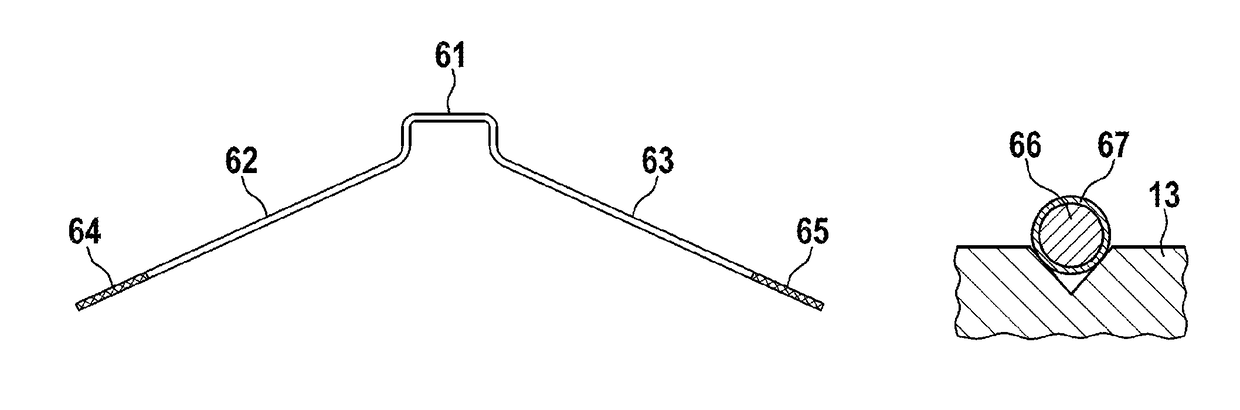
[0030]In FIG. 1, a preferred embodiment according to the invention is shown. A slipring brush has a center section 61, which may be bent to be adapted to a brush holder. On the first side of this center section is a first uncoated section 62 followed by a first coated or plated section 64, and on the second side of the center section is a second uncoated section 63 followed by a second coated or plated section 65. The first and second coated or plated sections are the sections, which are in contact with a slipring module. Contact of the uncoated section with a slipring module should be avoided, as this could cause unnecessary wear and results in poor transmission characteristics like considerably contact noise. Preferably, the coating completely encloses the coated or plated sections. Details of the coated or plated sections are shown in the next figure.
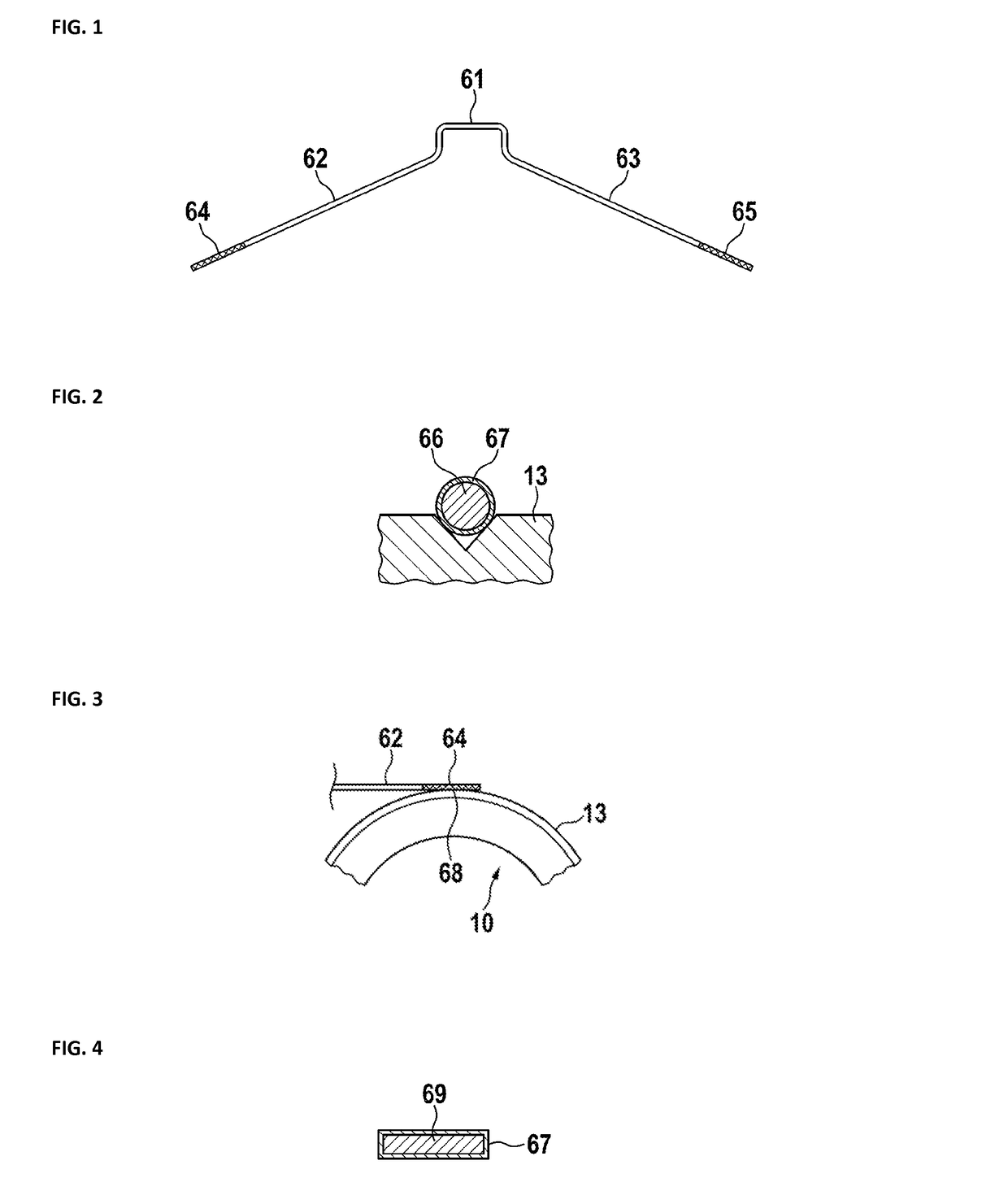
[0031]In FIG. 2, the details of a coated or plated section are shown. A wire 66 has a coated or plated surface section 67. The wire...
PUM
| Property | Measurement | Unit |
|---|---|---|
| total length | aaaaa | aaaaa |
| total length | aaaaa | aaaaa |
| total length | aaaaa | aaaaa |
Abstract
Description
Claims
Application Information
 Login to View More