
Method of manufacturing oxygen-nitrogen-oxygen laminated structure and gate
A technology of a laminated structure and a manufacturing method, which is applied in the manufacture of semiconductor/solid-state devices, electrical components, semiconductor devices, etc., to achieve the effects of increasing the equivalent oxide thickness, increasing the threshold voltage, and reducing charge loss
Patent Information
- Authority / Receiving Office
- CN · China
- Current Assignee / Owner
- Publication Date
- 2011-01-26
- Estimated Expiration
- Not applicable · inactive patent
Smart Images
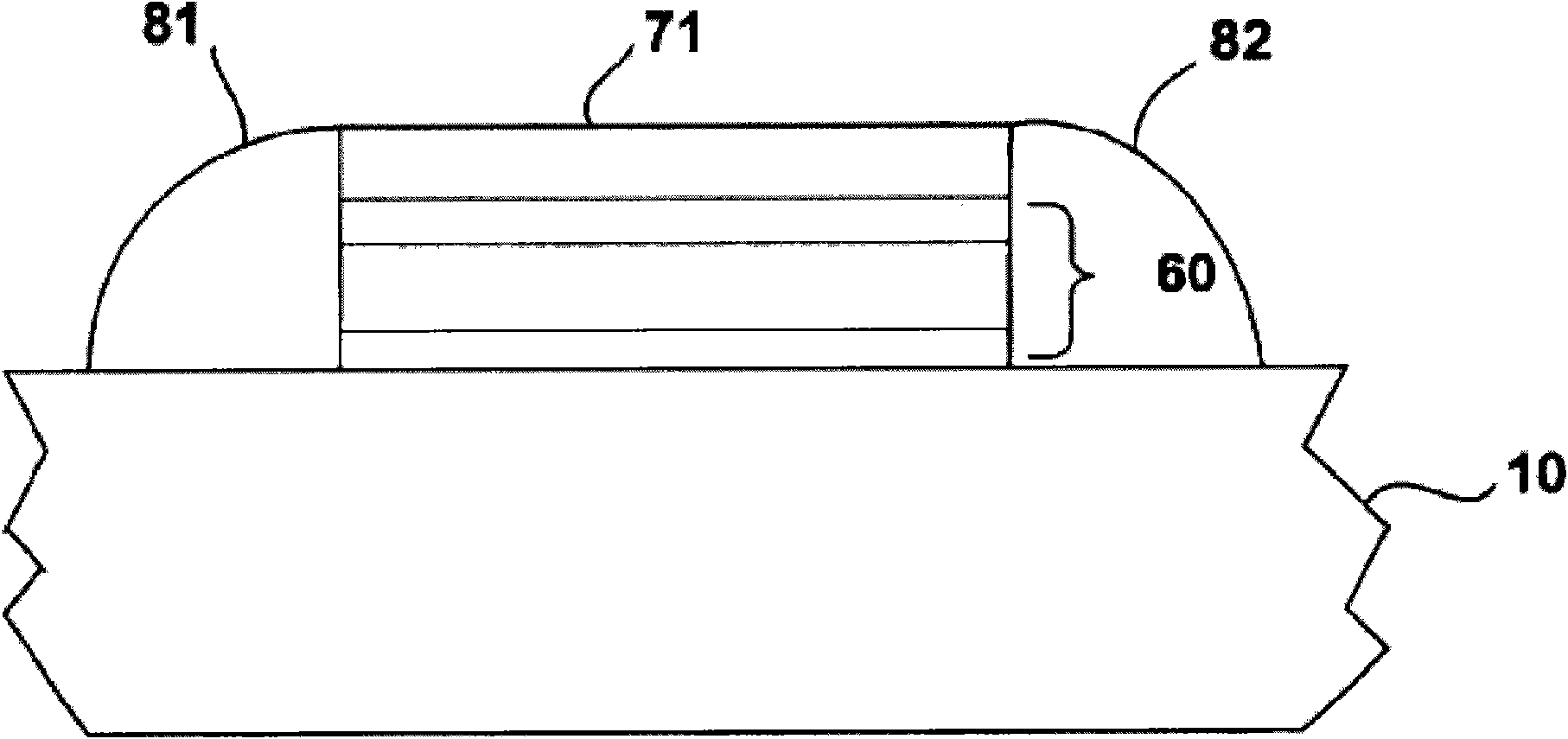
Figure 1 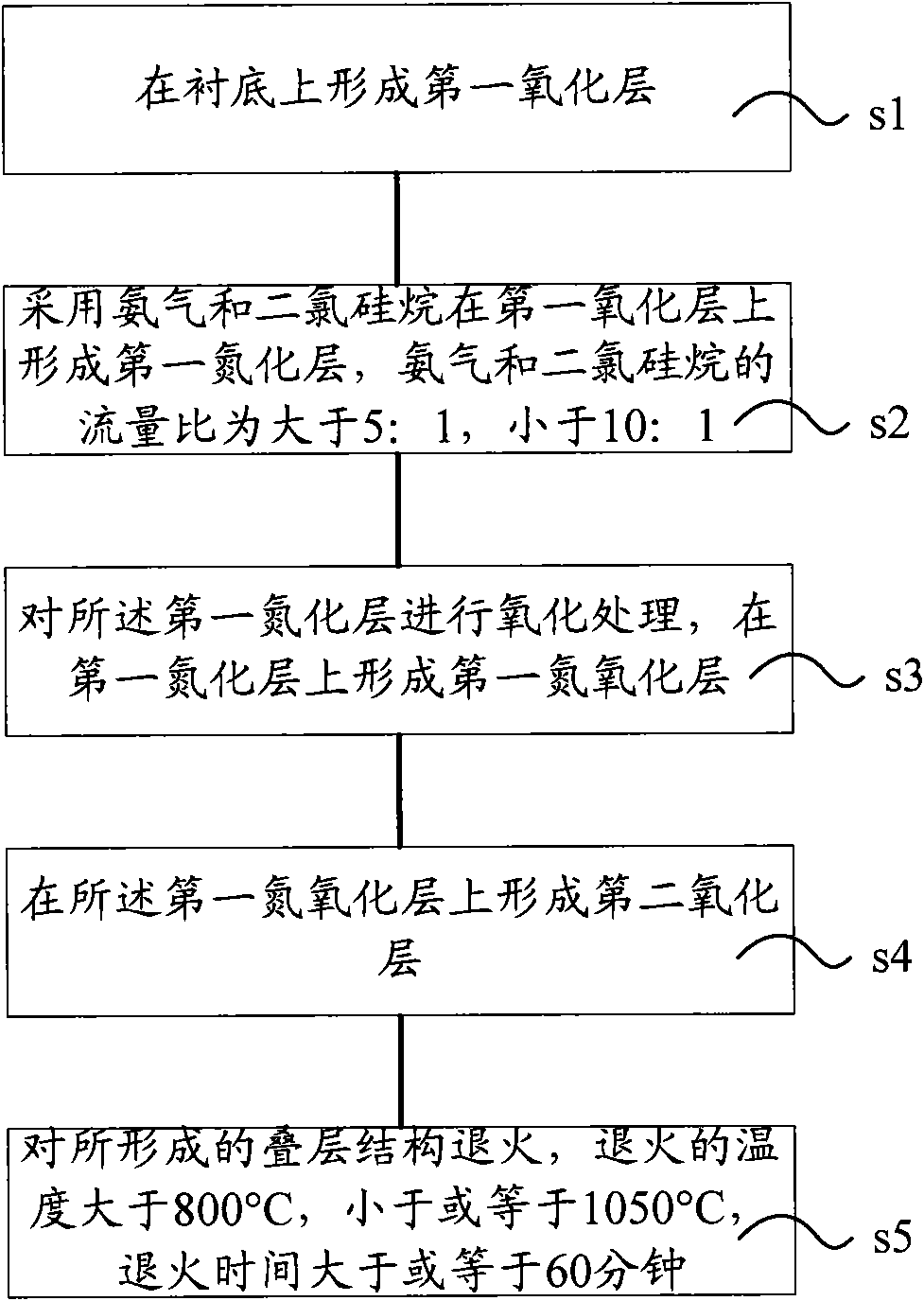
Figure 2 
Figure 3
Abstract
Description
technical field
[0001] The invention relates to the field of semiconductor manufacturing, in particular to an oxygen-nitrogen-oxygen stack structure and a gate manufacturing method. Background technique
[0002] In the manufacturing process of the semiconductor memory, the gate of the memory cell often adopts a structure containing an oxygen-nitrogen-oxygen (ONO) layer. figure 1 Shown is a schematic structural diagram of an existing storage unit. refer to figure 1 As shown, the memory cell includes: a substrate 10 ; an ONO layer 60 on the substrate 10 ; a control gate 71 on the ONO layer 60 ; spacers 81 and 82 on both sides of the ONO layer 60 and the control gate 71 . Wherein, the ONO layer 60 is a laminated structure, and the materials of each layer in the laminated structure are generally silicon oxide, silicon nitride, and silicon oxide from bottom to top.
[0003] For example figure 1 The manufacturing process of the ONO layer of the memory cell shown is generally a...
Examples
Embodiment approach
[0029] refer to figure 2 As shown, according to an embodiment of the method for manufacturing the oxygen-nitrogen-oxygen stack structure of the present invention, it includes:
[0030] Step s1, forming a first oxide layer on the substrate;
[0031] Step s2, using ammonia gas and dichlorosilane to form a first nitride layer on the first oxide layer, the flow ratio of ammonia gas and dichlorosilane being greater than or equal to 5:1 and less than 10:1;
[0032] Step s3, performing oxidation treatment on the first nitride layer to partially oxidize the first nitride layer to form a first nitride oxide layer;
[0033] Step s4, forming a second oxide layer on the first oxynitride layer;
[0034] Step s5, annealing the formed laminated structure, the annealing temperature is greater than 800° C. and less than or equal to 1050° C., and the annealing time is greater than or equal to 60 minutes.
[0035] In the above embodiment, when forming the first nitrided layer, the flow ratio...