

Cold pressing preparation process for calophyllum inophyllum linn seed oil
A technology of crabapple seeds and crabapple seeds, applied in the field of processing of crabapple seeds, to achieve good quality, clear and transparent oil, and improve the quality of oil
- Summary
- Abstract
- Description
- Claims
- Application Information
AI Technical Summary
Problems solved by technology
Method used
Image

Examples
specific Embodiment approach
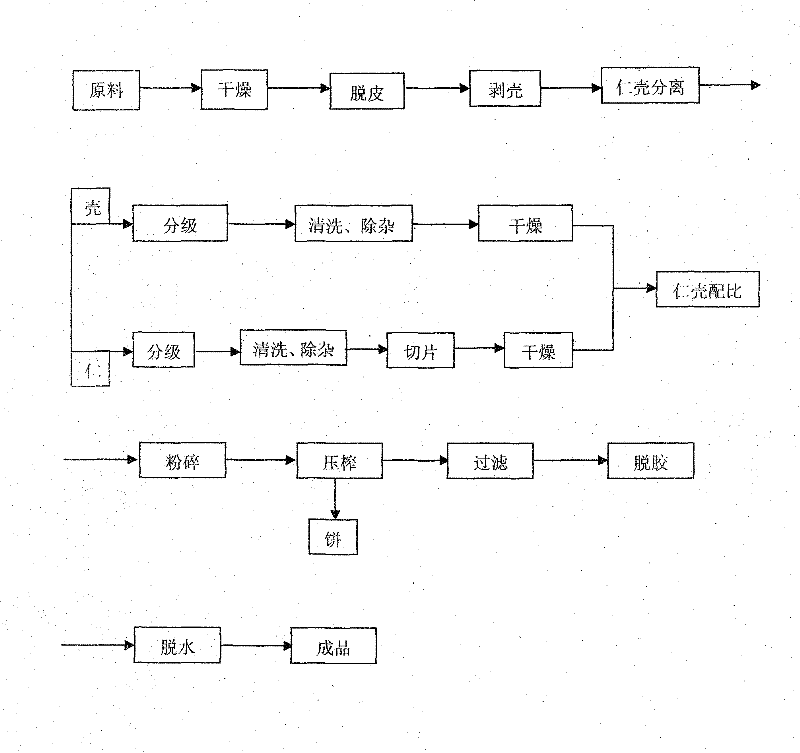
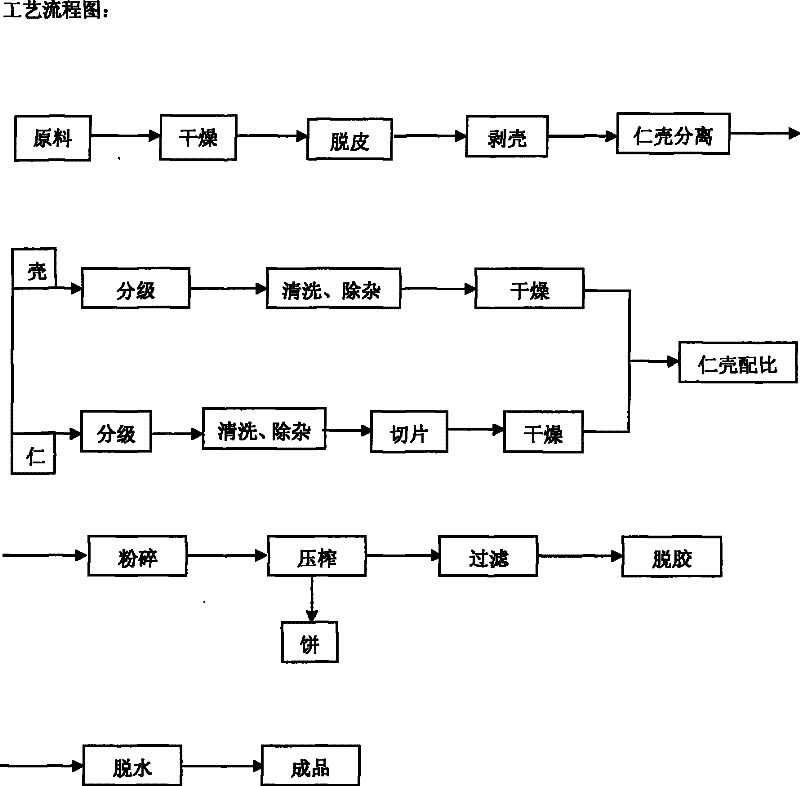
[0025] Tamana fruits are collected, dried and peeled. The peeled tamanu fruit is sent to the cutter cage peeling machine for shelling, and the tamanu seed kernel and the tamanu seed shell are separated by a vibrating screen and a winnowing machine. The peeled and separated tamanu seed kernels and tamanu seed shells are graded, and high-quality tamanu seed kernels and seed shells are selected and washed with tap water to remove impurities adhering to the surface. Slice the selected tamanu seeds with a slicer, and the thickness of the slices is controlled between 0.5 mm and 5.0 mm. Put the sliced kernels and shells together in an oven for drying at a drying temperature of 30°C to 60°C and a drying time of 8h to 25h until the moisture content of the tamanu seeds is between 0.1% and 5%. The dried tamanu seed kernels are mixed with the tamanu seed shells in a certain ratio, and pulverized by a pulverizer. After being crushed, it is sent to a static pressure oil press for cold p...
PUM
| Property | Measurement | Unit |
|---|---|---|
| thickness | aaaaa | aaaaa |
Abstract
Description
Claims
Application Information
 Login to View More