

Microcystin test chip, kit and detection method
A microcystin and detection chip technology, which is applied in the field of microcystin detection chips, can solve the problems of affecting the monitoring/early warning of harmful algal blooms, the inability to pre-inspect for toxin-producing microcystis, and reducing the timeliness of biological monitoring. The effect of shortening the detection time, eliminating PCR amplification, and quickly correcting the accuracy
- Summary
- Abstract
- Description
- Claims
- Application Information
AI Technical Summary
Problems solved by technology
Method used
Image

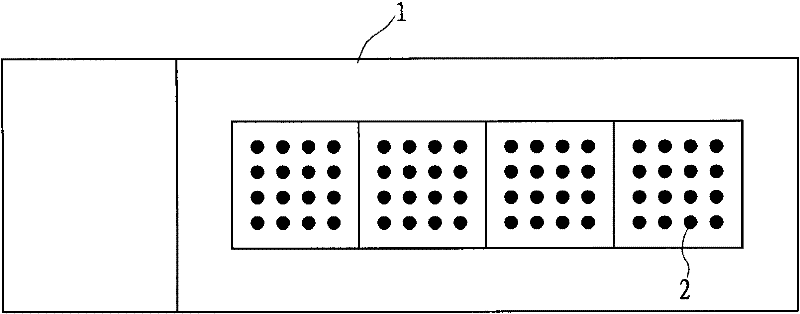
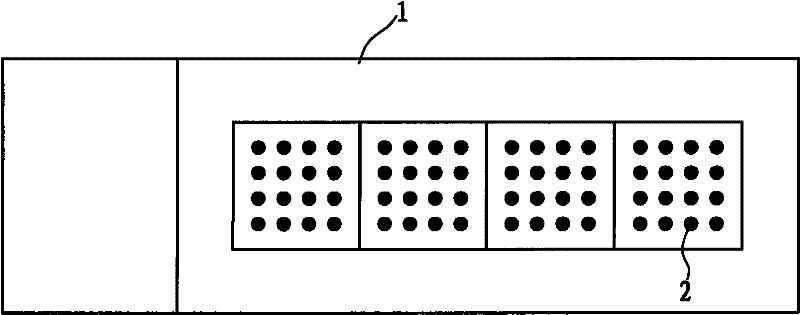
Examples
Embodiment Construction
[0023] The present invention will be described in further detail below in conjunction with the embodiments of the drawings.
[0024] ①Sample DNA extraction: Centrifuge the water sample, discard the supernatant, and extract the metagenomic DNA in the centrifuged water sample with nucleic acid extractant combined with adsorption column method
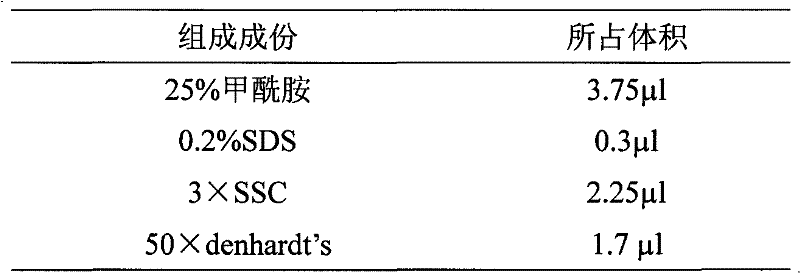
[0025] ②Hybridization: Melt the hybridization solution and mix it with metagenomic DNA. After denaturation, place the chip in the hybridization box with an ice bath, cover with a cover slip, and inject the denatured ice bath hybridization solution through the sample hole, and close the hybridization box lid , Hybridize in the hybridizer;
[0026] ③Washing: the hybridized chip is cleaned and centrifuged by a washer-dryer;
PUM
 Login to View More
 Abstract
Description
Claims
Application Information
 Login to View More