
Real-time multicast method in wireless multi-hop network
A wireless multi-hop, multicast group technology, applied in wireless communication, broadcast service allocation, network traffic/resource management, etc., can solve problems such as restricting applications and wasting network resources
- Summary
- Abstract
- Description
- Claims
- Application Information
AI Technical Summary
Problems solved by technology
Method used
Image

Examples
Embodiment Construction
[0083] Below in conjunction with accompanying drawing, technical scheme of the present invention is described in further detail:
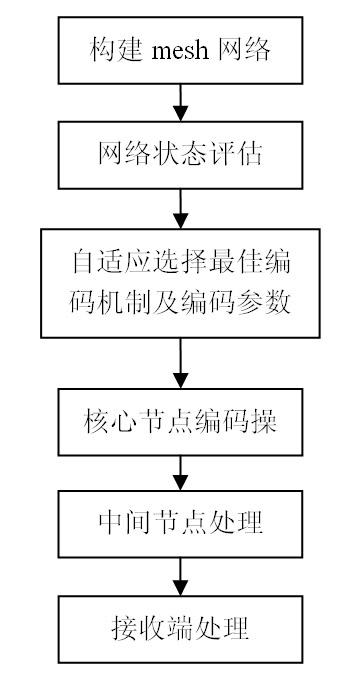
[0084] Such as figure 1 Shown, the real-time multicast method in a kind of wireless multi-hop network designed by the present invention is characterized in that the method comprises the following steps:
[0085] Step (1): Use the Multicast Announcement control packet to initialize the network as a mesh network;
[0086] Step (2): Assess the current network conditions and obtain all required network parameters;
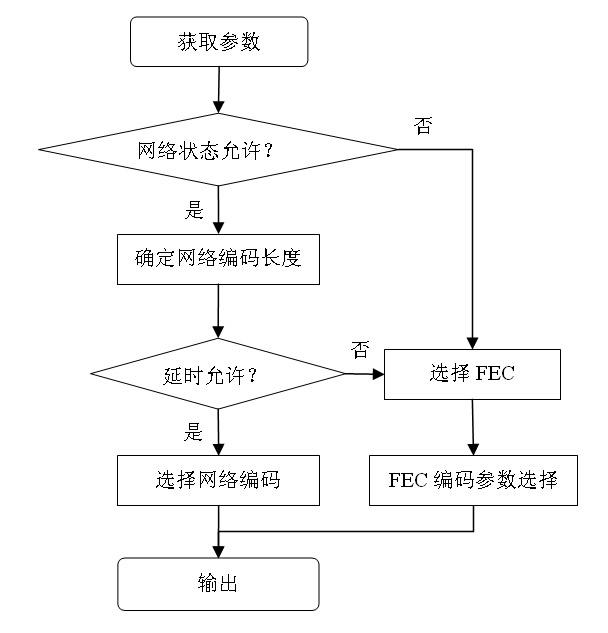
[0087] Step (3): According to the current network conditions and the real-time requirements of the business, adaptively select the network coding or forward error correction coding mechanism, and dynamically adjust the coding parameters;
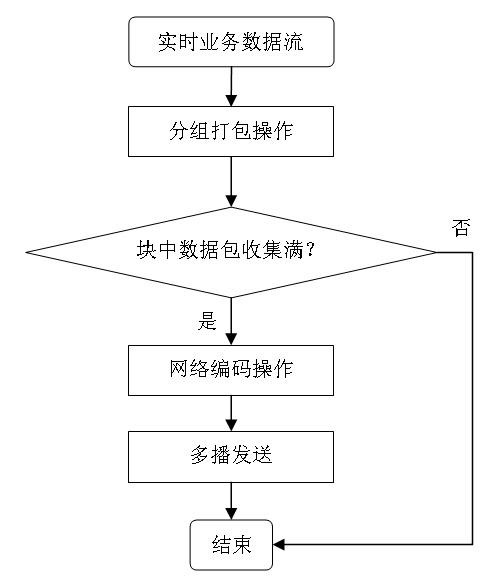
[0088] Step (4): The core node packs the real-time service data stream into groups, performs coding operations on each group block according to the selected coding mechanism and coding parameters, and t...
PUM
 Login to View More
 Abstract
Description
Claims
Application Information
 Login to View More