
Furnace wall structure of molten metal container and furnace wall construction method of molten metal container
A technology of molten metal and construction method, which is applied in the field of furnace wall structure of molten metal container and furnace wall construction of molten metal container, to achieve the effects of improving melting resistance, improving thermal conductivity coefficient, and reducing thermal expansion difference
- Summary
- Abstract
- Description
- Claims
- Application Information
AI Technical Summary
Problems solved by technology
Method used
Image

Examples
Embodiment
[0070] Next, examples performed for confirming the effects of the present embodiment will be described.
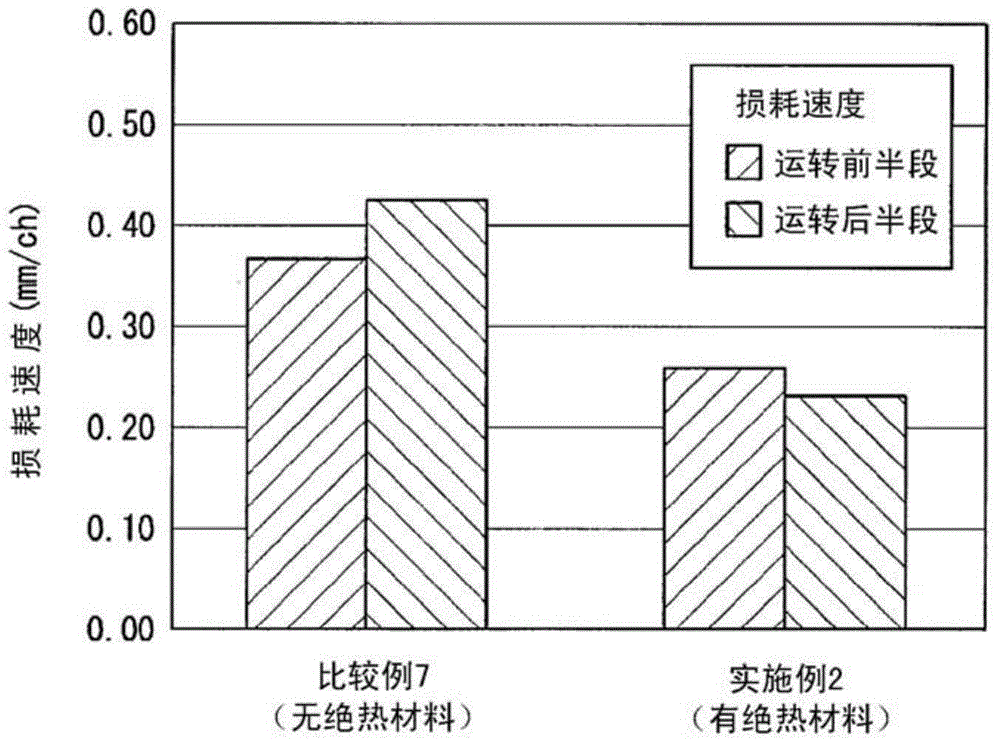
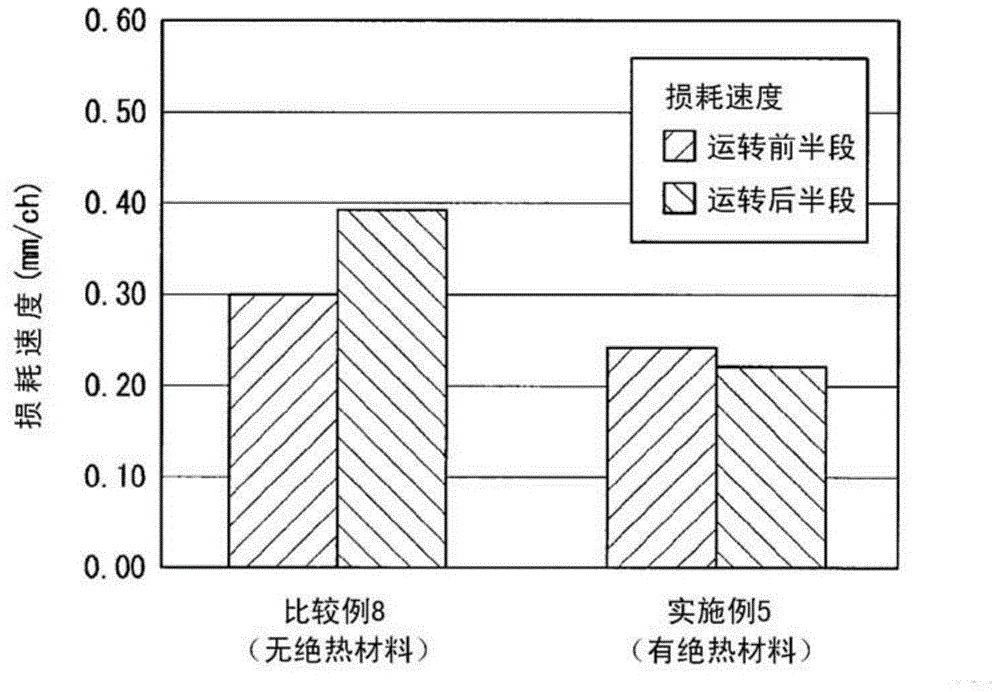
[0071] Here, actual machine investigations were conducted using a converter A having a furnace wall structure provided with the heat insulating material 14 and a converter B having a furnace wall structure not provided with the heat insulating material 14 .
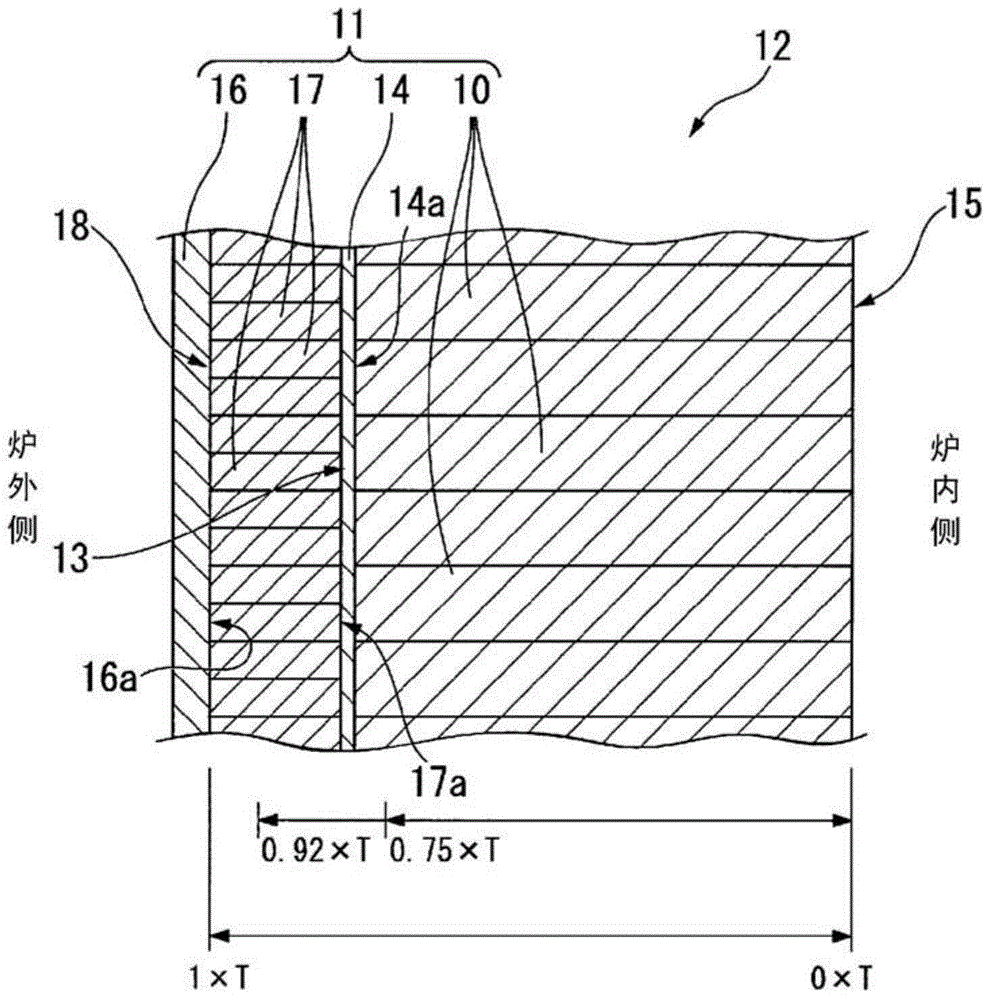
[0072] Specifically, in the converter A, the furnace wall structure provided with the heat insulating material 14 is formed as follows: on the inside of the iron sheet 16 of the converter 12, magnesia permanent bricks ( Thickness: 65-230 mm), heat insulating material 14 and magnesia-carbon wear brick (thickness: 720-990 mm) as the magnesia-carbon brick 10 . Examples 1-5 and Comparative Examples 1-6 showed the result.
[0073] On the other hand, in the converter B, the furnace wall structure without the heat insulating material 14 is formed as follows: inside the iron sheet 16, magnesia-based permanent bricks (thickne...
PUM
| Property | Measurement | Unit |
|---|---|---|
| thickness | aaaaa | aaaaa |
| melting point | aaaaa | aaaaa |
| thickness | aaaaa | aaaaa |
Abstract
Description
Claims
Application Information
 Login to View More