
Chemical mechanical pulping method for recycling of wet strength waste paper
A chemical mechanical and reuse technology, applied in the direction of recycling technology, paper recycling, waste paper processing, etc., can solve the problems that affect paper making, strong chemical action of waste paper pulp, reflocculation, etc.
- Summary
- Abstract
- Description
- Claims
- Application Information
AI Technical Summary
Problems solved by technology
Method used
Image

Examples
Embodiment 1
[0073] Example 1: Bleaching paper machine breaks and scraps containing wet strength agents, repulping and recycling
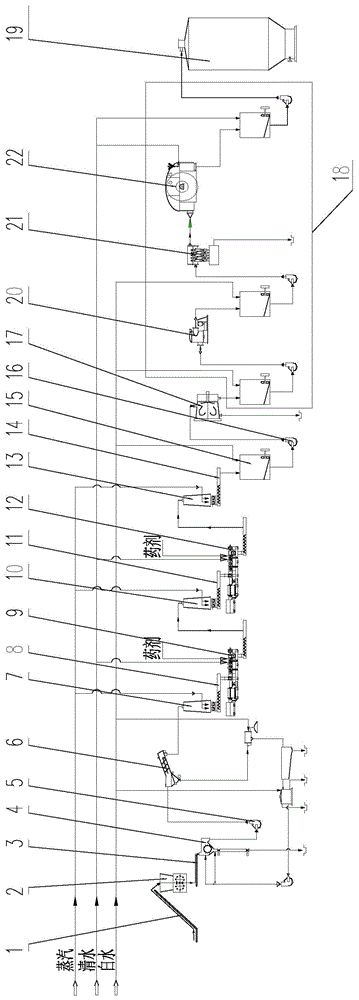
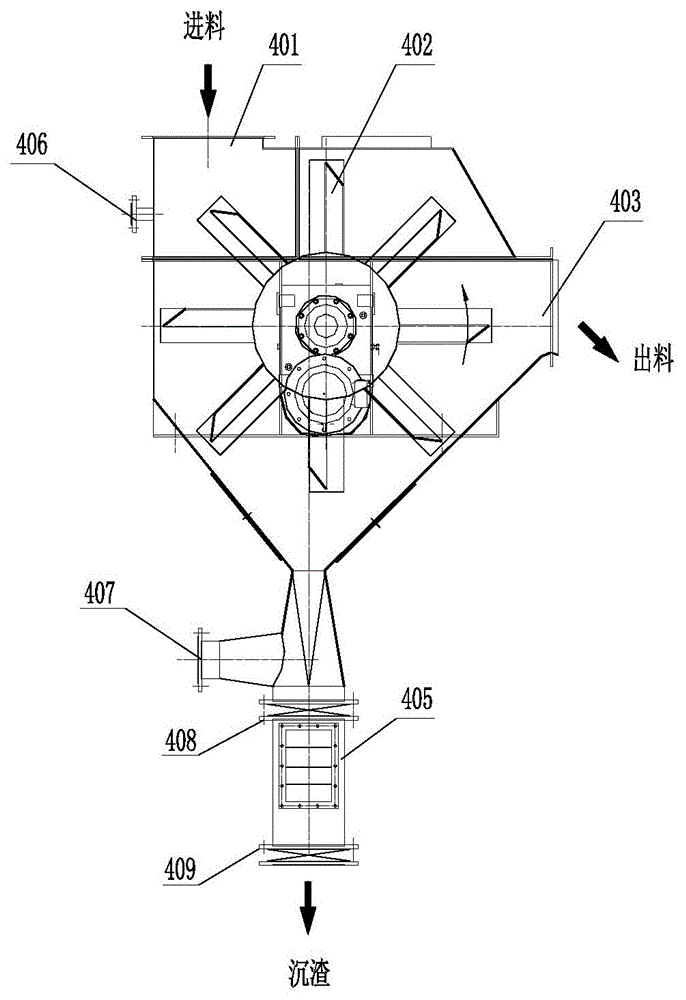
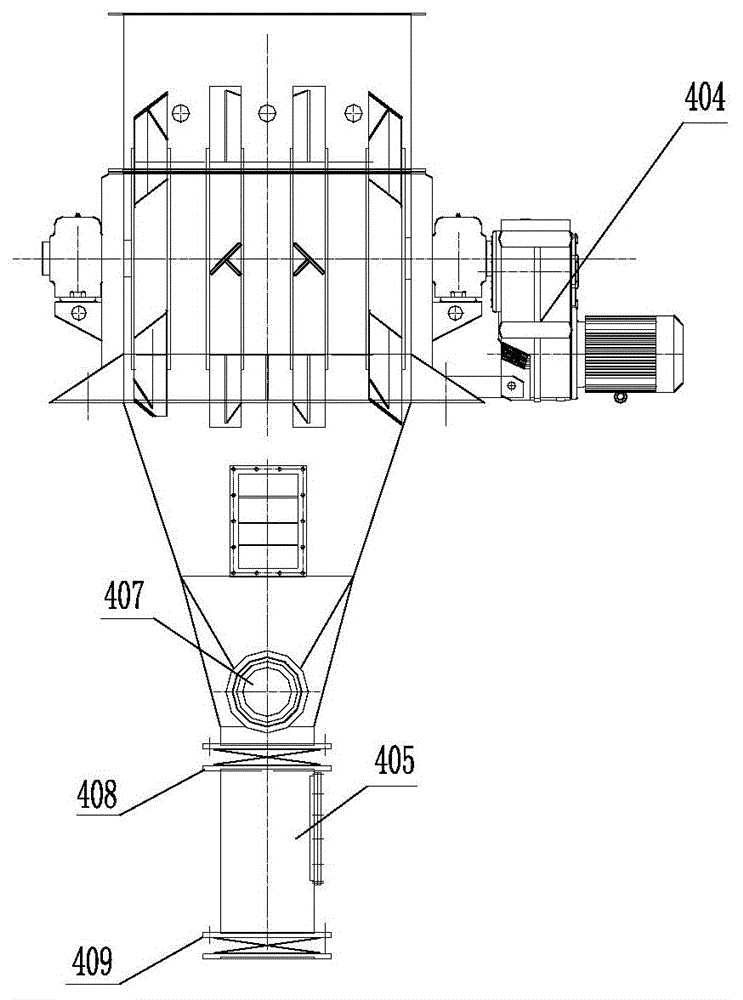
[0074] Broken paper and leftovers are conveyed by the chain conveyor to the hydropulper and shredded into paper pieces, then sent to the drum washing machine 4 to adjust the concentration to 3% for washing and slag removal, and then pumped by the material pump 5 to The oblique spiral dehydrator 6 dehydrates and concentrates, and then transports it to the steaming chamber 7 for steaming for 15 minutes. The steam pressure is 0.3MPa. According to the weight percentage of the absolute dry raw material, when entering the steaming chamber, spray 0.1% rewetting agent; after steaming, the tablet is sent to the first twin-screw impregnation machine 9 by the third screw conveyor 8, extruded and kneaded into a silk ball and concentrated to about 35% concentration, and then according to the weight of the absolute dry raw material Percentage, add 1% liquid NaOH and appro...
Embodiment 2
[0076] Example 2: Unbleached paper machine broke and scrap repulping recycling with wet strength agent
[0077] Broken paper and leftovers are transported by the chain conveyor to the hydraulic pulper and shredded into paper pieces, and then transported to the drum washing machine 4 to adjust the concentration to 4% for washing and slag removal, and then pumped by the material pump 5 to the inclined Spiral dehydrator 6 is dehydrated and concentrated, and then transported to the steam chamber 7 for steaming for 25 minutes. The steam pressure is 0.45MPa. According to the weight percentage of the absolute dry raw material, when transported to the steam chamber, spray 0.12% rewetting agent; after steaming, the tablet is sent to the first twin-screw impregnation machine 9 by the third screw conveyor 8, extruded and kneaded into a silk ball and concentrated to about 40% concentration, and then according to the weight of the absolute dry raw material Percentage, 1.2% H added by met...
Embodiment 3
[0079] Example 3: Repulping of unbleached waste paper and waste carton board containing wet strength agents
[0080]The waste paper and waste cardboard are conveyed by the chain-plate conveyor to the shredder and shredded into paper pieces, and sent to the drum washing machine 4 to adjust the concentration to 5% for washing and slag removal, and then pumped by the material pump 5 Dehydration and concentration in the oblique spiral dehydrator 6, and then transported to the steaming chamber 7 for steaming for 30 minutes, the steam pressure is 0.6 MPa, according to the weight percentage of the dry raw material, when transported to the steaming chamber, it is sprayed into the steaming chamber at the feed port. 0.15% rewetting agent; after steaming, the flakes are sent to the first twin-screw impregnation machine 9 by the third screw conveyor 8, extruded and kneaded into silk balls and concentrated to about 45% concentration, and then according to the absolute dry raw material % ...
PUM
 Login to View More
 Abstract
Description
Claims
Application Information
 Login to View More