
A preset performance tracking control method for motor servo system with hysteresis compensation
A servo system and preset performance technology, applied in the field of control, can solve the problems of not considering hysteresis nonlinearity, insufficient design, phase lag, etc., and achieve the effects of good parameter estimation, good robustness and bounded stability, and reasonable planning.
- Summary
- Abstract
- Description
- Claims
- Application Information
AI Technical Summary
Problems solved by technology
Method used
Image

Examples
Embodiment Construction
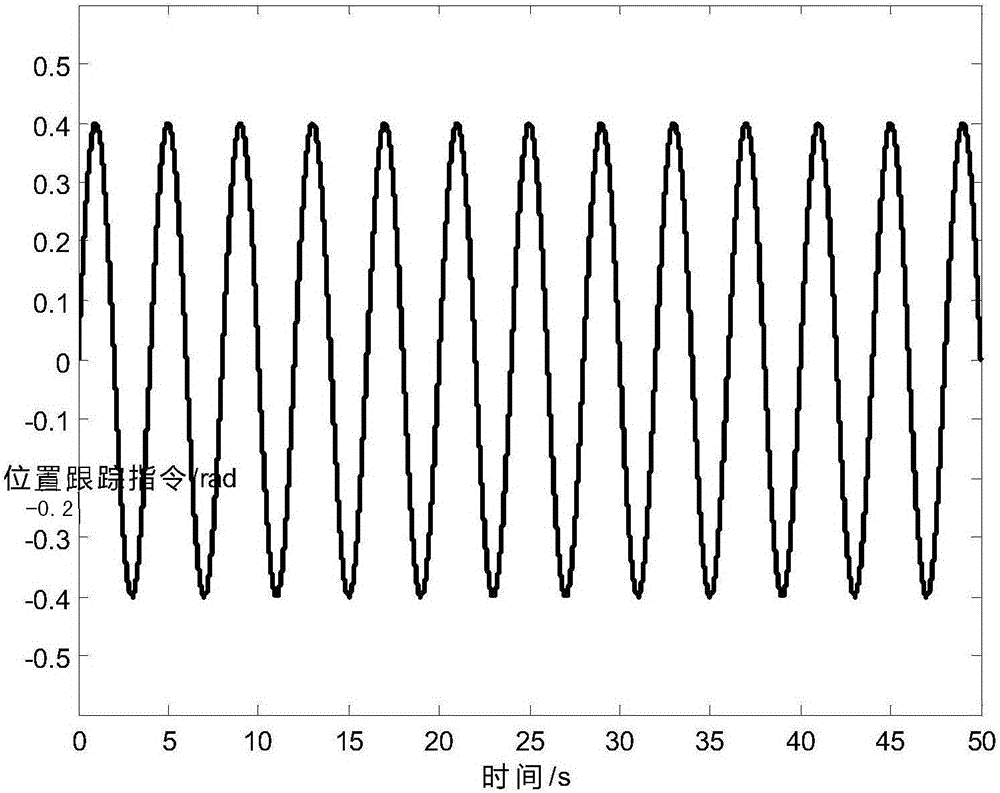
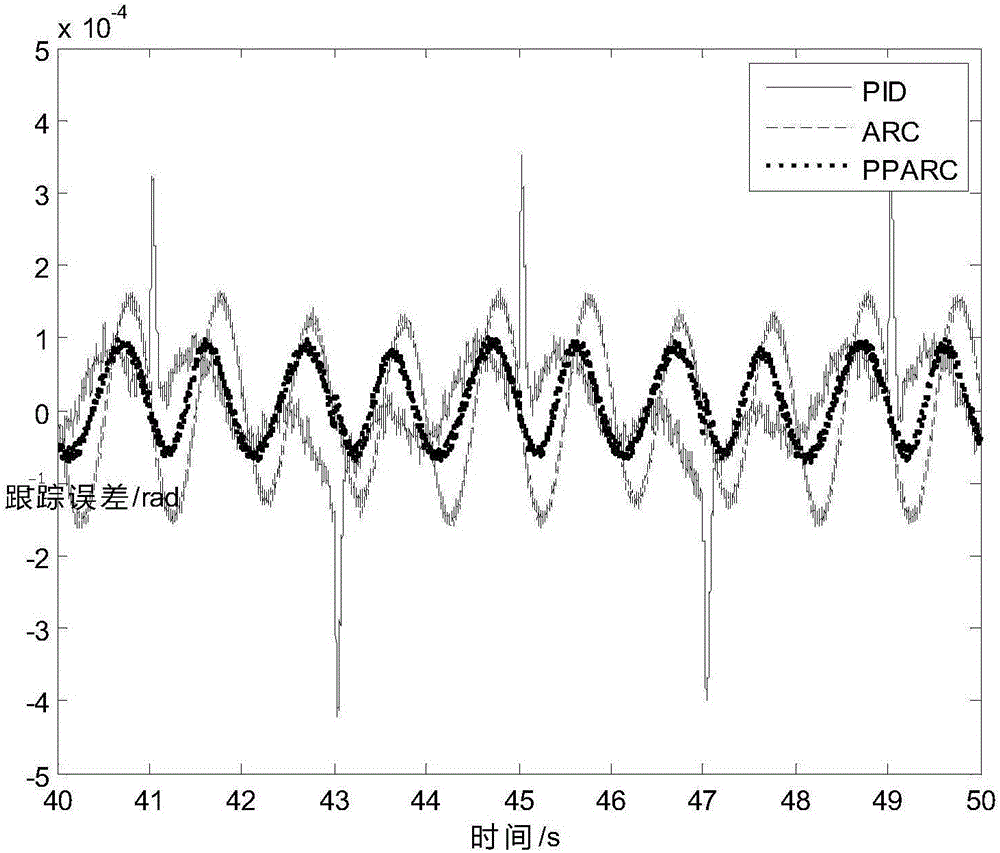
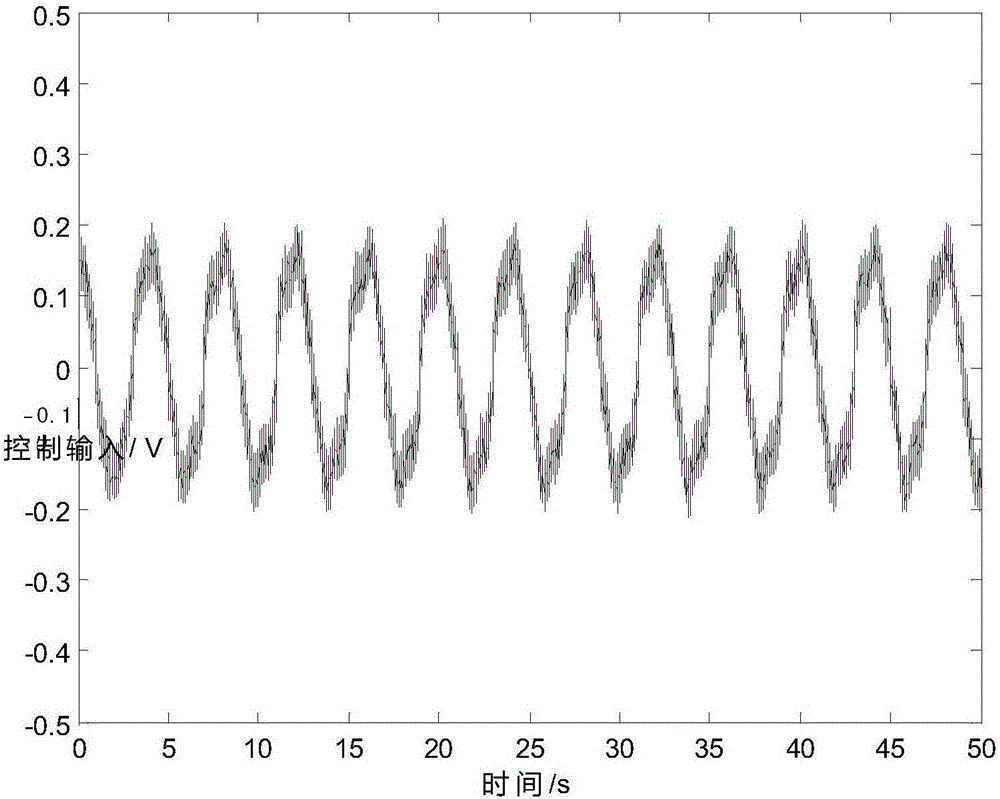
[0055] combine figure 1 , figure 2 with Figure 8 , a motor servo system preset performance tracking control method with hysteresis compensation, comprising the following steps:
[0056] Step 1, establish a motor servo system model with hysteresis, the specific method is as follows:
[0057] The hysteresis model is established as follows:
[0058]
[0059] In formula (1), u is the hysteresis model output, that is, the effective control input, c, a and B 1 is the hysteresis characteristic parameter, and satisfies c>B 1 , v is the output control quantity of the controller. Formula (1) can be transformed into:
[0060] u=cv(t)+d(v)
[0061]
[0062] u in formula (2) 0 and v 0 Indicates the initial value. Analyzing formula (2), we can see that the hysteresis model after conversion is composed of a linear term with a slope of c and an interference term d(v), and the boundary of the d(v) term is known.
[0063] Step 1.1, establish a motor servo system model with h...
PUM
 Login to View More
 Abstract
Description
Claims
Application Information
 Login to View More