
Improved patterned sapphire substrate developing method
A technology for patterning substrates and developing methods, which is applied in photography, photoengraving process of pattern surface, optics, etc., can solve the problems of reducing the reflection effect of PSS and light extraction efficiency, so as to improve the extraction efficiency of light and solve the problem of graphics. Irregular, white light brightness enhancement effect
Patent Information
- Authority / Receiving Office
- CN · China
- Patent Type
- Applications(China)
- Current Assignee / Owner
- Publication Date
- 2015-09-23
- Estimated Expiration
- Not applicable · inactive patent
Smart Images
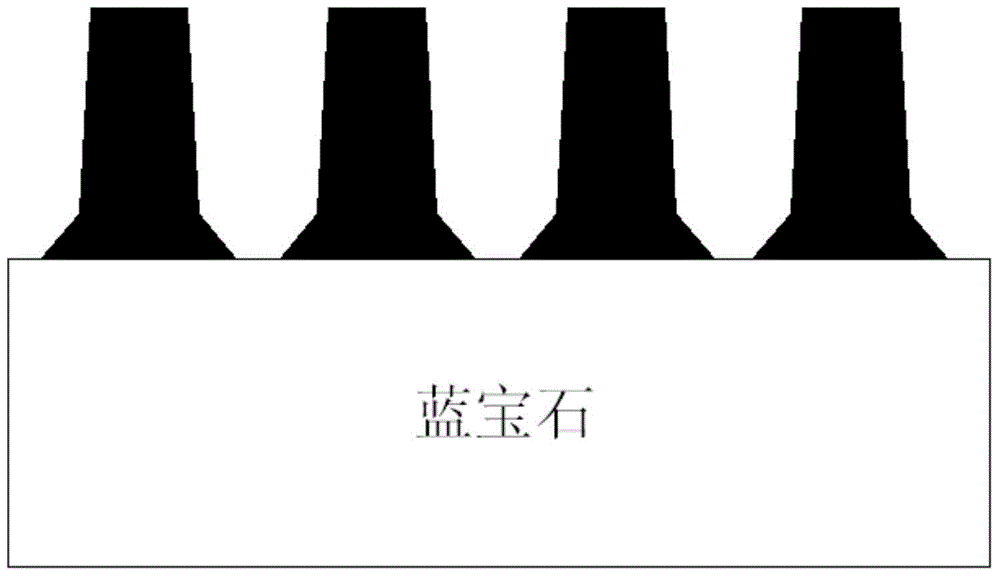
Figure 1 
Figure 2 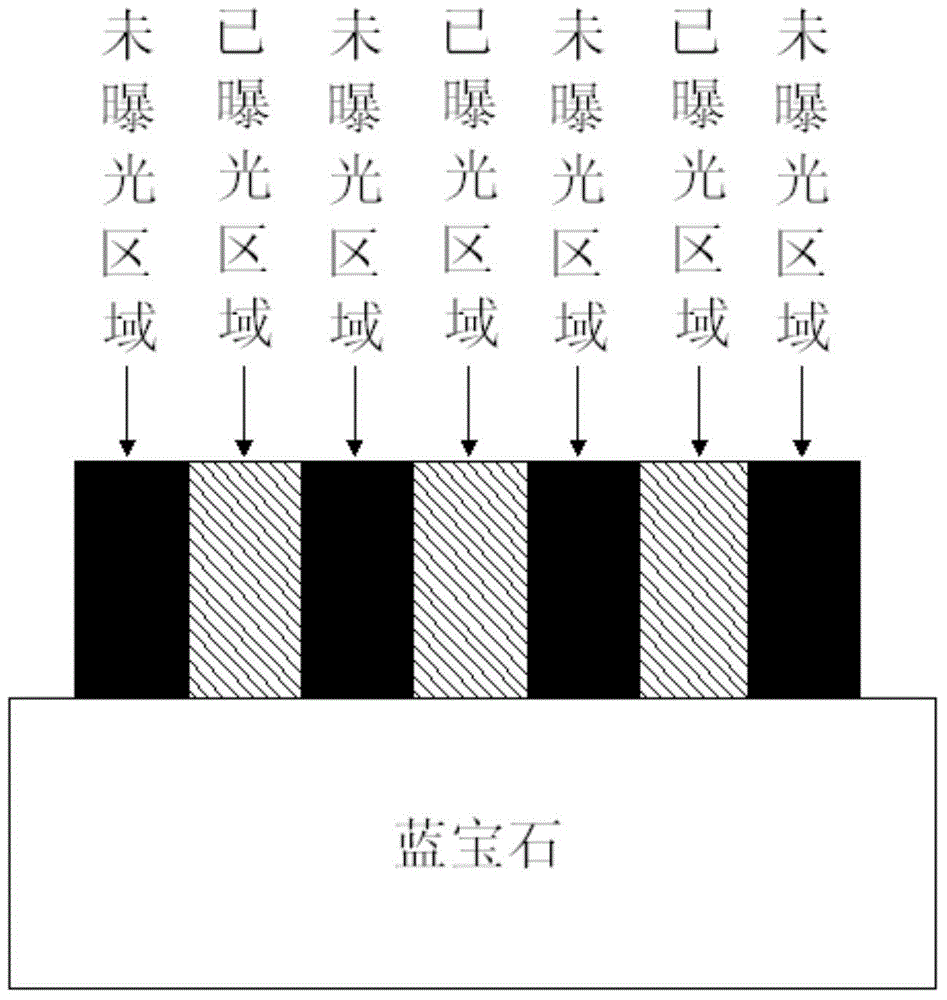
Figure 3
Abstract
Description
technical field
[0001] The invention relates to the field of LED chip manufacturing, in particular to an improved developing technology for patterned substrates. Background technique
[0002] Patterned substrate technology is usually called PSS, which is the abbreviation of Patterned Sapphire Substrate. Usually, patterns such as triangular pyramids or triangular prisms are produced on the sapphire flat substrate by etching. On the one hand, when the GaN material is grown on the PSS substrate, its vertical epitaxy becomes lateral epitaxy, and as a result, the dislocation density of the GaN epitaxial material can be effectively reduced, thereby reducing the non-radiative recombination of the active region and reducing the reverse leakage. On the other hand, the light emitted by the active area is scattered multiple times by the interface between GaN and sapphire substrate, which changes the exit angle of total reflection light, increases the probability of light exit, and imp...
Examples
Embodiment 1
[0024] The mode of adding developing solution among the present invention is the general mode in the industry in the prior art, and developing solution flows out from the pipe inside (3-4 millimeter of nozzle diameter), and developing solution is evenly coated on the sapphire sheet. The amount of developer solution for each development is at least 2 milliliters. The main components of the developer are tetramethylammonium hydroxide or potassium hydroxide, etc., all of which are based on the prior art, and will not be repeated here.
[0025] In the development method in this embodiment, 2 milliliters of developer is added each time, and the development time is 5 seconds to 10 seconds. During the development process, the sapphire sheet is rotated at 30-60 rpm to ensure that the reaction between the developer and the glue is more complete and uniform. After development, the sapphire The film is rotated at a high speed of 1500-3000 rpm, and the developer is thrown away, and then t...
Embodiment 2
[0027] In the present embodiment, 3 milliliters of developing solutions are added, and the development time is 5 seconds. While developing, the sapphire sheet is rotated at a speed of 30 rpm. The developing solution is thrown away, and then the rotating speed of the sapphire sheet is lowered to 30 rpm and cleaned with deionized water for 5 seconds, and then the sapphire sheet is rotated at a rotating speed of 1500 rpm to remove impurities and residual developing solution and deionized water;
[0028] In this embodiment, 3 ml of developing solution was added, and the above steps were repeated 4 times.
Embodiment 3
[0030] In the present embodiment, 4 milliliters of developing solutions are added, and the development time is 6 seconds. While developing, the sapphire sheet is rotated at a speed of 40 rpm. The developing solution is thrown off, and then the rotating speed of the sapphire sheet is lowered to 40 rpm and cleaned with deionized water for 6 seconds, and then the sapphire sheet is rotated at a rotating speed of 2000 rpm to remove impurities and residual developing solution and deionized water;
[0031] In this embodiment, 4 milliliters of developing solution was added, and the above steps were repeated 4 times.