Unlock instant, AI-driven research and patent intelligence for your innovation.

An autoencoder-based nuclear magnetic resonance image processing device and method

A nuclear magnetic resonance image and nuclear magnetic resonance imaging technology, applied in image data processing, image analysis, image enhancement, etc., can solve problems such as unavailable, impossible to use, and huge amount of calculations for nuclear magnetic resonance imaging

Active Publication Date: 2021-11-16
GENERAL HOSPITAL OF PLA +1
View PDF0 Cites 0 Cited by
  • Summary
  • Abstract
  • Description
  • Claims
  • Application Information

AI Technical Summary

Problems solved by technology

However, this document only processes the three-dimensional voxel data of the MRI of the head, and the technical solution used is a three-dimensional convolutional autoencoder
Since it is necessary to process all the three-dimensional voxel data of the magnetic resonance imaging of each subject's head, this technical solution requires a huge amount of calculation. Even if a high-performance computer or a high-performance computer cluster is used, this technical solution will not Difficult or impossible to use clinically
In addition, the image data of the MRI of the clinical common scanning head is the image data of 20 to 40 two-dimensional slices, the method in the above-mentioned arXiv:1607.00556v1 document cannot be used for the MRI of the clinical common scanning head Imaging image data

Method used

the structure of the environmentally friendly knitted fabric provided by the present invention; figure 2 Flow chart of the yarn wrapping machine for environmentally friendly knitted fabrics and storage devices; image 3 Is the parameter map of the yarn covering machine
View more

Image

Smart Image Click on the blue labels to locate them in the text.
Viewing Examples
Smart Image
  • An autoencoder-based nuclear magnetic resonance image processing device and method
  • An autoencoder-based nuclear magnetic resonance image processing device and method
  • An autoencoder-based nuclear magnetic resonance image processing device and method

Examples

Experimental program
Comparison scheme
Effect test

Embodiment approach 1

[0028] Embodiment 1 utilizes the data of the Alzheimer's Disease Neuroimaging Initiative (ADNI for short) in the United States to realize the hippocampal head, fimbria hippocampus, CA1, CA2, CA3, A technical solution for computer-aided identification of CA4 / dentate gyrus and hippocampus image data. Download cranial MRIs of clinically confirmed Alzheimer's disease (AD), amnestic mild cognitive impairment (MCI) and normal aged group (NC) from the official website of the Alzheimer's Disease Neuroimaging Program in the United States image data,

[0029] The data of the Alzheimer's disease neuroimaging project in the United States, 3013 scan results (scans), 321 subjects (subject), can be divided into training set, verification set and test set

[0030] The condition of the training set

[0031]

[0032] The case of the validation set

[0033]

[0034] The case of the test set

[0035]

[0036]

[0037] Whole-brain three-dimensional data of the above-mentioned crani...

Embodiment approach 2

[0047] Embodiment 2 Utilize the data of the Alzheimer's Disease Neuroimaging Initiative (ADNI for short) in the United States to realize the hippocampus head, fimbria hippocampus, CA1, CA2 of the hippocampus of the image data of the magnetic resonance imaging of the head in the present invention , CA3, CA4 / dentate gyrus and hippocampus image data for computer-aided identification. Download cranial MRIs of clinically confirmed Alzheimer's disease (AD), amnestic mild cognitive impairment (MCI) and normal aged group (NC) from the official website of the Alzheimer's Disease Neuroimaging Program in the United States image data,

[0048] The data of the Alzheimer's disease neuroimaging project in the United States, 3013 scan results (scans), 321 subjects (subject), can be divided into training set, verification set and test set

[0049] The condition of the training set

[0050]

[0051] The case of the validation set

[0052]

[0053] The case of the test set

[0054] ...

Embodiment approach 3

[0066] Embodiment 3 Utilize the data of the Alzheimer's Disease Neuroimaging Initiative (ADNI for short) in the United States to realize the hippocampal head, fimbria hippocampus, CA1, CA2, CA3, CA4 / A technical solution for computer-aided identification of image data of the dentate gyrus and hippocampus. Download cranial MRIs of clinically confirmed Alzheimer's disease (AD), amnestic mild cognitive impairment (MCI) and normal aged group (NC) from the official website of the Alzheimer's Disease Neuroimaging Program in the United States image data,

[0067] The data of the Alzheimer's disease neuroimaging project in the United States, 3013 scan results (scans), 321 subjects (subject), can be divided into training set, verification set and test set

[0068] The condition of the training set

[0069]

[0070] The case of the validation set

[0071]

[0072] The case of the test set

[0073]

[0074] Whole-brain three-dimensional image data of the above-mentioned cran...

the structure of the environmentally friendly knitted fabric provided by the present invention; figure 2 Flow chart of the yarn wrapping machine for environmentally friendly knitted fabrics and storage devices; image 3 Is the parameter map of the yarn covering machine
Login to View More

PUM

No PUM Login to View More

Abstract

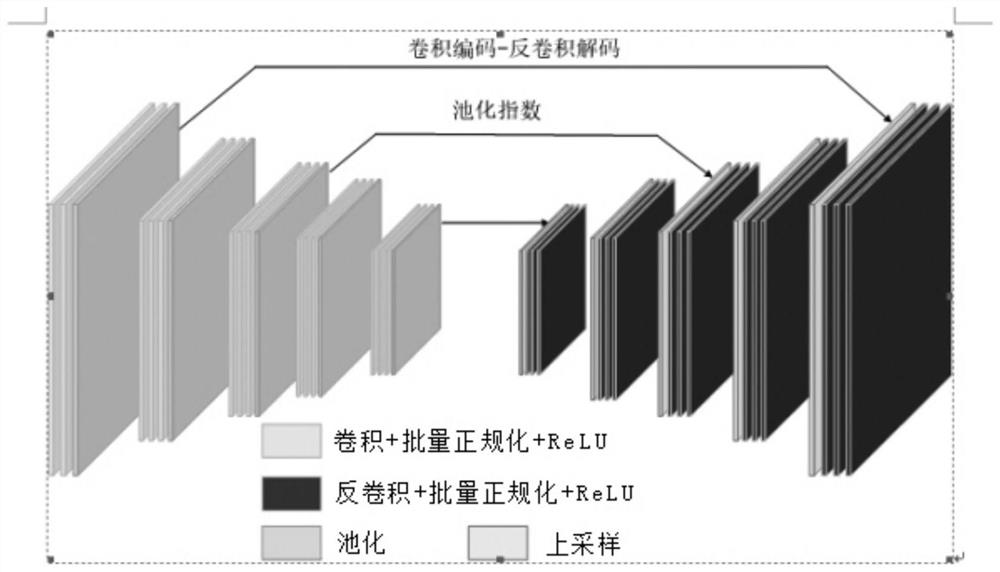
The invention relates to a nuclear magnetic resonance image processing device and method based on an autoencoder. It involves the method of computer-aided identification of the hippocampal head, CA1, CA2, CA3, CA4 / dentate gyrus, fimbria hippocampus and hippocampus tail of the hippocampus. The two-dimensional self-encoder of deep learning of artificial intelligence is used to realize the recognition of the normal elderly group, A three-category classification method for clinically diagnosed as amnestic mild cognitive impairment and clinically diagnosed as Alzheimer's disease, using the normal elderly group, clinically diagnosed as amnestic mild cognitive impairment The damage and clinically diagnosed NMR image data of Alzheimer's disease determine the training set, verification set and test set of the deep learning of artificial intelligence, and the three-dimensional data of MRI can be converted into two-dimensional by selecting two-dimensional slices. dimension data.

Description

technical field [0001] The present invention relates to a nuclear magnetic resonance image processing device and method based on an autoencoder, in particular, to a deep learning-based two-dimensional autoencoder that utilizes cranial nuclear magnetic resonance imaging to perform Alzheimer's disease on the substructure of the hippocampus. A computer-aided identification method for pairwise discrimination between amnestic mild cognitive impairment and normal elderly groups. Background technique [0002] Alzheimer's disease is a neurodegenerative disease. Existing research work has confirmed that in the MRI image files of the head, although there are individual differences in the MRI image data of each subject, in the sense of biostatistics, Alzheimer's disease, Alzheimer's disease, Amnestic mild cognitive impairment and the three categories of normal elderly group exist differences between the three categories of MRI imaging data. The deep learning method of machine learnin...

Claims

the structure of the environmentally friendly knitted fabric provided by the present invention; figure 2 Flow chart of the yarn wrapping machine for environmentally friendly knitted fabrics and storage devices; image 3 Is the parameter map of the yarn covering machine
Login to View More

Application Information

Patent Timeline
no application Login to View More
Patent Type & Authority Patents(China)
IPC IPC(8): G06T7/00G06T7/10G06T7/33G06T7/41G06K9/62
CPCG06T7/0012G06T7/0014G06T2207/20084G06T2207/20081G06T2207/30016G06T2207/10088G06F18/2431
Inventor 张熙周波郭艳娥冯枫安宁豫姚洪祥罗亚川樊茂华赵思远
Owner GENERAL HOSPITAL OF PLA